Airlines Are Done Tolerating This Annoying Habit, United Airlines Just Made It a Rule That Could Get You Kicked Off a Flight
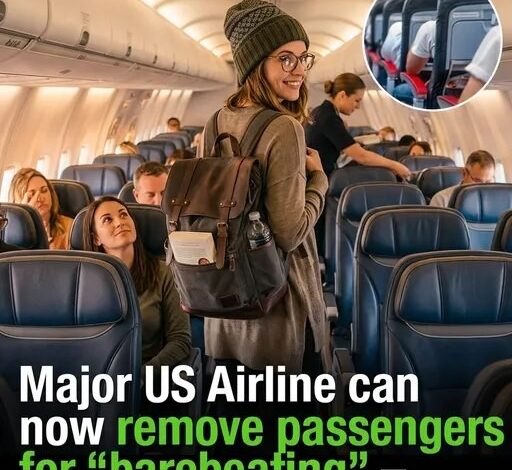
Air travel has always been a shared experience.
You’re sitting shoulder to shoulder with strangers, confined to a narrow cabin for hours, all moving toward the same destination. In that kind of environment, comfort doesn’t just depend on the airline—it depends on the people around you. Small habits, things that might not matter anywhere else, suddenly become very noticeable.
And lately, one particular habit has been pushing passengers to their limit.
It’s not loud conversations. It’s not crying babies. It’s something simpler—and, for many, far more frustrating.
People playing music, videos, or games out loud on their phones without using headphones.
At first glance, it seems minor. A small inconvenience. Something you can ignore.
But inside an airplane cabin, where space is limited and sound carries easily, it quickly becomes impossible to tune out. What starts as a quiet video turns into a constant background noise that follows you no matter where you sit.
And for passengers trying to sleep, work, or simply relax, it’s enough to ruin the entire experience.
The issue has grown so common that it even picked up a nickname online. Some people refer to it as “barebeating”—a term used to describe playing audio out loud in public without headphones. It might sound trivial, but the reaction to it hasn’t been.
Because for frequent flyers, it’s one of the most consistently irritating parts of modern travel.
As technology has improved, this problem has only gotten worse.
Airplanes are no longer disconnected from the world. High-speed internet is becoming standard on many flights, allowing passengers to stream movies, scroll endlessly, play games, and listen to music as if they were sitting at home.
But that convenience comes with a side effect.
More content means more sound.
And without headphones, that sound doesn’t stay personal—it becomes everyone’s problem.
That’s where United Airlines decided to step in.
Recognizing the growing frustration among travelers, the airline updated its official policies to address the issue directly. What was once considered basic etiquette is now clearly defined as a rule.
And not just any rule.
A rule that can carry real consequences.
Under the updated “Refusal of Transport” policy, passengers who refuse to use headphones while playing audio or video can now be classified as disruptive. That puts the behavior in the same category as actions that have long been considered serious—like ignoring crew instructions or boarding a flight while intoxicated.
In other words, this isn’t just about courtesy anymore.
It’s about compliance.
If a passenger continues to play audio out loud after being asked to stop, they could be denied boarding or even removed from the flight.
That’s a significant shift.
Because for years, this was something handled informally. Flight attendants would politely ask passengers to lower the volume or use headphones. Most people complied. Some didn’t.
Now, there’s less ambiguity.
The expectation has been made explicit.
Use headphones—or face the consequences.
For many travelers, this change feels overdue.
Frequent flyers have been vocal about the issue for years. Long flights are already physically demanding—limited space, restricted movement, and hours spent in the same seat. Add constant, unwanted noise to that, and the experience becomes even more exhausting.
People want to sleep. They want to read. They want to work without distraction.
And they don’t want to listen to someone else’s playlist, movie dialogue, or game sound effects for hours.
From that perspective, the rule isn’t restrictive—it’s reasonable.
It reinforces something that most people already understand.
Shared spaces require shared respect.
Flight attendants, in particular, have welcomed the clarity.
For them, this issue has quietly become part of the job. Repeatedly asking passengers to lower volume or use headphones takes time and can lead to unnecessary tension. Some travelers comply immediately. Others push back, arguing that it’s not a big deal.
With the policy now formalized, crew members have clearer authority.
They’re not just making a request.
They’re enforcing a rule.
And that distinction matters.
Of course, not everyone sees it the same way.
Parents traveling with young children have raised practical concerns. Headphones don’t always fit comfortably on smaller kids, and keeping them on for long periods can be challenging. Some argue that flexibility is needed in those situations.
But airline staff emphasize that the expectation still applies.
It’s not about eliminating device use—it’s about managing it in a way that doesn’t affect others.
Lower volume. Use appropriate equipment. Be aware of your surroundings.
Simple adjustments that make a difference.
Because ultimately, the issue isn’t about technology.
It’s about behavior.
Air travel has changed dramatically over the years, but one thing hasn’t—people still share the same space. And in that space, individual actions have collective impact.
What seems insignificant to one person can be overwhelming to another.
That’s why small habits matter.
The decision by United Airlines reflects a broader shift in how airlines are approaching passenger experience. It’s no longer just about major disruptions. It’s about the smaller, everyday behaviors that shape how comfortable a flight feels.
Noise. Space. Courtesy.
These are the details that define the journey.
And as expectations evolve, so do the rules.
For passengers, the takeaway is straightforward.
If you’re planning to watch something, listen to music, or play a game during your flight, bring headphones.
Not as a suggestion.
As a requirement.
Because what used to be considered a minor annoyance is now officially recognized as something that can disrupt an entire cabin.
And airlines are no longer willing to ignore it.
In the end, the goal isn’t to restrict enjoyment.
It’s to make sure everyone can enjoy the flight—not just the person holding the device.
And sometimes, the simplest solution—like putting on a pair of headphones—is all it takes to make that happen.