The Secret Tool In Your Closet That Saved Millions Of Shoes And Changed History Forever
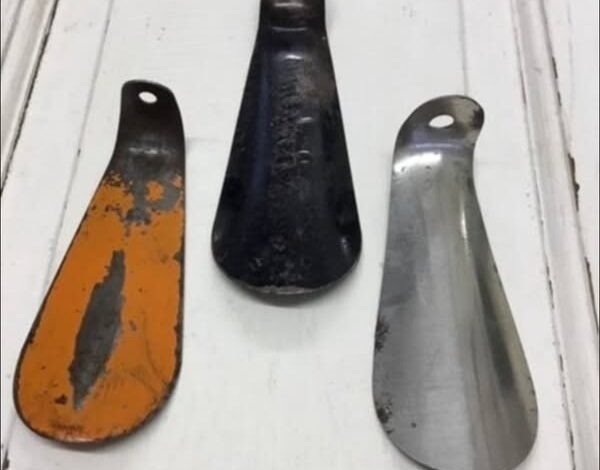
In an age dominated by high tech gadgets, wearable AI, and complex machinery, it is rare to find an innovation that has remained virtually unchanged for over half a millennium. While the digital world moves at a breakneck pace, one humble object has quietly stood the test of time, nestled in the corners of closets and the entryways of homes across the globe. It is a tool that requires no battery, no software updates, and no complex manual, yet its impact on daily life and the preservation of expensive craftsmanship is profound. This great innovation, often overlooked by the modern eye, is the shoe horn—a masterclass in functional design that has served humanity since the 15th century.
The story of the shoe horn is not one of sudden, explosive discovery, but of a slow, persistent necessity. Long before the era of flexible sneakers and mass-produced casual footwear, shoes were rigid, structural items often handcrafted from stiff, unforgiving leather. For the nobility and the burgeoning middle class of the Renaissance, footwear was a significant investment, often custom-made and intended to last for years, if not decades. Forcing one’s foot into a narrow, stiff-heeled shoe was not only a struggle of physical strength but a risk to the structural integrity of the garment. To solve this, craftsmen looked to nature, utilizing the smooth, curved surfaces of animal horns to create a bridge between the heel of the foot and the heel of the shoe.
These early versions were literally fashioned from the horns of cattle, sheep, or goats. The natural curve of the horn provided a perfect anatomical match for the human heel, while its polished surface allowed the foot to glide effortlessly into the shoe. This simple mechanical advantage prevented the “heel counter”—the stiff reinforcement at the back of the shoe—from collapsing under the weight of the foot. By preserving the shape of the shoe, the shoe horn effectively doubled the lifespan of footwear, making it an essential tool for anyone who valued their appearance and their wallet. Over time, the materials shifted from bone and wood to more resilient substances like brass and steel as metalworking techniques advanced during the Industrial Revolution.
As the centuries progressed, the shoe horn evolved from a purely utilitarian object into a symbol of status and personal style. During the Victorian era, the elite would commission shoe horns made from sterling silver, ivory, or tortoiseshell, often featuring elaborate engravings, family crests, or handles carved into the shapes of animals and mythical creatures. These were not merely tools kept out of sight; they were part of a sophisticated grooming ritual, displayed on dressing tables alongside silver-backed brushes and ivory combs. For the wealthy, the act of putting on one’s shoes was a ceremony, and the shoe horn was a centerpiece of that daily performance.
However, the true genius of the shoe horn lies in its democratization. By the 20th century, the advent of plastics and mass production made the shoe horn accessible to every household. What was once a luxury item for the aristocracy became a staple of the common home. Today, they are found in every corner of the world, from high-end boutiques in Paris to modest homes in rural villages. The design remains remarkably consistent: a curved, spoon-like blade that fits the heel, often attached to a handle. This persistence of form is the ultimate proof of its perfection; if a design has not needed to change in five hundred years, it is because it already solves its intended problem flawlessly.
Beyond the preservation of leather and fashion, the shoe horn serves a critical humanitarian and ergonomic function that is often ignored. For older adults, individuals suffering from chronic back pain, or those with limited mobility due to arthritis or injury, the act of bending down to pull on a shoe can be a painful, if not impossible, task. The innovation of the long-handled shoe horn was a revolutionary step for independence. These extended versions allow a person to guide their foot into their footwear while remaining perfectly upright. It is a tool of dignity, allowing people to dress themselves without assistance, maintaining their autonomy in the face of physical challenges. In hospitals, physical therapy centers, and nursing homes, the long shoe horn is a vital piece of assistive technology that bridges the gap between disability and self-sufficiency.
Despite its benefits, the modern world sometimes views the shoe horn as an “old-fashioned” relic, a gadget from a bygone era of stiff collars and formal galas. Yet, in the world of high fashion and professional attire, it remains as relevant as ever. Anyone who has invested in a pair of high-quality dress shoes or bespoke boots knows that using a shoe horn is not an option—it is a requirement. Modern footwear, while more diverse, still relies on structural integrity. Even the sturdiest leather will eventually crack, fold, and degrade if it is repeatedly crushed by the weight of a heel. The shoe horn remains the primary defense against the premature death of a good pair of shoes, acting as a silent guardian of our most expensive wardrobe investments.
The collectible nature of antique shoe horns further highlights their historical significance. Collectors today seek out vintage pieces from the Art Deco period or hand-forged iron versions from the American frontier. These objects tell the story of human movement—of where we went and the care we took in preparing for the journey. They are small pieces of social history, reflecting the materials, aesthetic preferences, and economic realities of the eras in which they were created. To hold a 19th-century silver shoe horn is to touch a tangible link to a daily habit shared by a person living two hundred years ago.
Ultimately, the shoe horn represents the beauty of the “humble innovation.” It doesn’t scream for attention, and it doesn’t boast of its complexity. Instead, it offers a quiet, reliable solution to a universal human problem. It reminds us that sometimes the most important inventions are not the ones that change how we think, but the ones that subtly improve how we move. It is a reminder that good design is timeless and that practicality never goes out of style. So, while it may look like an odd, curved piece of plastic or metal to the uninitiated, the shoe horn is actually a pillar of daily life—a centuries-old secret to longevity, comfort, and independence. It is proof that a small, simple idea can ripple through history, making the world a slightly smoother place to walk, one step at a time.