INCIDENT IN Colossal Cave: Police seal off the cave after finding Nancy Guthrie’s walking cane — when lights shine inside, several officers rush out immediately. Read more below ↓
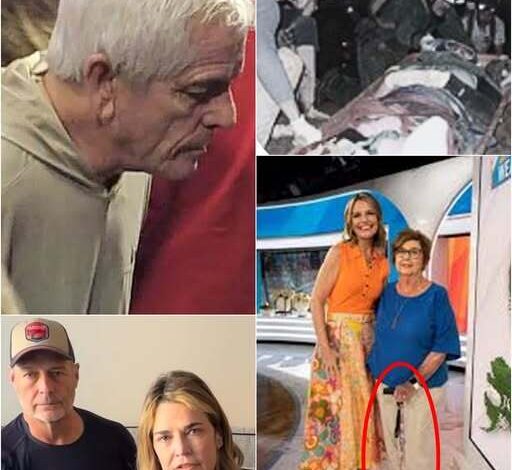
The investigation into the disappearance of Nancy Guthrie has taken a dramatic and unsettling turn following a discovery deep within the rugged landscape of Arizona’s Colossal Cave. In an operation characterized by high-stakes tension and meticulous forensic precision, authorities have officially sealed off a sprawling section of the cave system after recovering a personal item inextricably linked to the missing woman. The item, a walking cane confirmed by family members to belong to Nancy, was found abandoned near a secluded entrance of a subterranean passage that had previously escaped the notice of search-and-rescue teams. The recovery has not only provided the first tangible physical lead in a case fraught with uncertainty but has also triggered an immediate and dramatic reaction from the law enforcement officers on the scene.
According to preliminary reports from the site, the discovery occurred during a targeted sweep of remote rural areas, an effort prompted by a sophisticated synthesis of digital intelligence and international investigative cooperation. Analysts had been cross-referencing Nancy Guthrie’s financial transactions and travel logs with regional cell tower pings, eventually identifying a series of geographic anomalies that pointed toward this specific, untraversed stretch of the cave system. When a specialized ground unit arrived at the entrance, they found the cane resting against a limestone shelf, looking strangely out of place against the ancient, dusty floor of the cavern. The sight of a domestic object—a tool of mobility and a symbol of Nancy’s daily life—abandoned in such a desolate, inaccessible environment immediately elevated the case to a level of extreme urgency.
However, it was the events following the discovery that have sparked the most intense speculation. As initial responders directed high-intensity searchlights into the deeper recesses of the cave to scout for further evidence, several officers were seen rushing out of the entrance with visible urgency. While official statements have been carefully worded to avoid inciting panic, the rapid withdrawal of personnel has led many to believe that the cave’s interior holds more than just geological wonders. Authorities have cited “environmental hazards” and “unstable structural conditions” as the primary reasons for the immediate evacuation and subsequent sealing of the site. Nevertheless, the sudden mobilization of medical teams, hazardous material specialists, and forensic technicians suggests that the investigation has moved beyond a simple search for an object and into a much more complex recovery phase.
The walking cane itself has been treated with the highest level of forensic care. Transferred under a strict chain of custody, the item is currently being analyzed at a high-level laboratory for trace evidence that could reconstruct Nancy’s final known movements. Forensic analysts are looking for microscopic residues—soil samples, plant spores, or even chemical compounds—that might indicate where the cane has been in the days leading up to its discovery. Most importantly, they are looking for “recent use” indicators, such as fresh wear patterns on the rubber tip or DNA traces on the handle, which could provide a vital timeline for when the item was deposited. If the cane was left there recently, it suggests a survival scenario; if it has been there for days, the implications become significantly more dire.
As the forensic team works on the cane, geological and cave-specialist units have taken over the site at Colossal Cave. The operation is no longer a standard search-and-rescue mission; it has evolved into a methodical, chamber-by-chamber forensic mapping of the cave’s interior. Experts are utilizing remote-controlled drones and LiDAR technology to map the subterranean architecture, looking for signs of human passage in areas where oxygen levels may be depleted or where the structural integrity of the rock is compromised. The decision to restrict all access to the cave serves a dual purpose: it protects investigators from the unpredictable dangers of the cave environment and ensures that any potential evidence, such as footprints or discarded items, remains uncontaminated by outside interference.
The geographic location of the find is perhaps the most puzzling aspect for the Guthrie family and the public alike. The area is far removed from Nancy’s known residences and habitual routes, situated in a terrain that few would encounter by accident. This raises critical questions about how she arrived at the site and whether she was alone. Investigators are currently reviewing surveillance footage from nearby transportation hubs and rural roadways, searching for any vehicle or individual that may have been in the vicinity of Colossal Cave during the period in question. The presence of the cane at a location that requires deliberate effort to reach suggests a sequence of events that is far more complex than a simple case of a person becoming lost or disoriented.
For Savannah Guthrie and her family, the recovery of the cane is a poignant and painful development. It represents a fragile bridge between the woman they love and the silent, stony depths of the Arizona wilderness. While the discovery provides a concrete starting point for a new phase of the investigation, it also intensifies the emotional weight of the search. The uncertainty of what lies deeper within the sealed-off passages of the cave has placed the family in a state of agonizing suspense. Law enforcement officials have remained in constant contact with the family, providing private updates as the technical teams begin the slow, dangerous task of penetrating the cave’s deeper chambers.
The Colossal Cave operation marks a substantial escalation in the search for Nancy Guthrie, transitioning the case from a broad regional inquiry to a specific, evidence-driven recovery mission. The integration of physical evidence, such as the walking cane, with digital forensics and geological mapping represents the modern frontier of missing-person investigations. Authorities have pledged to remain at the site for as long as necessary, emphasizing that every cubic inch of the cave will be examined with the utmost scrutiny. They are looking for subtle environmental cues—disturbed dust, moisture patterns, or shifts in the cave’s natural state—that could point the way to Nancy’s location.
As the investigative perimeter remains under heavy guard, the focus of the nation remains fixed on the mouth of Colossal Cave. The discovery of the cane was the catalyst, but the true story remains hidden within the dark, winding passages that have now been reclaimed by the light of forensic inquiry. Investigators are cautioned against premature conclusions, yet they acknowledge that this is the most significant breakthrough since the search began. The path forward is one of disciplined, systematic exploration, guided by the hope that the evidence recovered from the depths will finally illuminate the mystery of Nancy Guthrie’s disappearance and lead the search toward a meaningful and long-awaited resolution.