$85,000 This penny is worth a fortune. Make sure you know how to spot it!
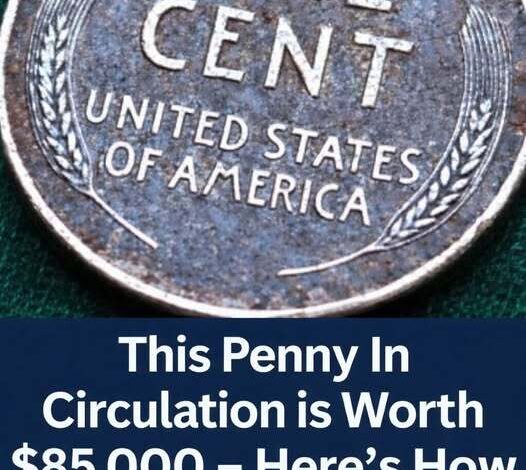
Most people would never think twice about an old penny sitting at the bottom of a jar or mixed in with loose change. At first glance, it seems completely ordinary — just another small coin passed from hand to hand over the years without much attention. In everyday life, tiny details are easy to ignore. Coins become part of the background, something people carry automatically without stopping to examine closely. Yet sometimes, a second look can reveal something surprisingly valuable or historically important. A specific date, a small mint mark, an unusual color, or even the condition of the coin can suddenly spark curiosity and lead someone to discover that what appeared ordinary may actually be extremely rare.
For collectors, coins are much more than simple currency. They are small pieces of history connected to different moments in time. Certain coins become valuable because of limited production numbers, design changes, manufacturing mistakes, or unusual materials used during important historical events. Collectors study these details carefully, often paying attention to differences that most people would never notice. Even the smallest variation can completely change a coin’s rarity and value.
During major global events such as wars or economic crises, governments sometimes changed the materials used to produce coins in order to conserve important resources. These temporary adjustments created rare variations that today attract serious attention from collectors around the world. Over time, some of these unusual coins became highly sought after because only a small number survived or were accidentally produced.
There are indeed coins worth around $85,000 — and in some cases far more — but they are usually extremely rare errors or limited varieties that almost never appear in normal circulation. Most people will never encounter one, which is exactly why they attract so much interest and excitement when discovered. Stories of rare coins hidden in old collections, forgotten jars, or inherited boxes continue to fascinate collectors because they remind people that valuable discoveries can sometimes appear in the most unexpected places.
One of the most famous examples is the rare 1943 copper penny. During 1943, the United States government needed copper for World War II supplies and military equipment. Because of this, pennies that year were supposed to be made from steel coated with zinc instead of copper. However, a small number of pennies were accidentally struck using leftover copper planchets from the previous year. These rare mistakes created what collectors now consider one of the most famous error coins in American history.
Only around 20 authentic 1943 copper pennies are believed to exist today, making them extraordinarily rare. Their value depends heavily on authenticity and condition, but some examples have sold for $85,000, while others have reached well over $200,000 at auctions. Discoveries like this continue to fuel public fascination with coin collecting, proving that even a tiny penny can sometimes hold an incredible story — and an astonishing value.