The Shocking Unrehearsed Nightmare That Reconfigured the Entire Entertainment Industry Overnight
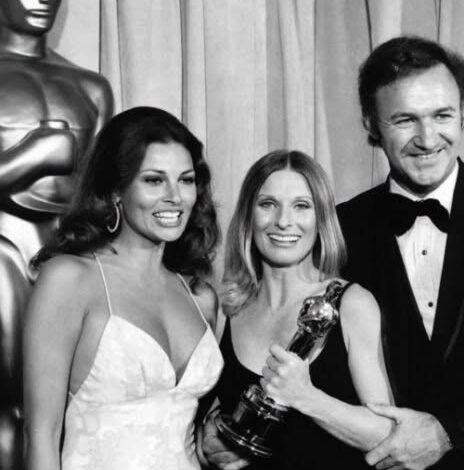
The dazzling allure of Hollywood has always operated as a meticulously engineered mirage, a shimmering defense mechanism constructed to shield the public from the gritty realities of life. For decades, the Academy Awards have offered a flawless, intensely managed spectacle of perfection to global audiences. The designer gowns are pristine, the smiles are mathematically simulated, and the acceptance speeches are carefully sanitized to ensure they offend absolutely no one. Yet, there are extraordinarily rare moments in human history when the immaculate facade of the entertainment industry completely shatters, exposing something raw, unpredictable, and deeply unsettling underneath. When historians examine the definitive archival records of the 1972 Oscars, they are not viewing a typical night of self-congratulatory Hollywood celebration. Instead, they are witnessing a chilling, stark reality frozen in time, a singular moment where the polished veneer of show business cracked wide open to reveal the intense human vulnerability pulsing directly beneath the surface of the industry’s most prestigious night.
To truly comprehend why the 44th Academy Awards remain the undisputed turning point of cinematic history, one must look far past the superficial sparkle of the red carpet and the gleaming golden statuettes. This specific evening marked the exact moment cinema finally grew up, shed its manufactured innocence, and confronted the darkness of the real world. The cultural landscape of the early 1970s was defined by intense political friction, systemic mistrust, and massive social upheaval, and the movies competing for honors that evening perfectly mirrored that deep national anxiety. The cinematic landscape was dominated by gritty, uncompromising masterpieces like The French Connection and The Last Picture Show. The industry was undergoing a massive, chaotic, and generational changing of the guard. A new wave of visionary directors was aggressively shedding the old constraints of studio control, transforming into genuine auteurs who demanded total creative freedom and absolute narrative honesty. The stories unfolding on the silver screen were no longer designed to serve as mere escapist fantasies to distract the masses from their daily struggles. Instead, they functioned as jagged, unforgiving mirrors held directly up to the fractured, bleeding soul of an anxious nation.
The palpable tension vibrating through the auditorium that evening extended far beyond the simple, predictable anxiety of who would take home a golden prize. The atmosphere was heavily charged with the sudden, overwhelming realization that an entire era of entertainment was gasping its final breath. It was a literal funeral for the old studio system and a fierce, uncompromising baptism for the cinematic movement known as New Hollywood. For decades, legendary studio executives had tightly controlled every single frame, every talent contract, and every safe narrative fed to the public. But by 1972, that iron grip had completely slipped away. A new wave of cynical, brilliant, and daring filmmakers had arrived to claim the throne, bringing with them a harsh realism that would alter global culture permanently.
When you study the iconic, unedited photographic evidence from that legendary night, you quickly realize you are not just looking at a routine gathering of wealthy celebrities clad in tailored tuxedos and elegant evening wear. You are staring directly into the eyes of a historic turning point from which there was no return. If you look closely at the expressions of the legendary actors and creators seated in the audience, you can see a complex, heavy mix of emotions playing out across their faces. There is a deep exhaustion born from surviving years of rapid, chaotic cultural shifts, but it is deeply intertwined with the electric, terrifying thrill of witnessing history happen in real time. It stands as a remarkably rare, unfiltered glimpse into a night where the stakes felt immensely higher than they ever have in the decades since.
The true magic captured on that evening did not reside in the carefully memorized scripts, the predictable political statements, or the elaborate stage designs. The true power belonged entirely to the people in the room who possessed the immense bravery required to bring uncomfortable truths to the screen. In an era marked by intense political scandal and profound social fragmentation, these artists refused to look away from the inherent darkness of the human condition. The legacy of that night serves as a permanent, haunting reminder that even in the most tightly curated, high-pressure environments imaginable, the truth possesses a relentless way of surfacing. It demands to be seen, breaking through the public relations barriers and leaving an indelible, permanent mark on absolutely everyone who dares to look.
When you look back at the documentation of that fateful evening, you are forced to look beyond the easily recognizable faces of classic movie stars who populated the venue. You begin to search for the hidden emotions swirling beneath the surface, tracing the complex, unscripted stories that never managed to make the official headlines or the morning talk shows. That underlying human drama is the core reason the cultural conversation always returns to 1972. It was much more than just an exceptional night for the art of filmmaking. It was a profound, fleeting moment when the entire world seemed to stand completely still, caught directly in the crosshairs of monumental change. For one brief, flashing second, the veil was lifted entirely, and the world was allowed to see exactly who these cinematic icons were when the cameras were not quite finished rolling and the public relations teams could no longer protect them from reality.
The ripples of that night continue to define how movies are made, judged, and remembered in the modern era. The absolute triumph of gritty, psychological realism over manufactured, pristine glamour set a massive precedent, ensuring that Hollywood could never fully retreat back into the safe, sanitized illusions of its golden age. The 1972 Oscars proved to the world that cinema is at its absolute best when it is dangerous, unpredictable, and devastatingly honest about the world it inhabits. Decades later, the entertainment industry still chases the ghost of that singular night, trying in vain to recreate the authentic lightning in a bottle that occurred when Hollywood stopped pretending, the facade fell away, and the raw truth of a changing world took center stage.