Cheapskate Husband Bills Dying Wife Three Hundred Dollars For Childbirth Meds Until His Mother Steps In With Ultimate Revenge
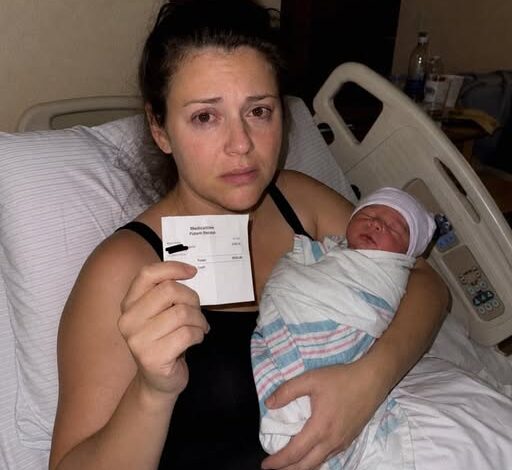
I had always mistakenly believed that my husband Marcus’s obsessively strict financial boundaries were simply his flawed, defensive way of feeling secure in an unstable economic world. Ever since we tied the knot, our relationship had been entirely governed by a singular, unyielding mandate, absolutely everything had to be split precisely down the middle. Marcus proudly referred to this rigid lifestyle as the Fairness System, while I quietly thought of it as a cold marriage governed entirely by mathematical equations and sterile software. At first, I actively chose not to despise the setup, having grown up watching my own sweet mother frantically hide past-due utility bills in a kitchen drawer, making Marcus’s neat, predictable spreadsheet feel like a safe haven. What I completely failed to anticipate was that this mathematical obsession would eventually morph into a toxic tool of absolute emotional cruelty.
The dynamic grew significantly worse the very moment I became pregnant with our first child. Suddenly, the financial spreadsheets became aggressively weaponized against me. Every single prenatal vitamin purchase went strictly under my personal expense column, alongside the specialized maternity body pillow and the supportive orthopedic shoes I was forced to buy when my feet swelled to twice their normal size. I tried to wipe down the clean kitchen counters, swallowed my rising anger, and desperately convinced myself that his extreme stinginess was merely a temporary manifestation of paternal anxiety. But the shattering reality of his profound selfishness finally smacked me in the face on the traumatic Tuesday night my labor began.
My delivery was nothing short of a physical catastrophe. By hour twelve, I was still trying to crack weak jokes, but by hour twenty, the agonizing contractions had stripped away my pride, leaving me weeping openly in front of the medical staff. By hour twenty-nine, the blinding pain completely consumed my consciousness. Dr. Lawson maintained an admirable calm, but the delivery room suddenly accelerated into high gear around us. When our beautiful son, Asher, finally arrived, he let out a sharp cry, and I eagerly reached out to hold him against my chest. But within seconds, the triumphant atmosphere turned into pure terror. I heard Dr. Lawson frantically shouting my name over and over again as the nurses scrambled for emergency medical supplies, barking out terrifying words like internal hemorrhage, severe bleeding, and critical medication now.
Marcus stood by, watching as the medical team fought desperately to save my life, ordering an emergency pharmaceutical injection that ultimately stabilized my body. Because my husband’s wallet happened to be physically closer than mine during the chaos of the recovery room, he swiped his credit card to cover the three-hundred-dollar out-of-pocket balance left over after insurance. For a brief, incredibly foolish moment, I let myself believe that this crisis had transformed Marcus into a true husband, proving he was a man who would step up when my life was hanging in the balance. I could not have been more tragically mistaken.
On our official discharge day, the hospital room smelled heavily of sharp sanitizer and stale coffee. My hands were still shaking violently from the physical trauma as I tried to button baby Asher into his newborn sleeper, my body aching from extensive surgical stitches, a bruised IV arm, and sheer physical exhaustion. Marcus sat across the room by the window, entirely disconnected, tapping away furiously on his open laptop. When I weakly begged him to tell me he wasn’t working, he coldly responded that he was simply organizing our recent expenses. He then stood up, cleared his throat, and slid a neatly folded piece of white paper across the hospital blanket, letting it land directly next to our newborn son’s tiny fist.
I opened the document with trembling fingers, only to discover it was the official hospital pharmacy receipt for the three-hundred-dollar life-saving medication. Marcus looked me dead in the eye and calmly stated that this bill was entirely on me, reasoning that since it was my physical body that required the medical intervention, he refused to split an expense that had absolutely nothing to do with him. The entire room went completely cold. I was lying in a hospital bed where I had nearly bled to death making him a father, and my husband was actively billing me for surviving the ordeal. Before I could even gather the energy to scream, his magnificent mother, Eleanor, who had been quietly standing in the open doorway, stepped into the room. She gently kissed my forehead, took the receipt from my hands, and promised to handle Marcus herself with a lesson he would never forget.
The subsequent confrontation arrived a few days later during a festive Sunday family gathering at our house, which smelled of fresh lasagna and baby wipes. Marcus was strutting around the living room, proudly accepting glowing congratulations from his friends and brothers as if he had personally survived the physical horrors of labor. After lunch was served, Eleanor stood up and tapped a silver spoon against her glass to command the room’s attention, announcing she had a special, custom-made gift for the new father. Marcus laughed arrogantly, tearing away the wrapping paper before the entire family, but his smug smile completely vanished the second he saw what sat inside the frame.
Eleanor had created a stark, unforgettable visual collage titled The Cost of Becoming a Father. Right at the very center sat the three-hundred-dollar medical receipt, beautifully surrounded by archival photos of Eleanor herself from decades ago, looking hollow-eyed, exhausted, and completely isolated while raising Marcus alone because his own selfish father had treated financial withholding as fairness. Directly beneath the modern photo of me pale and broken in my hospital bed, Eleanor had printed a devastating sentence in bold lettering, a man who counts what his wife costs him has forgotten what she gave him.
Marcus instantly panicked, frantically stammering that the situation was private and entirely out of context, but I refused to let him hide from his own cruelty. I carefully stood up from the sofa, looked him directly in the face, and loudly detailed the entire horrific truth to the room, exposing how he had three feet away from my bleeding body and billed me for the medication that saved my life. Marcus’s brother turned on him in absolute disgust, demanding to know how he could possibly charge his own wife for surviving childbirth, while his father sat in stunned, defensive silence.
Standing before our entire family, I proudly announced that the toxic Fairness System was officially dead and permanently buried. I looked Marcus dead in the eye and informed him that we were completely throwing away the disgusting notion that love has to submit financial receipts. I demanded an immediate household budget, shared financial responsibility, and intensive marital counseling, vowing that I would never raise our innocent son to believe that a family is a cold business deal. That night, a thoroughly humiliated Marcus finally opened his laptop to permanently delete his precious spreadsheets, weeping as he begged for my forgiveness. The deep emotional damage will take years to fully heal, but when baby Asher woke up crying a few hours later, Marcus eagerly rushed to the crib before I ever had to move, finally learning that some things can be split down the middle, but a real family is absolutely not one of them.