ICON DEAD With heavy hearts, we announce the passing of this groundbreaking woman
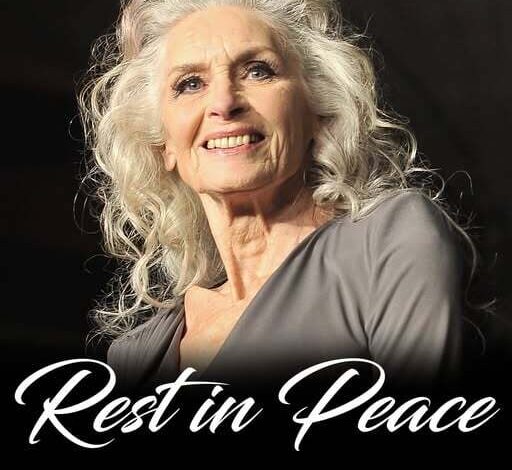
There was something almost poetic about the timing.
Daphne Selfe spent her final working day attending a Vogue luncheon at Royal Ascot — surrounded by fashion, elegance, and the kind of atmosphere she had inhabited for decades with effortless grace. Then, not long afterward, during the quiet turning of the spring equinox, she passed away peacefully, leaving behind a life that seemed to close with unusual symmetry and calm.
For many people, her death feels less like the loss of a model and more like the closing of an era.
Because Daphne Selfe was never simply famous for surviving in fashion into old age. She became extraordinary because she refused to treat aging as something shameful in the first place. Long before industries began publicly celebrating “age inclusivity,” she stood before cameras with silver hair, natural lines, and unapologetic authenticity, quietly challenging an entire culture obsessed with youth.
And eventually, the fashion world that once overlooked women her age came back asking her to lead.
Born in a different era of modeling entirely, Daphne Selfe was first discovered at just 21 years old. At the time, fashion operated under rigid expectations about beauty, femininity, and age. Models were expected to remain eternally youthful, interchangeable, and carefully polished. Yet Daphne’s life unfolded differently. Rather than chasing fame endlessly, she stepped away from much of the industry to focus on marriage, family, and ordinary life beyond the runway.
For many women of her generation, that would have been the end of the story.
Instead, it became the beginning of another one.
Decades later, when most fashion careers would have long disappeared into memory, Daphne Selfe returned. Not as someone desperately trying to reclaim lost youth, but as someone entirely comfortable with time itself. She kept her silver hair natural. She did not hide wrinkles behind layers of reinvention. She carried herself with calm confidence rather than performance.
And suddenly, the industry saw something it had spent years ignoring.
Elegance without fear.
What made her presence so powerful was not only her appearance, but the energy surrounding it. She walked runways with the ease of someone who no longer needed external validation. Younger models often radiated ambition or anxiety; Daphne radiated certainty. There was no visible struggle against aging because she had already made peace with it.
That quiet confidence transformed her into an icon.
Soon she became a familiar face at London Fashion Week and major campaigns, admired not merely as a novelty but as proof that beauty evolves rather than disappears. Designers, photographers, and audiences increasingly embraced the authenticity she represented. In a world dominated by filters, cosmetic perfection, and manufactured youthfulness, Daphne’s face carried something increasingly rare: history.
She showed that style is not erased by age.
If anything, it deepens through it.
Friends and colleagues often described her as remarkably grounded despite her success. She reportedly valued ordinary pleasures — coffee with friends, conversation, laughter, routines — just as much as glamorous events or magazine features. That balance became central to her appeal. She never seemed consumed by the illusion of celebrity. Fashion remained part of her life, not the entirety of it.
Perhaps that is why so many people found her inspiring far beyond the runway.
For older women especially, Daphne Selfe represented permission. Permission to remain visible. Permission to age naturally without apologizing for it. Permission to believe life could still expand after the years society often labels as a woman’s “prime.”
Her success challenged something deeply embedded in modern culture: the idea that aging diminishes relevance.
Instead, Daphne suggested the opposite.
That experience creates its own kind of beauty.
That confidence can become more striking than youth.
That a person can bloom again long after the world assumes their story is finished.
And perhaps most radically of all, she demonstrated that reinvention does not always require becoming someone new. Sometimes it means becoming more fully yourself than ever before.
Even her final years seemed to reflect that philosophy. She continued appearing publicly, attending events, walking runways, and engaging with fashion not as someone clinging desperately to relevance, but as someone genuinely enjoying the life she had built. There was joy in her visibility rather than fear.
Now, after her passing, tributes describe not only a legendary model but a woman who altered perceptions simply by existing openly and confidently within an industry historically terrified of aging.
Her legacy reaches far beyond clothing or photography.
She changed what people imagine when they think of elegance.
Not frozen youth.
Not artificial perfection.
But vitality carried honestly through time.
The image many will remember is not one specific runway or campaign, but the sight of Daphne Selfe walking calmly through spaces designed to worship youth, entirely unbothered by expectations that she should disappear.
And perhaps that is why her story feels so moving now.
Because even at the end, she seemed to embody the lesson she spent decades teaching without preaching:
A life does not lose beauty because it grows older.
Sometimes it becomes beautiful in a deeper way precisely because it has endured.