Greedy Kids Thought They Inherited Everything So I Sold My House Out From Under Them
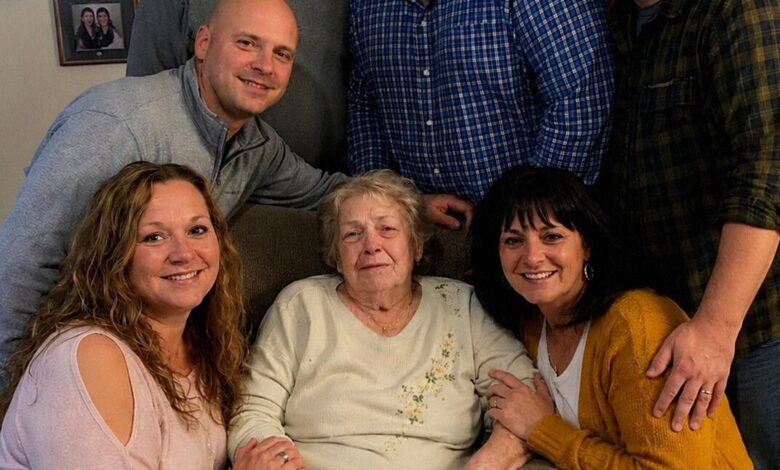
The lie itself was almost harmless.
A small exaggeration about her health. A comment passed carefully from one sibling to another until urgency spread through the family like a storm warning. Suddenly, after months — in some cases years — of distracted phone calls, forgotten birthdays, and promises to “visit soon,” all six of her adult children came rushing home at once.
And for a little while, she let herself believe it meant something beautiful.
The house filled with noise again for the first time in years. Doors opening and closing. Grandchildren running through hallways. Familiar laughter spilling from the kitchen while old recipes simmered on the stove. Someone repaired the porch railing. Someone cleaned the gutters. Music played softly in the evenings while stories resurfaced from decades earlier, stories polished smooth by repetition and memory.
For forty-eight hours, the loneliness lifted.
She watched her children move through the rooms she had once built her entire life around, and something fragile inside her reopened. These were the same people she had carried through fevers, heartbreaks, school failures, weddings, divorces, debts, disappointments, and dreams. She had spent years sacrificing quietly so their lives could expand outward while hers slowly narrowed around waiting.
Waiting for visits.
Waiting for calls.
Waiting to matter again.
And suddenly, here they all were beneath one roof.
It almost felt like love returning home.
Then came the conversation.
Late that night, unable to sleep, she walked quietly toward the kitchen for tea when voices drifting from the living room stopped her halfway down the hallway. At first, she smiled faintly, assuming her children were reminiscing together the way families sometimes do after long absences.
Instead, she heard her own life being divided.
Not metaphorically.
Literally.
Her oldest son calmly discussed the value of the house. One daughter wanted grandmother’s jewelry “before it disappeared.” Another argued about furniture. Someone mentioned bank accounts. Someone else asked whether the will had been updated recently. They spoke in practical, measured tones, occasionally disagreeing but never sounding ashamed enough to stop.
The most devastating part was not greed itself.
It was the assumption.
The assumption that she was already halfway gone. That her belongings had become future inventory. That her existence had quietly shifted from mother to estate.
She stood frozen in the dark hallway listening as her children divided pieces of her life while she was still alive enough to hear every word.
Yet strangely, she did not cry.
Not then.
The grief arrived differently — colder, sharper, almost clarifying. By the time the house finally fell silent again, something inside her had settled permanently. The illusion she had been protecting for years collapsed all at once. The reunion had not been about reconnection. It had been proximity to inheritance wrapped in temporary affection.
And once she understood that, she stopped feeling confused.
By morning, she had already called her lawyer.
Her voice remained calm throughout the conversation, which surprised even her. She did not rant. She did not seek revenge theatrically. She simply explained that changes needed to be made immediately. By the afternoon, appointments were arranged. Documents prepared. Decisions finalized with the same steady clarity that once helped her survive widowhood, financial hardship, and decades of raising six children mostly through determination alone.
Then she planned one final family dinner.
This time entirely on her terms.
That evening, the dining table looked almost painfully beautiful. She cooked their favorite childhood meals herself despite her exhaustion — roasted chicken, fresh bread, potatoes seasoned exactly the way they loved growing up, pies cooling near the window. The table glowed warmly beneath soft light, set with care that now felt almost ceremonial.
Her children arrived smiling, unsuspecting.
For a moment, watching them settle into their old seats, she felt the ghost of the family she once believed would stay close forever. But ghosts cannot survive truth for long.
Halfway through dinner, she set down her fork and quietly said:
“I heard your conversation last night.”
Silence crashed across the room instantly.
No one moved.
The shame appeared first — quick flashes across their faces, brief and involuntary. But it vanished almost immediately, replaced by defensiveness, irritation, and eventually anger. Excuses arrived rapidly. They had only been “planning ahead.” They were “concerned.” They “didn’t mean it like that.”
But none of them denied it.
That hurt most of all.
Then the lawyer spoke.
He unfolded the updated documents calmly and explained that her estate had been completely restructured. The house, savings, jewelry, investments — everything once intended for her children — would now pass primarily to the grandchildren through carefully protected trusts and charitable allocations.
The reaction was immediate.
Not grief.
Not guilt.
Outrage.
Questions exploded around the table all at once. What about the house? What about fairness? What about what they “deserved”? Years of entitlement surfaced with startling speed now that inheritance had disappeared from reach.
And in that moment, the final illusion shattered completely.
Because not one question centered on her.
Not her loneliness.
Not her pain.
Not the devastation of hearing her children discuss her belongings like scavengers dividing ruins.
Only the money mattered.
She listened quietly until the noise exhausted itself.
Then, with a calmness that unsettled them more than yelling ever could, she reminded them of everything she had already given. The years. The sacrifices. The second chances. The unpaid debts. The sleepless nights. The pieces of herself permanently spent making sure they survived hard seasons of life.
“I gave you enough,” she said softly. “What you chose to do with that love was your responsibility.”
No one answered.
Because deep down, they knew she was right.
A week later, she left the house.
Not because she was forced to.
Because she wanted to.
For the first time in decades, she stopped building her life around waiting for people who only appeared when they feared losing something. She rented a smaller place filled only with what she truly loved. She traveled. Joined community groups. Made friends. Learned how to exist outside motherhood’s endless gravitational pull.
And slowly, unexpectedly, she discovered something radical.
Peace.
Not the dramatic kind found in revenge.
The quieter kind found when a person finally understands that their worth cannot depend on who stays, who calls, or who claims to love them only when inheritance is involved.
Her children believed the story was about money.
But it never truly was.
It was about finally refusing to spend the rest of her life begging to be valued by people she had already given everything to.
And in walking away from their expectations, she reclaimed something even larger than the estate they lost:
Herself.