MASSIVE SEVEN POINT SEVEN MAGNITUDE EARTHQUAKE TEARS THROUGH ASIA AS EMERGENCY CREWS RACE AGAINST TIME TO FIND SURVIVORS
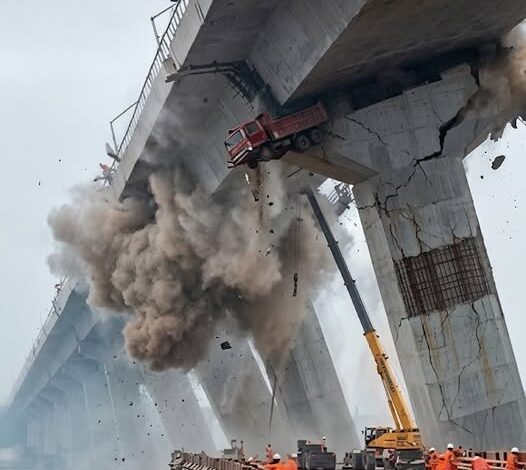
In the early hours of Monday morning, a terrifying seismic event shattered the silence across a vast stretch of Asia, plunging millions into chaos as a powerful 7.7-magnitude earthquake ripped through the mountainous terrain bordering Myanmar, northern Thailand, and southern China. The shockwave, which struck while the vast majority of the population was sound asleep, turned the peaceful pre-dawn hours into a desperate fight for survival. Because the quake occurred at such a shallow depth, the energy was released with devastating intensity, causing the earth to heave and buildings to shudder across hundreds of miles, leaving a trail of destruction that is only now beginning to be fully understood.
The geography of the affected region, characterized by rugged peaks and isolated rural villages, has created a nightmare scenario for first responders. In many of the hardest-hit communities, the infrastructure that connects them to the outside world—narrow mountain roads, precarious bridges, and communication lines—has been decimated. This isolation has meant that for the first several hours after the tremor, many families were left to fend for themselves amidst the rubble of their homes. As the sun began to rise over the region, the true scale of the catastrophe became horrifyingly clear. Collapsed homes, buckled highways, and the debris of fallen public buildings have blocked access routes, forcing rescue teams to navigate treacherous terrain on foot just to reach the most vulnerable survivors.
Local authorities and hospitals have been inundated with a surge of injured residents, some suffering from crush injuries while others are grappling with the psychological trauma of the event. Field clinics are being rapidly established, with doctors and nurses working around the clock to provide life-saving care under incredibly difficult conditions. The challenge is compounded by the threat of aftershocks, which have continued to rattle the region, further destabilizing already compromised structures and heightening the anxiety of a population that is now terrified to return indoors.
The shallow epicenter of the earthquake is a significant factor in the severity of the damage. When a quake is shallow, the seismic energy does not dissipate as much before reaching the surface, resulting in stronger, more violent ground motion. This is particularly catastrophic in regions where many dwellings are constructed from traditional materials that are not equipped to withstand the violent lateral forces of such a massive tremor. Across the border regions, reports are flooding in of entire neighborhoods flattened or severely compromised, with families huddling in the open, fearful of what the next hour may bring.
Governments in the affected nations have mobilized emergency disaster response units, deploying search-and-rescue teams, heavy machinery for debris removal, and medical supplies to the front lines. International aid organizations are also beginning to coordinate their efforts, preparing to funnel resources into the most inaccessible areas. However, the sheer logistical hurdles are immense. In many locations, power grids have failed completely, leaving entire districts in the dark and hindering efforts to coordinate rescue operations. The lack of electricity has also meant that information is slow to reach authorities, creating a dangerous information vacuum where the needs of the most remote villages remain unknown.
The primary focus at this stage remains the search for survivors. Every passing hour is critical, and the teams on the ground are working with an urgency that underscores the gravity of the situation. Trained search dogs, thermal imaging equipment, and structural engineers are being deployed to evaluate the stability of surviving buildings, ensuring that the rescue teams can operate safely. Simultaneously, local volunteers have formed chains to move rubble by hand, an act of communal resilience that has become the hallmark of the response efforts so far.
Beyond the immediate search and rescue, the long-term impact of this earthquake is already beginning to weigh on the region. The destruction of agricultural land, loss of livestock, and the displacement of thousands of people present a secondary crisis that will require sustained intervention. Families who have lost everything now face the daunting reality of rebuilding their lives in a region where economic resources are already stretched thin. The displacement of rural populations also raises concerns about sanitation and the spread of disease in the makeshift camps that have sprouted in the aftermath.
Public safety officials are working tirelessly to disseminate information, urging residents to avoid any buildings that show signs of structural stress and to stay clear of areas prone to landslides, which are common in this mountainous geography. They have warned that recovery efforts will likely take days, if not weeks, as emergency crews struggle to clear the primary arteries of transportation. The coordination between China, Myanmar, and Thailand has been a rare bright spot in a dark situation, with nations setting aside geopolitical tensions to facilitate the passage of aid across borders and ensure that medical teams can reach those in need regardless of national jurisdiction.
As the world watches the unfolding situation, the stories of survival and loss continue to emerge from the debris. Despite the overwhelming destruction, the resilience of the local communities remains the defining narrative. From neighbors pulling one another from the dust to the selfless dedication of local healthcare workers, the collective spirit of those caught in the quake is what is driving the recovery. The coming days will be filled with the difficult task of accounting for the missing and assessing the total cost of the tragedy. For now, the priority remains unwavering: to save as many lives as possible and to provide comfort to those who have been left with nothing but the clothes on their backs. The road to recovery for these shattered communities will be long, but for the moment, the entire region is holding its breath, hoping for miracles in the rubble.