AI Shows What Lisa Rinna Might Look Like Without Cosmetic Procedures – Photos Included
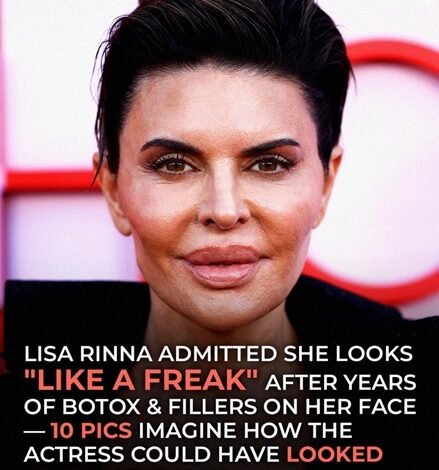
For decades, Lisa Rinna has occupied a unique space in Hollywood where beauty, transformation, and public conversation constantly overlap. Unlike many celebrities who carefully guard the details of their appearance, Rinna has often approached the topic with openness, humor, and a willingness to engage directly with public curiosity. Her evolution from soap opera actress to reality television personality and beauty entrepreneur has made her one of the most visually analyzed figures in modern entertainment.
From her earliest days in Hollywood, Rinna carried a natural screen presence that made her instantly recognizable. In her breakout years on daytime television, particularly her role as Billie Reed on “Days of Our Lives,” she embodied the classic soap opera aesthetic of the era—soft glam, expressive features, and a look that was still relatively untouched by the more exaggerated beauty trends that would come later. At that stage, her appearance reflected a rising actress finding her identity in a highly visual industry.
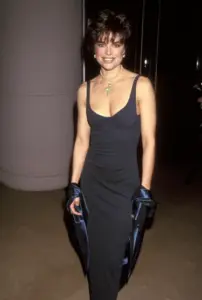
As the 1990s progressed, Rinna’s style began to sharpen in both fashion and facial presentation. The era’s red carpet culture favored bold hair, strong makeup, and distinctive silhouettes, and she adapted seamlessly. Her short, voluminous haircut became a defining feature, framing her face in a way that made her expressions even more striking on camera. This period marked the beginning of her transformation from working actress to recognizable public personality.
By the late 1990s, Rinna had become firmly established as a celebrity figure beyond daytime television. Her marriage to actor Harry Hamlin further elevated her public visibility, and together they became a familiar Hollywood couple at premieres and industry events. During this time, her beauty began to take on a more defined, camera-ready edge, reflecting the evolving standards of red carpet glamour.
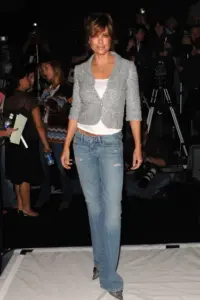
As she transitioned into the 2000s, Rinna’s look evolved again, reflecting broader trends in celebrity culture. This was an era of heightened media scrutiny, where high-definition photography and increasing tabloid attention placed greater emphasis on facial detail. Her appearance during this time showed more contouring, more polished styling, and a stronger emphasis on symmetry and definition, aligning with the early influence of cosmetic enhancements becoming more openly discussed in Hollywood.
It was also during this period that public conversation around her lips became more pronounced. What had once been simply part of her expressive facial features became a defining talking point in entertainment media. Rather than avoiding the attention, Rinna eventually leaned into it, acknowledging the fascination and later turning it into part of her personal brand identity.
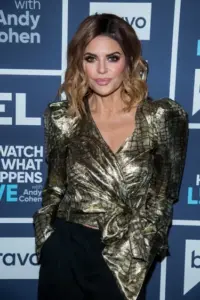
In later interviews, Rinna spoke candidly about cosmetic procedures, including moments of regret and reflection. She has openly discussed trying fillers and later reconsidering their effects, emphasizing that her experiences shaped her evolving perspective on beauty. Her honesty stood out in an industry where many celebrities often avoid direct confirmation or denial of aesthetic procedures.
She has been quoted expressing that certain cosmetic choices made her feel unlike herself, while also acknowledging that beauty standards and personal insecurity can influence such decisions. At the same time, she has consistently emphasized a belief in moderation, skincare maintenance, and the idea that subtlety often produces the most natural results.
Rinna’s approach to discussing beauty is notable because it blends self-awareness with commercial creativity. Instead of distancing herself from public fascination, she embraced it, eventually building a beauty brand that directly references her most discussed facial feature. Her lips, frequently mentioned in media coverage, became a central symbol of her entrepreneurial identity.
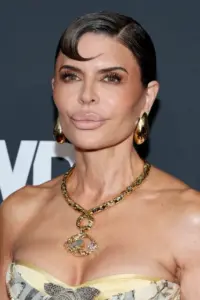
This transition from public commentary to business development reflects a broader trend in celebrity branding, where personal image becomes a foundation for product creation. In Rinna’s case, the evolution feels particularly organic because it directly connects her lived experience, public perception, and professional ventures into one continuous narrative.
In later years, especially during her time on “The Real Housewives of Beverly Hills,” her appearance became even more widely discussed due to the nature of reality television. Unlike scripted roles, reality TV places individuals under constant, unfiltered visual scrutiny. Every expression, angle, and lighting change becomes part of a larger public interpretation of identity and image.
This constant visibility amplified conversations about her look, making her one of the most analyzed personalities in reality television. However, it also reinforced her reputation as someone unafraid of public commentary, whether positive or critical. Her willingness to address topics directly rather than avoid them contributed to her long-standing relevance in pop culture discussions.
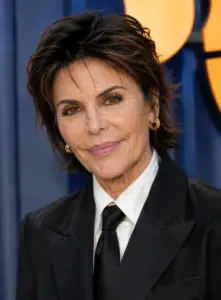
More recently, discussions around cosmetic treatments and aesthetic procedures have expanded further due to social media and digital commentary. Platforms such as Instagram and TikTok have intensified the pace at which celebrity images are analyzed, compared, and discussed. Rinna’s appearances have often been part of these conversations, reflecting both admiration and critique from online audiences.
In her own reflections, she has described certain cosmetic experiences as learning moments, emphasizing that not every procedure delivers the expected result. She has spoken about times when treatments led to temporary dissatisfaction, followed by corrective steps and recovery. These candid admissions contribute to a broader conversation about the unpredictability of aesthetic procedures and the emotional impact they can carry.
At the same time, she has also expressed satisfaction with aspects of cosmetic enhancement when done subtly and appropriately, reinforcing her belief that natural-looking results are the ideal outcome. This dual perspective—appreciation mixed with caution—has become a defining feature of how she publicly discusses beauty.
The concept of imagining Lisa Rinna without cosmetic work, often explored through digital or AI-generated visual interpretations, is inherently hypothetical. These renderings are not representations of reality but rather speculative visualizations designed to explore how facial features might appear under different aesthetic conditions. In such interpretations, her natural features are often depicted with softer contours, less pronounced volume, and a more understated overall appearance.
These conceptual images are typically used to spark conversation about beauty standards, aging, and the influence of cosmetic procedures in modern celebrity culture. They do not suggest authenticity but instead highlight the contrast between perception, enhancement, and natural variation in appearance.
What remains consistent across every stage of Rinna’s public life, however, is not a single facial feature but her willingness to engage openly with the subject of transformation. Whether discussing regret, confidence, business, or public perception, she has maintained a directness that distinguishes her from many of her peers.
Ultimately, Lisa Rinna’s story is not simply about changing appearance, but about how visibility, personality, and honesty intersect in modern celebrity culture. Her journey illustrates how public figures navigate evolving beauty standards while also shaping them through personal branding and openness.
Whether viewed through archival photographs, red carpet appearances, reality television, or speculative AI interpretations, she remains a figure defined less by any single look and more by her ongoing evolution in the public eye.