UNBELIEVABLE – Savannah Guthrie is stunned when her doorbell camera rings at midnight, a shadow looks exactly like her mother returning home, she opens the door and breaks down
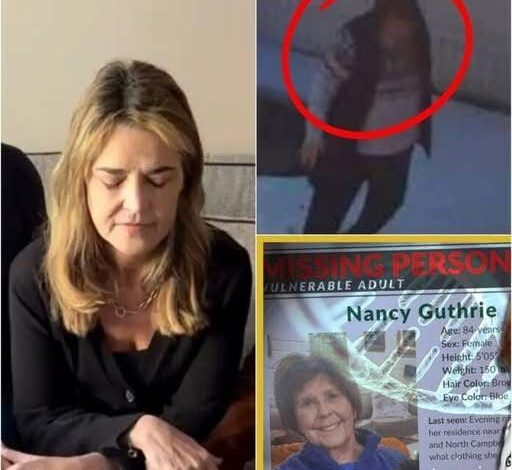
The disappearance of Nancy Guthrie has left a void that no amount of investigative rigor can fill, creating a landscape of grief where the boundaries between reality and desperate hope begin to blur. For her daughter, Savannah Guthrie, the weeks following the disappearance have been a relentless cycle of emotional exhaustion and hyper-vigilance. While the world watches the headlines, Savannah has existed in a private purgatory, often spending the hollow hours of the night reviewing security footage, searching for a flicker of movement or a shadow that might provide the missing piece of a devastating puzzle.
This psychological pressure culminated in a haunting incident shortly after midnight on a recent Tuesday. The digital chime of a doorbell camera, usually a mundane notification of a delivery or a neighbor, echoed through the silence of Savannah’s home like a thunderclap. The automated alert indicated motion at the front entrance—a signal that, in the context of a missing person case, carries a weight of expectation that is almost unbearable.
The recorded clip, later reviewed by law enforcement, captured a scene of ambiguity. In the grainy, low-resolution infrared of the night vision, a human-like silhouette stood near the threshold. The figure was a mere suggestion of a person, partially obscured by the deep shadows of the porch and the technical limitations of the camera’s sensor. There were no identifiable facial features, no distinct patterns of clothing, and no sound—only a quiet, dark shape occupying the space where a mother used to stand.
Driven by an instinct that bypassed rational thought, Savannah rushed to the door and threw it open, her heart surely hammering against her ribs with the impossible hope that the nightmare had ended. But the porch was empty. The cool night air offered no answers, only a profound and biting silence. A subsequent canvass of the property by police yielded nothing; there were no footprints in the garden beds, no signs of an intruder, and no corroborating footage from neighboring cameras that showed anyone approaching or retreating from the house during that time window.
Investigators and forensic experts have been careful to categorize the incident not as a confirmed sighting, but as a poignant illustration of the “presence hallucination”—a well-documented psychological phenomenon often experienced by those enduring extreme grief or traumatic loss. When the brain is saturated with a singular, desperate desire to see a loved one, it becomes hyper-tuned to scan the environment for familiar patterns. Under conditions of fatigue and emotional stress, the mind can take an ambiguous stimulus—a trick of light, a drifting shadow, or even a digital artifact in a video feed—and “fill in the blanks” with the image it craves most.
For a few fleeting seconds at the doorway, Savannah’s mind convinced her that Nancy had returned. The subsequent realization that the silhouette was merely a phantom of the night was a secondary trauma. Officers arriving on the scene described a woman who had reached her breaking point, collapsing emotionally as reality reclaimed the space where hope had momentarily flourished. It was a stark reminder that in cases of long-term disappearances, the primary witnesses are often the family members whose own perceptions become skewed by the agony of the unknown.
While the FBI and local authorities have retained the footage as a matter of protocol, they have officially stated that it holds no evidentiary value. It does not point to Nancy’s location, nor does it suggest the presence of a suspect. Instead, it serves as a somber case study in the human toll of an unresolved investigation. The “shadow at the door” has become a metaphor for the entire case: a silhouette of a person that remains just out of reach, visible enough to haunt the mind but too fleeting to grasp.
As the search for Nancy Guthrie continues into another month, the focus of the investigation remains bifurcated. On one hand, there is the technical hunt for the “rookie” kidnapper who allegedly made a grave error during the initial break-in at Nancy’s Tucson home. Experts have pointed to specific forensic oversights that suggest the perpetrator was not a seasoned criminal, providing a sliver of optimism that a breakthrough is inevitable. On the other hand, there is the human element—the struggle to support a family that is being slowly dismantled by silence.
The silence from the suspected kidnappers is perhaps the most chilling aspect of the mystery. Former NYPD inspectors and criminal profilers have noted that the lack of ransom demands or communication is often an ominous sign in abduction cases, yet the authorities refuse to concede to a dark conclusion. They continue to urge the public to remain vigilant, even as they encourage Savannah and her family to rely on professional psychological support to navigate the “presence hallucinations” and the crushing weight of grief-induced perceptions.
The incident at the doorbell has resonated deeply with the public, serving as a reminder that the people we see on television are not immune to the visceral, bone-deep terror of losing a parent. The image of a high-profile news anchor breaking down at her own front door after chasing a shadow is a testament to the universality of loss. It highlights the thin, fragile line between the hope that sustains a person and the despair that threatens to overwhelm them.
In the end, the investigation into Nancy Guthrie’s whereabouts remains a race against time and the fading of leads. Every tip is vetted, every “bombshell” theory from guest experts is analyzed, and every shadow on a camera is scrutinized. But for Savannah, the most painful part of the process is the realization that her own mind has become a battlefield. The shadow on the porch was not a lead, but a reflection of a daughter’s longing—a ghost created by a heart that refuses to say goodbye. As the sun rises over Tucson and the search parties head out once more, the nation watches and waits, hoping that the next time the door opens, it will be to a reality far better than the shadows of the night.