I almost left after seeing our baby, but my wife’s secret changed everything
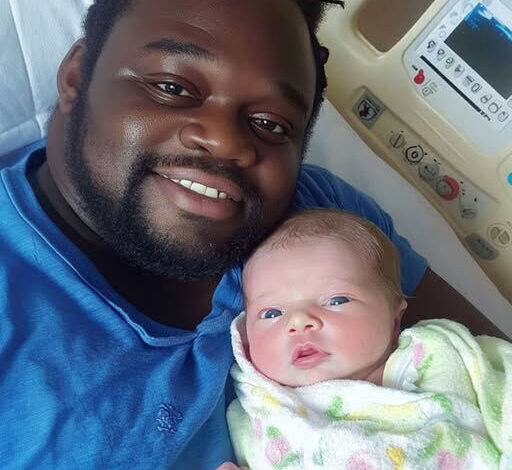
After years of praying, hoping, grieving, and wondering whether parenthood would ever happen for us, the moment should have felt sacred. I remember walking through the hospital hallway with flowers in my trembling hands, my heart beating so hard I could barely breathe. Nurses smiled as I passed. Friends had sent messages filled with congratulations. I thought I was about to step into the happiest moment of my life.
Instead, the second I entered that hospital room, my entire world seemed to collapse.
My wife sat quietly in bed, exhausted but glowing, cradling our newborn daughter against her chest. For one suspended moment, everything felt beautiful. Then I looked closer. The baby in her arms looked nothing like either of us. Not even remotely. My chest tightened instantly. My thoughts turned dark with terrifying speed. I searched desperately for familiarity — my eyes, her smile, some trace of the family I imagined — but panic drowned out reason before love had a chance to speak.
The room suddenly felt smaller, suffocating. Questions exploded in my mind faster than I could control them. Had my wife betrayed me? Had years of trust, years of struggle, years of trying for a child all been built on a lie? I hated myself for thinking it, yet I couldn’t stop. Fear is cruel that way. It disguises itself as certainty. Within seconds, joy became suspicion, and suspicion became rage.
I remember my wife looking at me — not defensive, not angry, but terrified. She knew exactly what I was thinking before I even said a word. And when I finally spoke, my voice sounded like someone else’s: cold, wounded, almost unrecognizable. I demanded answers she could barely process after childbirth. I accused without saying the accusation directly. Every insecurity I’d ever buried suddenly rose to the surface at once.
But even in that chaos, there was one detail I couldn’t stop staring at.
A tiny birthmark on our daughter’s foot.
At first it seemed insignificant, barely noticeable against her delicate skin. But something about it pulled at me. I had one almost identical — same shape, same strange curve, same placement. My wife noticed me staring and quietly revealed something she had never fully explained before: a recessive genetic trait that ran deep in her family history, something carried silently through generations, capable of producing features no one expected. She had mentioned it years ago in passing, but neither of us had truly understood what it could mean.
I wanted to believe her. God, I wanted to believe her. But fear had already infected everything. My family made sure of that.
The moment they saw the baby, suspicion spread through them like wildfire. My mother’s face hardened almost immediately. My relatives whispered when they thought we couldn’t hear. Some didn’t even bother hiding it. They questioned my wife openly, treating her exhaustion and heartbreak as evidence instead of pain. Every conversation became poisoned by doubt. Instead of celebrating our daughter’s arrival, the people closest to me turned her existence into a trial.
And the worst part is that for a while, I let them.
I stood trapped between two worlds: the woman I loved and the family that had shaped me. Every day felt like being torn apart from the inside. I looked at my daughter and saw innocence — tiny fingers curling around mine, soft breaths against my chest, a helpless child completely unaware of the storm surrounding her. Yet I also heard the voices of relatives insisting I was blind, naïve, humiliated. They planted fear inside me until I no longer knew which thoughts were truly mine.
But the birthmark kept haunting me.
Every time doubt threatened to swallow me whole, my eyes returned to that tiny mark on her foot. It felt impossible to ignore, impossible to explain away. More than resemblance, it became something emotional — a thread pulling me back toward my daughter whenever suspicion tried to drag me elsewhere. Slowly, painfully, I began realizing that my anger had never really been about her appearance alone. It was about fear. Fear that my identity, my family, my understanding of my own life could vanish overnight. Fear that love itself could make me vulnerable enough to be destroyed.
Then came the night everything changed forever.
My mother thought no one was watching.
I walked into the nursery and froze. She stood beside the crib holding a damp washcloth, rubbing hard at my daughter’s tiny foot. Again and again. Trying to scrub away the birthmark as if it were dirt. As if proof itself offended her. My daughter began crying, frightened and confused, while my mother muttered under her breath that she was “looking for the truth.”
Something inside me shattered.
All the confusion, hesitation, and divided loyalty vanished in that instant. I saw clearly for the first time what this situation had become. My child — my helpless newborn daughter — was being treated like evidence in a courtroom instead of a human being deserving protection. And the people doing it were my own family.
I grabbed the washcloth from my mother’s hands and told her to leave.
Not later. Not after another argument. Immediately.
The silence that followed felt enormous. My relatives accused me of choosing my wife over blood, of turning my back on the people who raised me. But they didn’t understand something I had only just realized myself: my wife and daughter were my blood too. Family is not measured only by shared history or approval. Sometimes it’s defined by who you protect when protecting them costs you everything else.
We eventually took the DNA test, though by then my heart already knew the answer. When the results confirmed that our daughter was biologically ours, I didn’t feel triumph. I felt grief. Grief for the damage suspicion had caused. Grief for the moments of joy we lost forever because fear had entered the room before trust could survive.
Facing my family afterward was unbearable. Their apologies came quietly, awkwardly, some more sincere than others. Shame hung heavily over every conversation. My mother cried. My relatives avoided eye contact. But some wounds do not disappear simply because the truth arrives. There are words you cannot unsay. Doubts you cannot completely erase.
Still, as I held my daughter afterward, watching her sleep peacefully against my chest, one truth became clearer than anything else in my life:
Love is not proven by resemblance. Not by genetics. Not by approval from others. Love is proven in the moment you decide who you will stand beside when the entire world demands that you walk away.
And when that moment came, I chose my wife. I chose my daughter. I chose us.