Kimmel Under Fire As Controversial Melania Trump Joke Backfires Spectactularly Following Terrifying Assassination Attempt
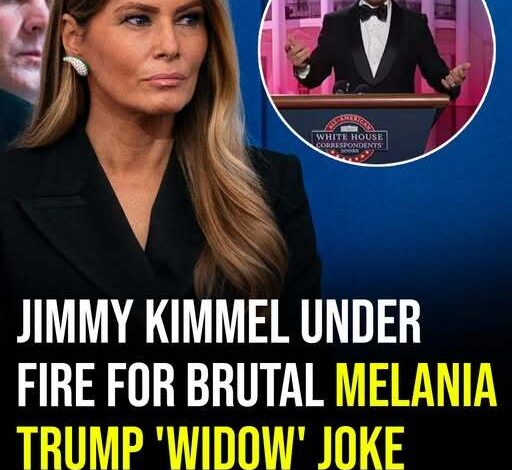
The glittering world of late-night television has been thrown into turmoil after a controversy involving Jimmy Kimmel erupted into a national debate about political rhetoric, satire, and the responsibility that comes with enormous public platforms. What began as a routine comedy monologue quickly transformed into something far heavier after a shocking shooting incident connected to the 2026 White House Correspondents’ Dinner.
According to the uploaded text, backlash intensified after a joke referencing Melania Trump resurfaced in the aftermath of the violent event at the Washington Hilton. Critics argued that the comment, initially framed as political satire, took on a far darker meaning once real violence entered the picture. The combination of a televised joke and footage of political figures being rushed away from gunfire created a disturbing contrast that many viewers found difficult to ignore.
The article describes how the incident triggered broader cultural questions about whether modern political comedy has crossed a line from critique into dehumanization. Commentators cited concerns that repeated portrayals of political figures as caricatures rather than human beings may contribute to an increasingly hostile public atmosphere. In this framing, the controversy became less about one individual joke and more about the larger media ecosystem surrounding political entertainment.
At the same time, the text emphasizes how quickly public perception can change once real-world tragedy enters the conversation. Material that may once have been dismissed as ordinary late-night humor suddenly felt different when viewed alongside images of panic, security failures, and near-fatal violence. The article argues that this collision between entertainment and reality forced audiences to reconsider the power and consequences of words delivered from influential platforms.
The uploaded piece also discusses how the controversy strengthened narratives among Trump supporters who believe the media treats the Trump family with hostility and disrespect. According to the article, Donald Trump used the backlash to reinforce his long-standing criticism of the press and entertainment industry, portraying himself as a figure constantly targeted by adversarial elites.
More broadly, the article frames the situation as a possible turning point for late-night television itself. For years, political satire has been one of the genre’s dominant formulas for ratings and viral engagement. But the text suggests that audiences may now be reconsidering whether aggressive political mockery still feels entertaining in an era where threats and violence increasingly feel real rather than theoretical.