My Husband Refused to Bring Our Newborn Home Because He Feared for His Car — But His Grandmother’s Response Changed Everything
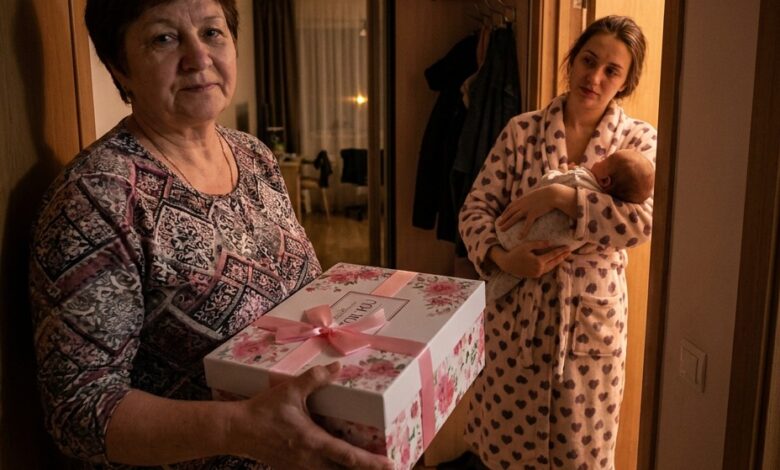
I thought bringing my newborn home would be filled with nervous excitement, sleepless joy, and the kind of exhaustion every new mother talks about. Instead, the memory that stayed with me forever began under the bright lights outside the hospital entrance. Less than twelve hours after giving birth, I stood holding my daughter’s carrier with shaking arms while my husband stared past us—not at the baby, not at me, but at the back seat of his luxury car. What should have been our daughter’s first ride home became a moment that revealed far more about my marriage than I had ever wanted to know. And by sunset, one decision about a car would unravel truths our family could no longer ignore.
The trouble began the moment we reached the hospital pickup area. I was sore, exhausted, and struggling to walk after delivery, carrying our daughter and balancing the diaper bag while Logan stood beside me empty-handed. At first, I assumed he was looking for the car or checking traffic. Instead, he looked at the infant carrier and quietly said he was not putting the baby in his vehicle. I laughed in disbelief, certain he had to be joking. But Logan pointed toward his leather seats and explained that spit-up, stains, or lingering smells could damage the interior. The more he spoke, the more unreal the conversation felt. I reminded him I had just given birth and could barely stand, but he dismissed my concern, insisting he had invested too much in the car to risk damaging it. Then, to my shock, he told me to call a taxi and drove away.
Humiliation hit harder than pain. A nurse found me crying near the entrance and gently brought me back inside, helping arrange transportation when my hands shook too badly to manage it alone. The taxi ride home felt endless. Every bump hurt, and halfway through the drive my daughter began to cry while I leaned awkwardly toward her carrier, trying to soothe her with exhausted whispers. I remember thinking how different I had imagined this day would be. Her first ride home was supposed to feel safe and joyful, not lonely and heartbreaking. By the time the taxi pulled into our driveway, I felt physically and emotionally drained. That was when Logan’s grandmother, who lived downstairs in the family home, stepped onto the porch and immediately realized something was wrong.
She listened quietly while I explained everything—the hospital, Logan’s refusal, the nurse, and the taxi ride. She never interrupted or defended him. Instead, she carried the diaper bag inside, made me sit down with the baby, and told me not to apologize for someone else’s failure. Her calm frightened me more than anger would have. Hours later, Logan returned home smiling as though nothing serious had happened, twirling his car keys and asking to hold the baby. But waiting for him in the living room was his grandmother, standing beside a cardboard box filled with documents he clearly recognized. Inside were financing papers and ownership records revealing something Logan had conveniently ignored for years: the luxury car he prized so fiercely did not fully belong to him. Because she had co-signed, covered part of the costs, and kept legal control until he proved himself responsible, she had every right to make decisions about it—and she already had.
Outside, a flatbed truck waited while an old family minivan sat in the driveway as its replacement. Logan’s grandmother calmly informed him she had arranged to sell the car and return the money I had contributed from my inheritance before the purchase. For the first time all day, he looked genuinely shaken. But her lesson was never truly about the vehicle. She told him plainly that if he wanted to remain part of the household, he would drive the van, handle baby appointments, install the car seat, and learn what real responsibility looked like. Watching him stand silently while his prized car disappeared was unforgettable, but an even harder realization settled inside me later that night. The deepest wound was not that he valued the car more in that moment—it was that he believed he could abandon his wife and newborn, then return expecting life to continue untouched. His grandmother gave him consequences, but life gave me clarity. Sometimes people reveal what matters most to them without meaning to. And when they do, it becomes impossible to unsee.