I Gave My Last 10 Dollars To A Homeless Man And Decades Later He Changed My Life
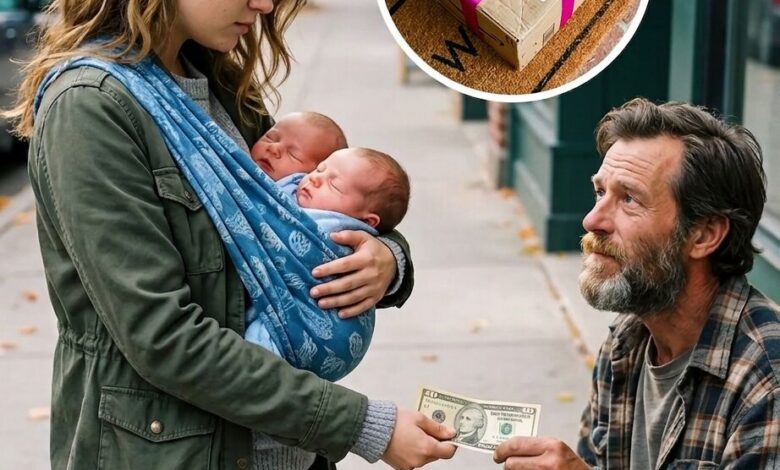
I became a mother long before I was ready for adulthood.
At just seventeen years old, I gave birth to twin daughters. Overnight, my world changed completely. I had no savings, no stability, and no clear plan for the future. Every day felt like a struggle to stay afloat. The only thing I truly believed in was education. I convinced myself that if I could somehow finish school, I might eventually build a better life for my children.
Unfortunately, my parents didn’t share that belief.
To them, becoming pregnant so young meant I had thrown away every opportunity I once had. Rather than helping me, they made it clear that I would have to face the consequences alone. Within days, I found myself trying to survive without a home, financial support, or anyone willing to step in and help.
By the end of 1998, my life had become a constant balancing act. I attended classes during the day, cared for two infants around the clock, and accepted any work I could find. The girls’ father had disappeared long before they were born, refusing any responsibility for them.
Most evenings, I worked at the university library.
Lily and Mae spent countless hours sleeping against my chest in an old baby carrier I had purchased secondhand. I survived on instant noodles, cheap coffee, and determination. Exhaustion became my normal state.
One rainy night in Seattle, after finishing a late shift, I checked my pocket and realized I had exactly ten dollars left.
That money represented everything I had.
It would cover transportation and perhaps a few groceries if I spent carefully.
As I stepped outside into the cold rain, holding my daughters close beneath a worn umbrella, I noticed an elderly man sitting alone beneath a rusted shelter across the street.
He looked miserable.
His clothes were drenched, and his entire body shook uncontrollably from the cold. What struck me most was that he wasn’t asking anyone for money. He wasn’t speaking. He simply sat there, defeated and forgotten by the world around him.
Something inside me refused to walk away.
Before I could reconsider, I crossed the street.
I pulled the ten-dollar bill from my pocket and placed it in his hand.
“Please get yourself something warm,” I said softly.
The man looked up at me, surprised.
For reasons I still cannot explain, I asked his name.
“Arthur,” he answered quietly.
I introduced myself and pointed to my daughters sleeping peacefully beside me.
“Nora,” I said. “And these are Lily and Mae.”
Arthur repeated our names slowly, as if he wanted to remember them forever.
Afterward, I walked home through the rain because I could no longer afford bus fare.
The journey felt endless.
By the time I reached my apartment, I was soaked, freezing, and questioning my decision. I stared at my empty wallet and wondered whether kindness was a luxury reserved for people with more than I had.
Life remained difficult for many years after that.
I worked wherever I could find hours. During the day I served customers in a diner. At night I returned to the library. Sleep came only in short moments whenever the girls were resting.
Then someone extraordinary entered our lives.
Mrs. Greene.
She lived in the same building and often watched me rushing between responsibilities.
One day she stopped me and said, “Leave those girls with me whenever you need to work.”
When I offered to pay her, she refused immediately.
“Finish school,” she said. “That’s all the payment I need.”
Her generosity changed everything.
Thanks to her support, I completed my education one course at a time. Years passed. Lily and Mae grew older, and eventually I secured a stable office job. We moved into a better apartment and slowly built a life that felt secure.
For a while, I thought the hardest days were behind us.
Then life surprised me again.
Nearly three decades after that rainy night, my daughter Mae became seriously ill. What initially appeared to be a minor health issue quickly turned into something much more serious. Hospital visits became frequent. Treatments multiplied. Medical bills arrived faster than I could pay them.
No matter how many extra hours I worked, the debt kept growing.
I felt myself slipping back into the same fear and uncertainty I had experienced as a teenager.
One morning, while staring helplessly at another overdue bill, a stranger appeared at my office.
He wore a dark suit and carried a small wooden box.
“Are you Nora?” he asked.
When I nodded, he placed the box on my desk.
“My name is Carter,” he said. “I’m here regarding Arthur’s estate.”
For a moment I couldn’t breathe.
Arthur.
I had not seen him since that rainy night decades earlier.
Carter explained that Arthur had spent years trying to find me.
With trembling hands, I opened the box.
Inside was an old leather journal.
The first entry immediately caught my attention.
“November 12, 1998. Met a young woman named Nora. She had twin babies. She gave me ten dollars. Never forget.”
Tears filled my eyes.
As I turned the pages, I discovered that Arthur had written about me repeatedly over the years. Time after time he reminded himself to find me.
According to Carter, Arthur had once owned a successful machining company before losing everything. After years of hardship, our brief encounter had given him something he desperately needed—hope.
He eventually rebuilt his life.
He found steady work.
He secured housing.
And through it all, he never forgot the stranger who had shown him kindness when she herself had almost nothing.
Then Carter explained something even more astonishing.
A few years earlier, Arthur had found an online fundraiser connected to Mae’s medical treatment. He recognized my face immediately.
Knowing his own health was failing, he updated his will.
“Take another look inside the box,” Carter said.
I reached in and found a cashier’s check.
The amount printed on it left me speechless.
Sixty-two thousand dollars.
Every dollar Arthur had managed to save.
“He wanted you to have it,” Carter said quietly. “He believed his second chance began the night you gave him those ten dollars.”
I cried harder than I ever had before.
Not because of the money itself.
But because a simple act of kindness I had nearly forgotten had somehow traveled through decades and returned exactly when I needed it most.
The money erased Mae’s medical debt completely.
For the first time in years, I could breathe without fear.
Soon afterward, I visited Mrs. Greene and told her the entire story. I tried to repay her for everything she had done for my family, but she smiled and encouraged me to continue helping others instead.
That evening, inspired by both of them, I opened Arthur’s journal and began writing my own list of kindnesses.
A few days later, I stood beside Arthur’s grave.
I placed a ten-dollar bill near the headstone and whispered a quiet thank you.
For most of my life, I believed kindness was something people could not afford when they were struggling.
Arthur taught me the opposite.
True kindness never disappears.
It travels through time, touching lives in ways we may never expect, until one day it finds its way home.