Huntsville Space Center Explores Women’s Urinals: A Modern Shift in Hygiene, Efficiency, and Inclusive Design
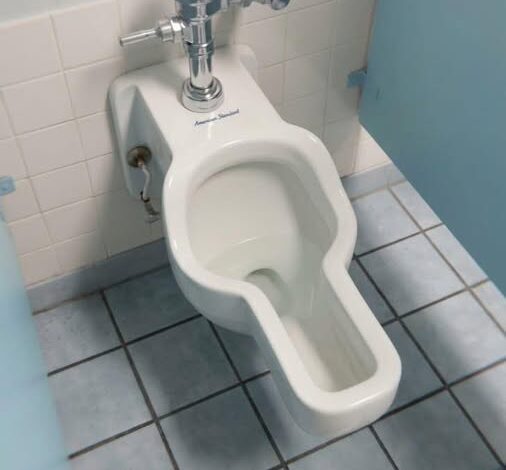
At a science museum in Alabama, a quiet experiment is drawing attention for something few people expected: the future of public restrooms.
There were no major announcements, ribbon-cutting ceremonies, or publicity campaigns. Instead, visitors simply began noticing an unusual addition inside the women’s restroom—a fixture rarely seen in public spaces and almost unheard of in the United States.
Women’s urinals.
While the idea may seem surprising at first, the motivation behind it is far less controversial than many assume. The project emerged from practical concerns that have frustrated women for generations: long restroom lines, crowded stalls, excessive water usage, and facilities that often fail to accommodate real-world demand.
In a building dedicated to innovation and space exploration, administrators began asking a simple question: if technology continues to improve nearly every aspect of modern life, why should restroom design remain frozen in the past?
The result was the introduction of specialized urinals designed specifically for women. Unlike traditional fixtures, these units allow users to remain standing or partially standing while maintaining hygiene and minimizing physical contact with surfaces. Supporters argue that this approach can significantly reduce waiting times while also improving cleanliness and efficiency.
The concept isn’t entirely new. Similar designs have appeared in parts of Europe and Asia for years, particularly at large events where restroom congestion becomes a serious issue. What makes the Alabama installation notable is its placement in a mainstream public facility, where thousands of visitors encounter it in everyday circumstances rather than as part of a temporary experiment.
For many women, one of the most appealing advantages is convenience. Long restroom queues have become such a common experience that many people simply accept them as unavoidable. Yet architects and planners have increasingly pointed out that traditional restroom layouts often create unequal wait times because women’s facilities typically require more stalls and longer usage periods.
By introducing alternative options, designers hope to address a problem that has existed for decades but rarely receives serious attention.
Environmental benefits also play a role.
Many modern urinals use significantly less water than conventional toilets. In large public venues, even small reductions in water consumption can translate into substantial savings over time. For institutions focused on sustainability, this becomes an important consideration alongside convenience and accessibility.
Of course, public acceptance remains the biggest question.
New technology is often easier to introduce than new habits. Many visitors may initially feel uncertain or uncomfortable simply because the concept is unfamiliar. Others may prefer traditional facilities regardless of potential benefits.
Experts suggest that successful adoption depends heavily on thoughtful design. Privacy, cleanliness, clear instructions, and user comfort are all essential factors. If any of these elements are overlooked, even the most efficient innovation can struggle to gain support.
Still, supporters believe the discussion itself is valuable.
For decades, restroom design has largely been treated as a fixed standard rather than something that can evolve alongside society’s needs. The Alabama project challenges that assumption by treating public facilities as infrastructure that deserves the same level of innovation applied to transportation, energy, and technology.
In that sense, the experiment is about more than a single fixture on a restroom wall.
It’s about questioning whether everyday spaces truly serve everyone as effectively as they could.
As visitors continue to react, debate, and adapt, one thing is becoming increasingly clear: sometimes the most unexpected innovations are not found in laboratories or aboard spacecraft. Sometimes they appear in the ordinary places people use every day.
And if this approach proves successful, what currently seems unusual may eventually become just another part of modern public life.