I Married a Blind Man — But On Our Wedding Night, He Revealed a Secret I Never Expected
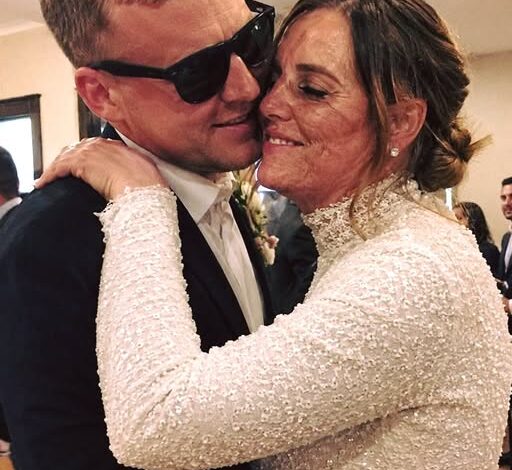
I married a blind man believing it would protect me from judgment, thinking he would never see the scars that had defined how others treated me for most of my life. For years, I had learned to hide my face and my past behind careful clothing and silence, convinced that visibility always meant vulnerability and that love required concealment to survive. On the morning of my wedding, my sister Lorie cried before I did, standing beside me in the small church room and looking at me like she remembered every painful chapter of my childhood.
She helped adjust my ivory dress with long sleeves and a high neckline, chosen not only for elegance but also for comfort, protection, and the quiet reassurance of not feeling exposed. When she called me beautiful, I hesitated, because that word had once felt impossible to belong to me after the accident that changed my life when I was only thirteen years old. I still remembered waking up in a hospital bed, my face and body burned, hearing officials say a gas accident had caused everything, leaving me alive but permanently marked and emotionally fractured.
They told me I was lucky to survive, but “lucky” never felt right when I faced a mirror and saw someone I no longer recognized, carrying both physical and emotional scars. Our parents were gone, and after different losses, my older sister Lorie became my guardian, protector, and emotional anchor, sacrificing her own youth to help me rebuild a life from broken pieces. Years later, I met Callahan in the basement of a church where he taught piano to children, guiding them patiently with a calm voice that immediately stood out in a world that often felt harsh.
He was blind, sitting beside a piano with his guide dog Buddy, speaking gently to students who struggled with timing, always encouraging them without frustration, only quiet patience and understanding. I was thirty then, cautious and emotionally guarded, having spent years believing that people only saw my scars first and my personality second, if they ever looked beyond my appearance at all. Most men I met before him either avoided me after seeing my scars or tried to hide their discomfort, leaving me convinced that real connection might never be possible for me.
But Callahan was different from the beginning, not because of blindness alone, but because he listened before judging, spoke before assuming, and treated me like a complete person without hesitation. On our first date at a small diner, I tried to warn him about my appearance, expecting distance or polite withdrawal, but instead he simply held my hand across the table. He told me he had never been interested in ordinary things, and in that moment, something inside me softened because I realized I was not being evaluated visually for the first time in years.
At our wedding, music played imperfectly as his students tried their best, filling the church with uneven notes, laughter, and sincerity that made the moment feel more real than perfection ever could. When I walked down the aisle, I felt both fear and hope, unsure if I deserved happiness but willing to take the risk of believing that love might still exist for someone like me. Callahan stood at the altar with Buddy beside him, calm and steady, turning slightly toward my voice as I approached, smiling in a way that made me feel unexpectedly safe.
When the ceremony ended, the world felt briefly lighter, as if years of shame and silence had been replaced by something fragile but real, something I was afraid to trust completely. That night, in his apartment, I guided him into the bedroom, nervous not because he could see me, but because he couldn’t, which made me confront my own fears more directly. When he touched my face, I instinctively tensed, expecting hesitation or discomfort, but his movements were slow, careful, and unexpectedly gentle as he traced the lines of my scars.
He called me beautiful, and in that moment I cried, not because I doubted him, but because I had spent so long believing I would never hear those words sincerely. Then he revealed something unexpected, telling me he had known more about my past than I realized, and that his connection to my history was deeper than I had ever imagined. He explained that he had been present near the accident years earlier as a teenager, involved indirectly in events surrounding a gas explosion that had permanently changed my life.
The revelation shattered my sense of safety because I realized that the man I trusted was not only connected to my trauma but had carried silent guilt for years. He admitted he had seen my story reported later and had struggled with the knowledge ever since, believing he could never tell me without destroying what we had built together. I left the apartment overwhelmed, needing space to process the truth, walking through the night feeling like the life I had just gained was already breaking apart again.
My sister found me and listened without judgment, offering quiet support as I tried to understand how love and truth could exist together without destroying each other completely. That night, I realized I could not make a decision based only on fear or shock, because both honesty and love mattered in ways that were now deeply intertwined. The next morning, I returned to Callahan’s apartment unsure of what I would find, but determined to face the situation rather than run from it again.
Buddy greeted me first, excited and comforting in his familiar presence, breaking some of the tension before I even reached the room where Callahan stood waiting. When he heard me, he turned toward my voice and smiled, saying he recognized me not by sight but by something deeper he described as emotional awareness and connection. We spoke honestly, confronting both pain and affection, acknowledging that trust had been damaged but not entirely destroyed, because understanding still remained between us despite everything.
In a quiet moment, laughter unexpectedly returned when a simple cooking mistake filled the kitchen with smoke, reminding us that imperfection and humanity still existed even in difficult circumstances. In that moment, something shifted again, not toward forgetting the past, but toward accepting it as part of a shared reality that neither of us could undo. I realized that healing was not about erasing scars or secrets, but about choosing whether love could still exist in the presence of truth, even when truth is painful.
And for the first time, I understood that being seen does not always come from sight, but from acceptance, patience, and the willingness to stay when everything becomes complicated.