The Morning My Son Begged Me Not to Go — And What I Discovered Changed Everything
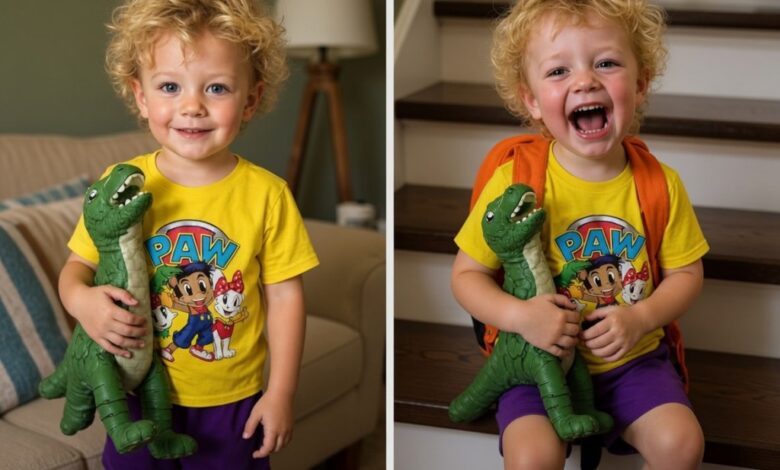
I was standing at the kitchen counter pouring my second cup of coffee when I heard it — a scream that didn’t sound like a tantrum or a bad dream. It was the kind of sound that makes a mother’s blood run cold. I dropped the mug and ran upstairs, heart hammering against my ribs. My three-year-old son Johnny was curled in the corner of his bedroom, knees pulled to his chest, sobbing so hard he could barely breathe. His small body shook with fear.
“No, Mommy,” he cried when I tried to pick him up. “Please don’t make me go. Please.”
I had never heard him sound like that before. Up until a few weeks earlier, Johnny had loved daycare. He would run through the doors every morning waving goodbye without a second glance. Something had changed, and I had been too busy, too tired, and too convinced it was just a phase to pay proper attention.
For days after that first terrifying morning, the pattern repeated. Every time I tried to get him dressed and ready, he would beg and cry until his little body trembled. He clung to my legs so tightly I sometimes had to pry his fingers loose. I told myself it was normal three-year-old behavior — separation anxiety that had simply arrived late. I reminded myself that other mothers dealt with this all the time. But deep down, a quiet voice kept whispering that this was different.
By Thursday night I was exhausted and scared. Johnny had cried himself to sleep after another meltdown. I sat on the edge of his bed watching his small chest rise and fall, wondering if I was failing him. The next morning I called his pediatrician between meetings. Dr. Adams listened patiently and said it sounded like classic separation anxiety that often peaks around age three. She suggested I stay consistent with the routine and give it another week or two. I wanted to believe her. I really did. But something about Johnny’s fear felt too raw, too specific to be ordinary anxiety.
On Friday morning I was running late for work again. Johnny was already crying before I even opened his bedroom door. When I tried to coax him into his clothes, he dropped to the floor and wrapped his arms around my ankles. I snapped. The words came out sharper than I intended.
“Johnny, stop it! We have to go. Stop crying right now.”
The silence that followed was worse than the crying. He went completely still, eyes wide with hurt and something that looked dangerously close to betrayal. In that moment I saw my own exhaustion and frustration reflected back at me, and I hated myself for it. I dropped to my knees, pulled him into my arms, and whispered that I was sorry. I asked him, really asked him this time, why he didn’t want to go to daycare.
He buried his face in my shoulder and whispered so quietly I almost missed it.
“No lunch.”
I kept him home that day. A neighbor’s teenage son came over to watch him while I went to work, and when I returned that evening Johnny was relaxed for the first time in weeks. He played with his trucks on the living room floor and even laughed at something on television. Seeing him like that made the decision for me. Whatever was happening at daycare, I wasn’t sending him back until I understood it.
The next morning I tried a different approach. I promised Johnny I would pick him up before lunch. I told him he wouldn’t have to stay for meals if he didn’t want to. He still looked nervous when we arrived, but he held my hand tightly instead of screaming. When it was time for me to leave, he looked up at me with an expression I will never forget — a mixture of fear and desperate hope that I would keep my word.
I returned two hours early and parked where I could see through the large windows of the playroom. What I saw made my stomach drop.
An older woman I had never seen before — definitely not one of the regular teachers — was sitting at a small table with Johnny. She had a plate of food in front of him and was holding a spoon to his mouth. Johnny had turned his face away, tears streaming down his cheeks. I could see his small shoulders shaking. The woman leaned in closer and said something I couldn’t hear through the glass, but her body language was clear. She wasn’t asking. She was insisting.
I was out of the car and through the door before I even realized I had moved.
The woman looked startled when I appeared. Johnny scrambled off the chair and ran straight into my arms, burying his face against my neck. I held him tightly while I asked the woman who she was and what she thought she was doing. She stammered something about making sure the children finished their lunch, but I wasn’t listening anymore. All I could feel was my son trembling in my arms and the sick realization that this had been happening for weeks while I told myself everything was fine.
I didn’t raise my voice. I didn’t need to. I simply told the director I was withdrawing Johnny immediately and that I expected a full explanation of who that woman was and why she had been left alone with the children. Then I carried my son out of that building and didn’t look back.
That night I sat on the floor of his room while he played quietly with his dinosaurs. He kept glancing at me as if making sure I was still there. Every so often he would come over and rest his head against my shoulder for a few seconds before returning to his toys. I watched him and felt something shift inside me — a fierce, protective clarity I hadn’t felt in a long time.
I had spent weeks trying to convince myself that his fear wasn’t real, that I was overreacting, that other mothers handled these things better. I had almost forced him to stay in a place where someone was making him feel small and powerless. The guilt sat heavy in my chest, but underneath it was something stronger — the determination that it would never happen again.
Johnny eventually crawled into my lap without saying anything. He didn’t need to. We sat together in the quiet room while the evening light faded outside his window. For the first time in weeks, he wasn’t shaking. He simply leaned against me and let me hold him.
I knew there would be difficult conversations ahead with the daycare and possibly with other parents. I knew I would have to figure out new childcare arrangements and deal with the practical fallout of pulling him out so suddenly. But in that moment, none of it mattered as much as the small boy in my arms who had tried so hard to tell me something was wrong.
He had begged me not to go. He had used every word his three-year-old vocabulary could manage. And I had almost missed it.
I pressed my cheek against the top of his head and closed my eyes. Whatever came next, one thing was certain: I would never again ignore that kind of fear in my child. I would never again tell myself that his terror was just a phase or that I was too busy to listen properly. The morning he begged me not to go had already changed something fundamental between us. From now on, I would trust his voice — even when it was small, even when it was shaking, even when it would have been easier to look the other way.
Because the next time he needed me to hear him, I would be ready.