My Paternal Parent Deserted My Maternal Parent Over the Blemishes on Her Countenance Following a Blaze – Two Decades Later, He Returned, and I Ensured He Acquired His Wisdom
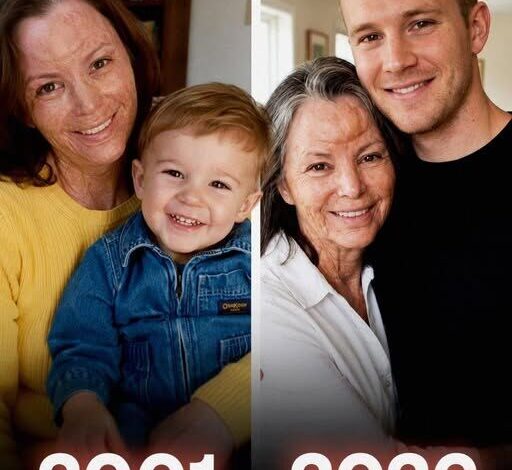
My father abandoned my mother after the worst night of her life.
For thirty years, he existed only as a story.
A name.
A ghost.
Then, on my thirty-second birthday, he appeared on our doorstep asking for help.
And I agreed to give it to him.
But only under one condition.
To understand why, you need to understand the woman who raised me.
I am alive because of my mother.
Not in the sentimental way people usually mean it.
Literally.
When I was two years old, our house caught fire in the middle of the night.
A propane leak in the kitchen triggered an explosion powerful enough to shake the entire structure. Flames spread rapidly through the house while smoke filled every room.
My mother woke to the smell moments before the blast.
She could have run.
She could have saved herself.
Instead, she ran into danger.
She raced through smoke and fire, found me in my crib, wrapped me in her arms, and carried me outside while pieces of the house collapsed around her.
She saved my life.
The fire nearly took hers.
I don’t remember any of it.
What I remember are the scars.
The burns covered part of her face, traveled down her neck, and stretched across one shoulder. Growing up, I often caught strangers staring at them. Some tried to hide their curiosity. Others didn’t.
When I was old enough to ask, my mother explained it simply.
“The house caught fire. I carried you out.”
Then she changed the subject.
That was always her way.
No self-pity.
No dramatic storytelling.
No demand for sympathy.
Just facts.
But there was much more to the story.
When my father returned home from his business trip and saw her after the hospital, he didn’t thank her for saving his child.
He didn’t praise her courage.
He didn’t hold her hand.
Instead, he looked at the scars and saw something he couldn’t accept.
Years later, my mother finally admitted what he had said.
He told her he couldn’t live with the reminder.
Couldn’t look at her without seeing what happened.
Couldn’t imagine spending the rest of his life beside someone who carried visible evidence of tragedy.
Then he left.
Just like that.
No custody battle.
No birthday cards.
No phone calls.
No support.
Nothing.
One day he was a husband and father.
The next day he was gone.
My mother never spoke bitterly about him.
That almost made it worse.
Whenever I asked why he left, she would shrug and say:
“Some people leave when life stops being convenient.”
Then she would go to work.
She worked double shifts at a diner.
Saved every dollar.
Endured painful medical procedures she could barely afford.
Raised me alone.
And somehow never allowed me to feel like a burden.
When I was sixteen, I got a part-time job folding clothes in a retail store.
She was furious.
“You should be studying.”
“I am studying.”
“You don’t need to work because of me.”
“I’m working because bills exist.”
She tried arguing.
I refused to quit.
Eventually she laughed and gave up.
Years passed.
I learned everything I could about retail.
Inventory.
Customer service.
Sales.
Management.
I saved money relentlessly.
By twenty-nine, I owned a small clothing boutique.
Nothing extravagant.
But successful.
Successful enough that my mother finally stopped working herself into exhaustion.
Successful enough that she could finally breathe.
Three years later came my thirty-second birthday.
We celebrated quietly at her house.
Burgers on the grill.
Corn.
Lemonade.
Just the two of us.
The kind of evening that feels peaceful because nobody is trying to impress anyone.
Then someone knocked on the door.
My mother looked up.
“Expecting anyone?”
“No.”
I walked inside and opened it.
The man standing there looked like life had spent years beating him down.
His clothes were worn.
His shoes were falling apart.
His face looked hollow.
Yet I recognized him instantly.
I had his eyes.
My mother stepped behind me and froze.
The color drained from her face.
The man swallowed hard.
“Hello,” he said.
Then he looked directly at me.
“Son.”
The word felt strange.
Unnatural.
Like hearing a foreign language I somehow understood.
“What do you want?” I asked.
His gaze shifted toward my mother.
For the first time, he looked genuinely ashamed.
“I need help.”
Of course he did.
People like him always come back when they need something.
He explained everything.
The second marriage had failed.
Money was gone.
Debt had piled up.
Friends had disappeared.
Assets had been sold.
He had nowhere left to go.
Then he said the one sentence that almost made me laugh.
“I didn’t know where else to turn.”
My mother turned away immediately.
She wasn’t interested.
Neither was I.
Yet I kept listening.
Maybe because I had imagined this moment for years.
Maybe because part of me wanted answers.
Or maybe because I wanted him to finally face what he had abandoned.
When he finished speaking, I looked at him for a long time.
Then I said something neither of them expected.
“I’ll help you.”
My mother’s head snapped toward me.
“What?”
“I’ll help.”
Relief flooded his face instantly.
Too quickly.
Then I continued.
“But I have one condition.”
The relief vanished.
“What condition?”
I looked him directly in the eyes.
“Tomorrow morning, you’re coming with us.”
“Where?”
“Back to the place where you left us.”
The next day we drove out to the old property.
The original house was long gone.
In its place stood a small rental home with a weathered porch and a leaning fence.
An elderly man named Walt owned the property now.
When he learned who we were, something unexpected happened.
He disappeared into his garage and returned carrying an old metal tin wrapped in faded cloth.
My mother’s face changed immediately.
“I buried that,” she whispered.
Years earlier, after my father abandoned her, she had returned to the burned property one final time.
Among the ruins she found photographs, memories, and a letter she had written but never sent.
Unable to keep them.
Unable to throw them away.
She buried them.
And somehow they survived.
Inside the box were old photographs.
Recipe cards.
Baby pictures.
And one sealed envelope addressed to my father.
I handed it to him.
“Read it.”
He opened it slowly.
The letter wasn’t angry.
It wasn’t cruel.
It wasn’t even emotional.
It simply stated the truth.
She wrote that her son was alive because she carried him through fire.
She wrote that if he could no longer love her, he still had a responsibility to love the child whose life she saved.
And she wrote one final sentence.
She refused to spend her life begging a coward to become a decent man.
When he finished reading, he sat down heavily on the porch.
For the first time since arriving, he cried.
Not dramatically.
Quietly.
Like someone finally forced to look at a reflection he had avoided for decades.
“I’m sorry,” he whispered.
Maybe he meant it.
I think he did.
But remorse and repair are not the same thing.
That’s when I revealed my condition.
“You want help?”
He nodded.
“Then earn it.”
Walt pointed out repairs around the property.
Broken boards.
Damaged posts.
A sagging fence.
Rotting wood.
I paid for the materials.
Walt supplied the tools.
My father supplied the labor.
For an entire week he worked.
Not symbolically.
Actually worked.
Sweated.
Hammered.
Lifted.
Fixed.
Built.
Every board he replaced felt like a debt finally being acknowledged.
Every nail driven into place felt like an admission of responsibility.
For years he had escaped consequences.
Now he couldn’t.
My mother avoided the property at first.
Then one day she arrived carrying two glasses of iced tea.
She placed one beside him.
Said only one sentence.
“Rotten wood doesn’t get stronger because you cover it.”
Then she left.
Later that week, another discovery emerged.
Buried near the old foundation was a carved piece of wood.
My mother recognized it immediately.
Part of my crib.
Handmade by my grandfather.
One of the few surviving pieces from the house that burned down.
She ran her fingers across the carved star.
“I thought it was gone forever.”
By the end of the week, the repairs were complete.
The porch stood strong.
The fence stood straight.
The property looked better than it had in years.
My father looked exhausted.
Older.
Smaller somehow.
“What happens now?” he asked.
I looked at him.
“Now you get one month.”
He frowned.
“One month?”
“Apartment above my shop. Food. Time to find work.”
His eyes widened.
“That’s it?”
“That’s it.”
“I’m your father.”
I nodded.
“Biologically, yes.”
For a long moment, nobody spoke.
Then he looked toward my mother.
“I know I don’t deserve another chance.”
“No,” she replied calmly.
“You don’t.”
And somehow that honesty felt more merciful than any lie.
A few days later, I took the carved crib piece to a craftsman.
He mounted it on a wooden display board.
Beneath the carved star, I had a phrase engraved:
“Worthy before the world said otherwise.”
Today it hangs inside my boutique.
Customers often stop and look at it.
Most never ask what it means.
Those who do receive a simple answer.
It’s a reminder.
A reminder that survival is not enough.
That love requires action.
That regret is not the same as repair.
And that some people spend years apologizing for what they destroyed when they should be spending those years rebuilding it.
Standing in my boutique, looking at that carved star, I finally understood why I created that condition.
Not to humiliate him.
Not to punish him.
Not even to make him suffer.
I did it because too many people mistake guilt for redemption.
They believe feeling bad is the same as making things right.
It isn’t.
Feeling sorry changes nothing.
Repair changes everything.
And before my father could receive help, he needed to understand the difference.