My Stepmother Took My Late Mother’s Veil During My Wedding Ceremony — But What My Father Did Next Left the Entire Church Speechless
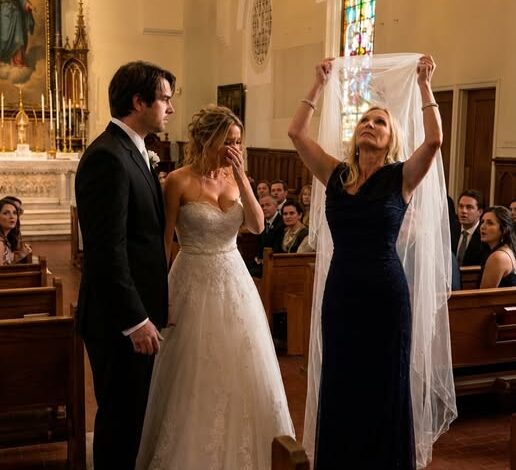
Just moments before I was supposed to say “I do,” I thought the biggest challenge would be holding back tears. The church was full, my fiancé was smiling at me, and I was wearing the one thing that connected me to my late mother on the most important day of my life—her wedding veil. For nearly a decade, I had carefully protected it after losing her to illness when I was nineteen. It wasn’t just lace and pearls; it was one of the few pieces of her I still had. But in the middle of my wedding ceremony, something happened that left the entire church frozen in disbelief and turned a joyful moment into a family confrontation no one saw coming.
My father remarried several years after my mother’s passing, and while I genuinely tried to build a relationship with my stepmother, Regina, there was always tension whenever my mother was mentioned. Over time, Regina became unusually focused on the veil. She frequently commented that she should have been allowed to wear it at her own wedding and suggested it would have been a beautiful symbol of family unity. I always politely declined. As my wedding approached, her comments became more frequent, but I never imagined she would actually act on them. Looking back, the warning signs were there, but I dismissed them because I wanted peace and believed everyone would respect the significance of the day.
Halfway through the ceremony, I suddenly heard movement behind me. Before I could react, Regina stepped into the aisle, removed the veil from my head, and placed it on her own. The room fell completely silent. Guests stared in disbelief as she calmly announced that the veil should have been hers years ago. For a moment, I couldn’t process what had happened. My bouquet slipped from my hands, and I stood frozen while family members gasped and whispered. My fiancé immediately stepped beside me, but before anyone else could respond, my father slowly stood from his seat. The expression on his face wasn’t anger—it was disappointment mixed with something final.
What happened next stunned everyone even more than Regina’s interruption. My father revealed that earlier that morning he had discovered messages showing Regina had been planning the incident. He had hoped she would reconsider, but seeing her carry it out in front of family and friends made the situation impossible to ignore. Standing in the middle of the church, he calmly told her their marriage was over and that he had already begun making arrangements for them to separate. The church remained silent as Regina realized nobody was defending her actions. For the first time, the attention she had worked so hard to capture was showing everyone exactly who she had become.
After Regina left, the ceremony paused while my bridesmaids carefully repaired the veil and secured it back into my hair. It wasn’t perfect anymore—one small section had been damaged—but I decided to continue. I wasn’t going to allow someone else’s actions to define my wedding day. We restarted our vows, and by the time we were pronounced husband and wife, there wasn’t a dry eye in the room. Months later, the veil was professionally restored, though a tiny repaired section remains visible if you know where to look. I never removed it. That small imperfection reminds me of something important: meaningful things can survive difficult moments. The veil is still my mother’s, still mine, and now it carries one more story—a reminder that sometimes the truth reveals itself when everyone is finally forced to see it.