How Jim Reeves Transformed Country Music With One Single Phone Call
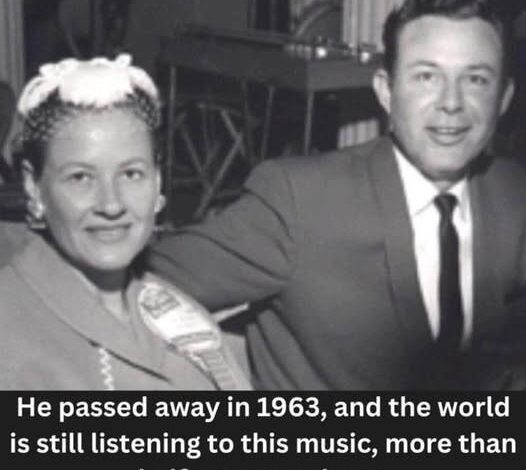
The year was 1960, and the world of music was about to be shaken to its core by a single, velvety voice. Jim Reeves, the man known as Gentleman Jim, released a track that did the impossible: it obliterated the invisible walls between raw, rural country and the polished, radio-friendly pop charts. It was a song born from a whispered conversation in a smoky bar, a desperate plea caught on a telephone line that would eventually define an entire generation of sound. This is the story of how a simple melody became a cultural phenomenon and changed the trajectory of Nashville forever.
Before the release of He’ll Have to Go, Jim Reeves was already a respected name, but he was largely confined to the traditional country circuits. A former radio announcer born in the heart of Texas, Reeves possessed a vocal texture that was often described as pure velvet. He had an innate ability to balance the sophisticated, polished requirements of pop production with the deep, aching vulnerability that serves as the lifeblood of country music. By the time he stepped into the studio to record this track, he was hungry for a sound that could reach beyond the regional borders of the South and speak to a global audience.
The genesis of the song is as intimate and human as the lyrics themselves. It was penned by the songwriting duo Joe and Audrey Allison, but the true inspiration struck Joe Allison while he was sitting in a bar, eavesdropping on a nearby conversation. He overheard a man on a payphone, his voice low and riddled with desperation, begging his lover to hold the receiver closer. It was a moment of profound longing, a scene of a relationship fraying at the edges, being held together by nothing more than copper wire and a shared history. Allison captured that specific vulnerability in the now-iconic opening line: “Put your sweet lips a little closer to the phone.”
When Reeves entered the studio, he brought an interpretative depth to the lyrics that elevated them from a simple story of heartbreak to a universal anthem of yearning. Under the subtle, expert production of the legendary Chet Atkins, the song was stripped of excessive ornamentation. Atkins understood that the power of the track lay entirely in the restraint of the instrumentation, allowing Reeves’ baritone to occupy the center of the sonic landscape. Reeves didn’t just sing the song; he occupied it, delivering the lines with a perfect balance of masculine confidence and devastating emotional exposure. He didn’t need to shout to be heard; his velvet tone commanded total silence from the listener.
The impact of the record was immediate and explosive. It didn’t just top the Billboard Country Chart; it crossed over to the Pop Chart with unprecedented momentum, peaking at number two. This crossover success was a watershed moment for the industry, effectively proving that country music could be accessible to mainstream audiences without sacrificing its emotional authenticity or its rural soul. It was a triumph of the Nashville Sound, a production style characterized by polished arrangements, smooth vocal layering, and a sophisticated, orchestral sheen. Reeves became the primary architect of this new aesthetic, setting a blueprint that would be utilized by countless artists for decades to come.
With the song’s success, Jim Reeves evolved into an international ambassador for country music. He began touring globally, bringing a genre once considered strictly American to new audiences in Europe, South Africa, and beyond. He looked the part of an international star—polished, impeccably dressed, and always maintaining that signature “Gentleman Jim” persona that bridged the gap between a rugged country performer and a suave crooner. He showed the world that country could be intellectual, emotional, and undeniably chic, forever altering how the genre was perceived by critics and fans alike.
Tragically, the arc of Reeves’ career was cut short in 1964. At the age of forty, in the prime of his life and at the height of his international influence, he died in a plane crash. The loss left a void in the industry that has arguably never been fully filled, but the legacy of his music, particularly the enduring power of He’ll Have to Go, ensured that he would never truly leave us. The song remained a staple on radio stations and home jukeboxes for years, a timeless touchstone for anyone who has ever felt the sting of a failing romance. His posthumous induction into the Country Music Hall of Fame was merely a formal recognition of a status he had already earned in the hearts of millions.
The influence of that 1960 hit continues to resonate today. The simple, raw emotion wrapped in a timeless melody remains a blueprint for crossover artists who seek to blend genre sensibilities without losing their authenticity. Modern superstars like Taylor Swift, Shania Twain, and Keith Urban have all walked through doors that Gentleman Jim Reeves effectively kicked open. He proved that music, when it touches on the universal themes of longing and vulnerability, can transcend the boundaries of category or geography.
Today, more than six decades later, He’ll Have to Go is still frequently featured in film, television, and advertising, introducing the velvet baritone to new generations who find themselves captivated by its stark, honest beauty. It is a reminder that the most powerful art is often the most restrained. Jim Reeves didn’t need a wall of sound or pyrotechnics to reach his audience; he only needed a microphone, a telephone line, and the human heart. He turned a desperate moment in a bar into a movement, leaving behind a classic that refuses to age. While the music industry has changed rapidly since 1960, the core of Reeves’ impact remains undisturbed—a testament to the fact that when honesty meets a perfect melody, the result is nothing short of eternal.