SHOCKING LEAK EXPOSES ROGUE DIPLOMAT CAUGHT IN TANGLED WEB OF DECEIT AND FOREIGN INFLUENCE\
The walls of the State Department are crumbling from within as a catastrophic security failure has finally been dragged into the harsh light of day. Behind the polished mahogany doors of American diplomacy, a trusted official was allegedly living a double life that threatened to compromise the very foundations of national security. Was this a simple lapse in judgment, or the beginning of a coordinated infiltration by our greatest geopolitical adversary? The truth is far more chilling than anyone dared to imagine, and the fallout from this explosive revelation is already sending shockwaves through the highest echelons of government power.
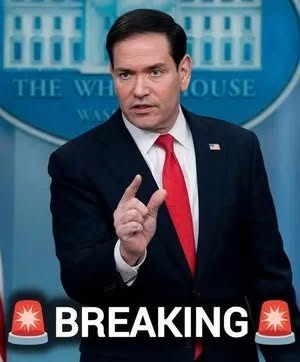
In a move that has sent tremors through the halls of Washington, Senator Marco Rubio has stepped forward to address the fallout following the abrupt dismissal of a high-ranking U.S. State Department foreign service officer. The individual, identified in recent reports as Daniel Choi, found his career permanently derailed after an internal investigation uncovered a pattern of undisclosed foreign contacts that flagrantly violated mandatory security reporting obligations. This wasn’t merely a clerical error; it was a profound breach of the sacred trust placed in those tasked with representing American interests on the global stage.
The investigation into Choi’s conduct reached a breaking point after undercover footage surfaced, capturing the official in a compromising and deeply concerning situation. In the secret recordings, Choi was allegedly heard discussing an intimate, ongoing romantic relationship with a woman whose family reportedly maintains deep, systemic ties to organizations directly affiliated with the Chinese Communist Party. For those operating within the sensitive sphere of international relations, such a connection is not just a personal matter—it is a glaring, neon-lit red flag that demands immediate scrutiny.
According to internal documentation and subsequent reports, Choi acknowledged during the inquiry that he had completely failed to disclose the existence of this relationship to his superiors at the Department of State. This admission is critical, as federal personnel regulations are crystal clear: employees serving in sensitive roles are under an absolute, non-negotiable mandate to report any close or ongoing associations with foreign nationals that could potentially manifest as security vulnerabilities. These policies are the primary barrier between national interests and the relentless efforts of foreign intelligence services to cultivate assets, extract sensitive information, or exert leverage over individuals holding positions of influence.
The ramifications of this failure are significant. Officials within the administration have emphasized that these strict disclosure protocols are not meant to infringe upon the personal lives of employees, but rather to mitigate the severe risks associated with outside influence, potential conflicts of interest, and the exploitation of vulnerabilities that could compromise the integrity of U.S. foreign policy. By choosing to conceal these ties, Choi effectively bypassed the oversight mechanisms designed to protect the agency from precisely this type of compromise.
Following a comprehensive internal review, the recommendation for separation from service was swift and final. Public statements issued by the department have framed the decision as a cornerstone of a broader, aggressive campaign to restore accountability and strengthen rigorous oversight across all agencies responsible for the execution of U.S. foreign policy. This case serves as a stark warning to the intelligence and diplomatic communities that the era of lax enforcement regarding foreign associations is officially over.
The episode has predictably ignited a fierce debate surrounding the efficacy and rigor of current counterintelligence practices. Experts who monitor these threats have long contended that an individual’s personal life—specifically their romantic relationships, complex financial entanglements, and off-the-books social affiliations—is the primary theater where national security risks are cultivated. When an official fails to provide transparency, they create an opening for foreign actors to exploit human frailties, potentially turning an otherwise dedicated servant of the state into an unwitting—or willing—participant in a larger geopolitical game.
Crucially, however, both administration officials and investigators have pointed out that at this stage, there is no public evidence to suggest that the relationship directly resulted in acts of espionage or the compromise of classified intelligence. The focus of the dismissal remains centered squarely on the flagrant, deliberate violation of reporting requirements. This distinction is vital; it highlights a culture of non-compliance that is considered just as dangerous as active betrayal. When security protocols are treated as optional suggestions rather than life-or-death requirements, the entire apparatus of the state becomes susceptible to erosion.
The case of Daniel Choi has now transformed into a rallying point for those calling for a top-to-bottom overhaul of security procedures for sensitive government positions. It has opened a window into the often-opaque world of diplomatic personnel management, forcing a long-overdue discussion on how institutions should identify, monitor, and react to the intersection of private life and public duty. For lawmakers like Senator Rubio, this is not just an isolated incident involving one rogue officer; it is symptomatic of a larger, systemic need for vigilance in an era of heightened global tension.
As the dust settles, the State Department faces the difficult task of reconciling this failure with its stated mission of absolute security. The incident serves as a grim reminder that in the shadow of the Chinese Communist Party’s global influence campaign, the smallest failure in accountability can become the greatest risk to the nation. The government’s decision to terminate Choi’s employment signals a pivot toward a more punitive approach to security breaches, ensuring that every officer, regardless of rank or tenure, understands the weight of the burden they carry. In the high-stakes arena of global power, the silence of a secret is often the loudest sound before the crash. Whether this action will be enough to mend the fractured trust in government oversight remains to be seen, but one thing is certain: the era of unchecked personal associations within the diplomatic corps is drawing to an abrupt, and perhaps overdue, conclusion.