Family of Austin Metcalf Shares Emotional Response Following Court Sentencing in Texas Case
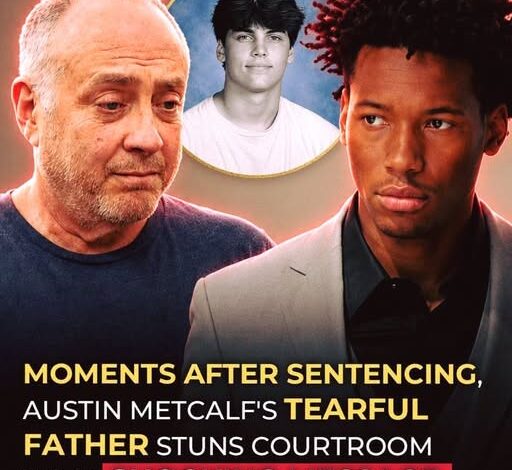
A Texas court recently concluded a widely followed criminal case involving the death of Austin Metcalf, a high school student who was fatally injured during a track meet in April 2025. After a lengthy legal process that attracted national attention, a jury found Karmelo Anthony guilty of murder and later sentenced him to 35 years in prison. The case drew significant public interest due to the circumstances of the incident and the emotional courtroom statements from both families.
The incident occurred on April 2, 2025, at a district track meet held in Frisco, Texas. According to court testimony and investigative reports, Austin Metcalf and Karmelo Anthony, both 17 at the time, were attending the same sporting event but represented different schools and did not know each other personally.
A confrontation reportedly took place inside a stadium tent shortly before 10 a.m., which escalated into violence. Authorities stated that Austin was stabbed during the altercation and later died from his injuries at a hospital.
Following the incident, law enforcement conducted an investigation that led to charges against Karmelo Anthony. A police report indicated that he admitted involvement in the stabbing but claimed self-defense. In the months that followed, the case moved through the legal system, including indictment by a grand jury and pretrial proceedings. The trial officially began in June 2026 and lasted several days, during which both prosecution and defense presented conflicting accounts of what occurred.
During the trial, prosecutors argued that the defendant used unlawful deadly force and described the incident as a criminal act that was not justified under self-defense laws. The defense, on the other hand, maintained that Anthony believed he was acting in self-defense during a fast-moving confrontation. Jurors were instructed to consider multiple legal factors, including whether self-defense applied and whether any actions leading up to the incident affected that claim.
After hearing testimony and closing arguments, the jury deliberated for a short period before returning a verdict of guilty on the charge of murder. The decision concluded the trial phase of the case and moved it into sentencing proceedings. During sentencing, the court also considered whether the offense involved what Texas law defines as “sudden passion,” which could potentially reduce the sentencing range. The jury ultimately rejected that argument.
The court then sentenced Karmelo Anthony to 35 years in prison. Under Texas sentencing guidelines, he will be required to serve a significant portion of his sentence before becoming eligible for parole. The verdict brought a formal conclusion to the criminal proceedings, though the emotional impact of the case continued to be reflected in courtroom statements.
Throughout the sentencing hearing, members of Austin Metcalf’s family addressed the court and spoke about the personal impact of their loss. His mother described the emotional difficulty of daily life following her son’s death, including the absence he left in the family home. She spoke about memories of Austin’s personality and his relationship with his twin brother, Hunter Metcalf, emphasizing the lasting grief experienced by the family.
Austin’s father also delivered a statement in court, reflecting on his son’s life, character, and the impact of his death. He expressed strong emotional responses to the case and criticized aspects of how the situation had been discussed publicly. He also highlighted efforts by the family to honor Austin’s memory through initiatives such as a scholarship in his name.
Austin’s twin brother, Hunter Metcalf, also addressed the court. He spoke about the personal loss of his sibling and described their close relationship. He referenced the emotional challenges of coping with the death and stated that his brother’s memory would continue to be an important part of his life moving forward.
Other family members also shared statements describing grief and the long-term emotional impact of the incident. They expressed that the loss affected the entire family and described ongoing struggles in processing what happened.
After the verdict and sentencing, both legal teams completed the final procedural steps in the case. The court formally closed the proceedings following the jury’s decision. The case remains one of several recent high-profile juvenile-related criminal trials in Texas that have drawn public attention due to the severity of the charges and the emotional testimony involved.