I Visited My Daughter’s Grave Every Sunday — Then a Groundskeeper Revealed the Truth I Was Never Told
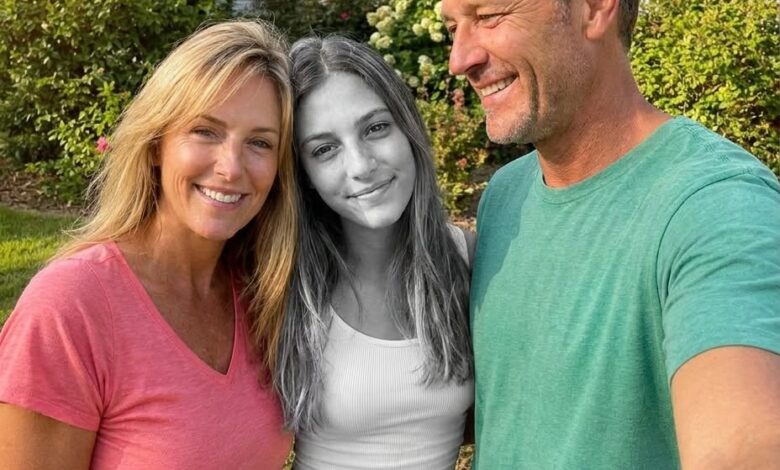
Every Sunday for a month, Jackie knelt beside her daughter Maya’s grave with white roses and the same unbearable apology: she should have picked her up that rainy night. Everyone had told her the accident near the bridge was simple — two cars, bad weather, no survivors. But on the fourth Sunday, the cemetery groundskeeper, Otis, finally approached her with a quiet warning. Another woman had been visiting Maya’s grave every Thursday, bringing yellow daisies and whispering apologies. Then Otis said the words that made Jackie’s grief turn cold: “Please don’t cry. You don’t know the whole truth about your daughter.”
That Thursday, Jackie waited at the cemetery gates until a dark SUV arrived. The woman who stepped out was Katherine, the mother of Sadie, the girl in the other car. Jackie expected excuses, but Katherine brought something worse: the truth. Sadie had survived long enough to say the girls had not been racing. They had met because Sadie wanted to apologize for spreading rumors about Maya’s art portfolio. Maya had been the stronger artist, the one likely to win the scholarship, and Sadie had been pushed into competing by a mother who cared too much about winning. But the storm worsened, the girls tried to leave, and according to Sadie’s final words, Maya answered a phone call from her father before running to her car in tears.
Katherine handed Jackie Maya’s missing sketchbook, which had been returned with Sadie’s belongings by mistake. Inside, Jackie found drawings and notes that revealed the pain her daughter had been hiding. Maya had written about her father calling art school foolish, about her mother trying to soften his cruelty, and about feeling alone whenever she dreamed of a future he did not approve of. Jackie went to Maya’s art teacher, Ms. Alvarez, who confirmed that Maya had been the top candidate for the scholarship but had been afraid to accept it because Jordan had threatened to withdraw support if she chose art. When Jackie checked Maya’s phone records, she found the proof: Jordan had called Maya just minutes before the crash.
That night, Jackie confronted him. Jordan denied it at first, then admitted he had told Maya not to come home unless she was ready to refuse the scholarship. He called it parenting, but Jackie finally saw it for what it was: control. For years, she had translated his harshness into concern and asked Maya to understand him. Now she realized her daughter had been carrying fear, pressure, and shame while Jackie kept trying to keep the peace. When Jordan told her to keep the truth private before Maya and Sadie’s memorial showcase, Jackie refused. The next evening, standing before the community, she told the real story: Maya was not reckless. She was talented, frightened, and unsupported by the person who should have protected her.
Katherine stood beside her and confirmed that Sadie had wanted to make things right before the crash. Together, the two mothers announced the Maya and Sadie Young Artists Fund, created for students who needed someone to believe their dreams mattered. Jordan stood exposed, no longer protected by Jackie’s excuses. The following Sunday, Jackie returned to the cemetery, but this time she brought yellow daisies instead of white roses. Katherine came too, carrying tulips for Sadie. With Otis watching kindly from nearby, Jackie placed the flowers by Maya’s stone and whispered, “No more roses, baby. I hear you now.” For the first time since the funeral, she walked away with dirt on her hands — but not guilt in her heart.