My Brother Called Grandma’s Farm a “Junkyard” for Years — Then One Locked Gate Changed Everything
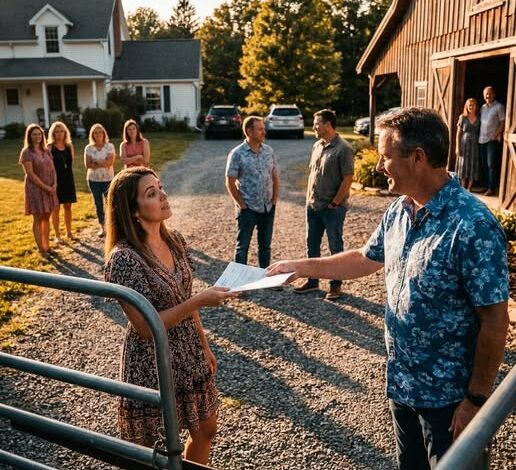
The moment my brother’s SUV pulled up to the farm with a caravan of relatives, coolers, and weekend bags, he was already acting like he owned the place. He had spent years mocking the property, calling it a “junkyard” and a “waste of land,” yet now he expected the gates to swing open the second he arrived. What he didn’t know was that this Memorial Day would be different. As he approached the entrance with his usual confidence, he found a locked iron gate, a professional event manager waiting to greet him, and a lesson he never expected to learn.
Years earlier, no one in my family wanted anything to do with my grandmother’s farm. It was considered too old, too remote, and too much work. When my grandmother needed help, everyone suddenly became busy. I was the one who moved in, helped with daily tasks, repaired things around the property, and spent countless evenings listening to her stories about the land she loved. What started as a temporary arrangement turned into nearly two years of caregiving. During that time, I came to understand that the farm was far more than a piece of property—it was a lifetime of memories, hard work, and dedication. When my grandmother passed away, she left the farm to me, a decision that surprised some family members but made perfect sense to those who knew the full story.
After inheriting the property, I faced a challenge: how to preserve it while making it sustainable. That’s when the idea of transforming the farm into an event venue began to take shape. With careful planning, long hours, and more determination than money, I restored the barn, upgraded the grounds, and built a thriving business. Weddings, family celebrations, and community gatherings soon filled the calendar. The same farm that had once been dismissed as worthless became one of the most sought-after venues in the region. While I focused on building something meaningful, my brother continued treating the property as if family ties automatically entitled him to unlimited access whenever he wanted.
The problems began when he started showing up without warning. One summer afternoon, he arrived with guests expecting to use the pool and grounds during a private event. Another time, he appeared with an even larger group. Each visit created unnecessary disruptions for paying clients and put my business at risk. After several conversations failed to change the situation, I installed a secure gate and established clear policies for all visitors. So when he arrived again on Memorial Day with fifteen people expecting a free weekend getaway, he was met by my event manager, who politely informed him that the property was hosting a private function and that only invited guests could enter. For the first time, he found himself standing on the outside looking in.
Later that year, we finally had an honest conversation. Beneath the frustration and arguments, he admitted something surprising: he never expected the farm to become what it had. He assumed it would always remain exactly as he remembered it. Over time, he began to understand that the property’s success wasn’t luck—it was the result of years of showing up, caring, and doing the work nobody else wanted to do. Eventually, we arranged a proper family visit, and for the first time in years, everyone gathered around the same table. Looking across the farm that autumn evening, I realized the locked gate had never been about keeping family out. It was about protecting something valuable. The farm had been built through generations of effort, and preserving it required the same commitment. Sometimes the strongest boundaries aren’t walls at all—they’re simply reminders that respect must come before access.