One of the Most Dangerous Foods in the World and Why It Requires Careful Preparation
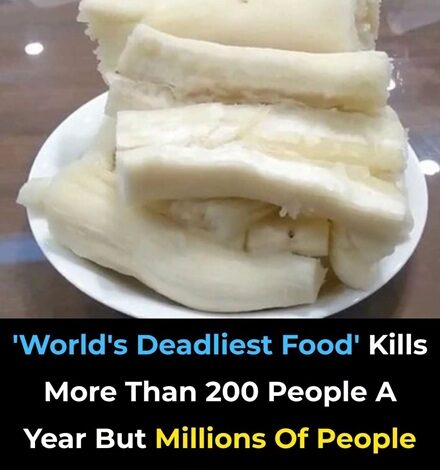
Cassava, also known as manioc or yuca, is one of the most widely consumed staple crops in the world, feeding hundreds of millions of people every day across Africa, Asia, and Latin America. Despite its importance as a reliable source of carbohydrates, especially in regions where other crops may fail due to drought or poor soil conditions, cassava carries a lesser-known biological risk that has earned it a reputation as one of the most carefully prepared foods on Earth.
The plant itself is not inherently dangerous when properly processed, but it contains natural chemical compounds that can release cyanide under certain conditions, making preparation absolutely essential for safe consumption. Cassava originates from South America, where it was first domesticated thousands of years ago before spreading globally through trade and colonization. Today, it is cultivated in tropical climates where it thrives even in poor soils and under harsh environmental conditions.
This resilience has made it a critical food security crop in many developing nations. However, cassava contains cyanogenic glycosides, naturally occurring compounds that serve as a defense mechanism for the plant. When the plant is damaged—through peeling, chewing, or improper processing—these compounds can break down and release hydrogen cyanide, a toxic substance that interferes with the body’s ability to use oxygen at the cellular level.
The risk associated with cassava consumption is not related to properly prepared food, but rather to insufficient or incorrect processing methods. In traditional practices, communities that rely heavily on cassava have developed detailed preparation techniques over generations. These methods often include peeling the root thoroughly, soaking it in water for extended periods, fermenting, drying, or cooking it thoroughly to reduce toxic compounds to safe levels.
When these steps are followed correctly, cassava becomes a safe and highly nutritious staple. However, when these precautions are skipped or rushed, particularly in situations of poverty or food scarcity, the risk of cyanide exposure increases significantly. Health organizations, including the World Health Organization, have documented cases of illness and death linked to improperly processed cassava.
While such incidents are relatively rare compared to the vast number of people who consume cassava safely, they highlight the importance of proper food preparation practices. In extreme cases of famine or displacement, when communities may lack access to clean water, time, or resources for proper processing, the dangers become more pronounced. This is why cassava is often described in scientific literature not as a “dangerous food,” but as a food that requires careful handling to ensure safety.
One of the most serious health conditions associated with long-term or high-level exposure to improperly processed cassava is konzo, a neurological disease that causes sudden and irreversible paralysis of the legs. Konzo is most often observed in regions where cassava is a dietary staple and where protein intake is very low. Protein plays a key role in helping the body detoxify cyanide, and when diets are lacking in essential nutrients, the body becomes more vulnerable to the harmful effects of cyanogenic compounds.
Outbreaks of konzo have been documented in parts of sub-Saharan Africa during periods of extreme food insecurity. Despite these risks, cassava remains an essential food source because of its ability to grow in difficult agricultural environments. It provides a major source of calories for millions of people who might otherwise face hunger. Its versatility allows it to be used in a wide range of foods, including flour, bread substitutes, porridge, and traditional dishes unique to different cultures.
For many communities, cassava is not viewed as dangerous but rather as a dependable and lifesaving crop that ensures survival during periods of hardship. Modern agricultural research has focused on reducing the risks associated with cassava by developing improved varieties with lower levels of cyanogenic compounds
. At the same time, public health campaigns have worked to educate communities about safe processing methods. These efforts aim to preserve cassava’s role as a food security staple while minimizing the health risks associated with improper preparation. Education is especially important in rural areas where cassava is consumed daily and where traditional knowledge plays a key role in food safety practices.
It is also important to understand that cassava does not pose a threat when properly prepared and consumed as part of a balanced diet. The perception of it as a “deadly food” often comes from isolated incidents rather than the everyday reality of safe consumption practiced by millions of people. Like many natural foods, cassava exists within a spectrum of safety that depends entirely on human handling and knowledge. This highlights a broader truth about global food systems: many foods require careful preparation, and safety often depends more on knowledge and practice than on the food itself.
In many regions, cassava has become deeply integrated into cultural traditions and daily life. The methods used to prepare it are often passed down through generations, forming an important part of community knowledge. These practices demonstrate how human societies adapt to the natural properties of the foods they rely on, transforming potentially harmful ingredients into safe and nourishing meals through experience and innovation.
Ultimately, cassava represents both the resilience and complexity of global food systems. It is a crop that sustains millions, survives in harsh conditions, and supports food security in some of the most vulnerable regions of the world. At the same time, it reminds us that food safety is not always inherent but often depends on careful preparation and cultural knowledge. When handled correctly, cassava is not a threat but a vital resource, demonstrating how human understanding can transform a naturally toxic plant into a life-sustaining staple.