The Unforgivable Betrayal: Why This Father’s Choice to End His Own Son’s Life Has Destroyed a Community
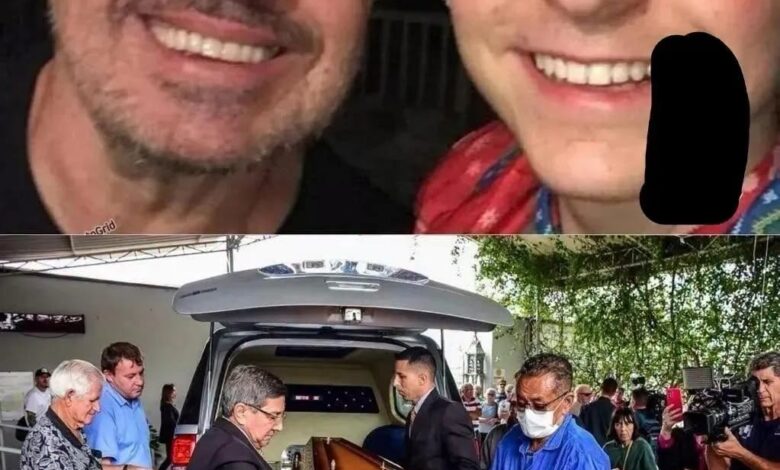
It was supposed to be a sanctuary, a home built on the foundation of family, but it became the scene of a tragedy that defied comprehension. When a young man finally found the courage to speak his truth, he expected the unconditional embrace of the man who raised him. Instead, he met a wall of absolute, cold-blooded rejection that culminated in the most horrific act a parent can commit against a child. This wasn’t just a breakdown in communication; it was an irrevocable, violent severance of the sacred bond between father and son. How did a simple conversation turn into a nightmare?
The incident has sent shockwaves through the nation, forcing families, educators, and mental health advocates to confront the brutal reality of what happens when parental conditional love snaps under the pressure of prejudice. This tragedy, which unfolded earlier this year, serves as a grim marker of the dangers lurking within households that prioritize archaic expectations over the safety and well-being of their children. At its core, the story is not just about a single violent act; it is about the catastrophic failure of empathy and the lethal consequences of refusing to listen when a child reaches out for understanding.
In the aftermath of the tragedy, the discourse has pivoted sharply toward the critical necessity of unconditional support. Experts in child psychology and family dynamics have been working overtime to explain the difference between discipline and destruction. Acceptance at home is not a “bonus” for a child’s development—it is an essential psychological pillar. When a young person feels they can be their authentic self within the walls of their own home, they develop the emotional safety net required to navigate the challenges of the outside world. Conversely, when that safety is stripped away, the home becomes a pressure cooker of isolation and despair.
The father involved in this horrific event has become a symbol of everything that is broken in our current understanding of parental responsibility. While he may have felt that he was “protecting” his traditional values or his image, he was actually dismantling the life he was tasked with nurturing. The tragedy underscores a vital, albeit uncomfortable, truth: parental authority does not grant the right to dictate a child’s identity or suppress their authentic existence. Love that is contingent upon conformity is not love at all—it is control, and when that control is challenged by the reality of a child’s true self, the result can be absolute ruin.
Communities across the country are now being urged to reconsider the culture of silence that often surrounds the domestic sphere. We are conditioned to respect the privacy of the family, to view the “sanctity of the home” as an untouchable domain. But when that sanctity is used as a shroud for emotional neglect or, in this extreme case, lethal hostility, we have a collective duty to intervene. This tragedy has sparked a grassroots movement for open, honest dialogue. Advocates are calling for the creation of community spaces—schools, libraries, and youth centers—where young people can find the validation that they might be cruelly denied at home. The goal is to ensure that no child ever feels so alienated by their own family that they have nowhere left to turn.
Furthermore, we must address the systemic lack of education regarding identity and acceptance. Many parents, perhaps raised in environments where conformity was survival, struggle to process the rapid evolution of social discourse regarding gender and sexuality. However, ignorance is no longer an excuse for violence. There is a mountain of resources available for parents to bridge the gap between their own upbringing and the lived reality of their children. The failure to access these resources—to remain wilfully ignorant—is a choice, and as this incident demonstrates, it is a choice with potentially fatal consequences.
The impact of this event is being felt by parents who are suddenly questioning the strength of their own relationships with their children. It has forced a difficult, mirror-gazing moment for fathers and mothers everywhere. Are we listening? Are we hearing? Are we providing a home that feels like a refuge, or one that feels like a courtroom where our children are constantly on trial? The answers to these questions are not always easy, but they are necessary. The cost of failing to answer them is simply too high.
Beyond the specific circumstances of this tragedy, we are faced with the broader issue of how we value the autonomy of our children. From the moment they are born, we hold them in our hands, but we are merely their guardians, not their owners. Their lives are their own, and their paths to discovery are theirs to walk. When we attempt to force them onto the narrow paths of our own making, we aren’t guiding them; we are clipping their wings. Every child deserves to be embraced, heard, and valued for their authentic self, regardless of how much that self deviates from the blueprint we had imagined for them.
This story serves as a harrowing, gentle, and absolutely urgent reminder that love should never depend on conditions, expectations, or the adherence to dated traditions. It is a clarion call for the end of conditional parenting. If we are to prevent such tragedies from repeating, we must champion a new standard of care—one where the safety of our children is prioritized above our own ego, our own discomfort, and our own prejudices. The memory of this young man, lost in the prime of his life to the hands of those who should have been his greatest protectors, demands that we do better. It demands that we dismantle the structures of intolerance that lead to such horrors, and replace them with a commitment to the radical, life-saving power of acceptance. The future of our youth depends on our ability to listen, to learn, and to love without strings attached. Anything less is a betrayal of the highest order.