INFERNO ON THE RUNWAY: THE MIRACLE ESCAPE THAT ENDED IN TRAGEDY
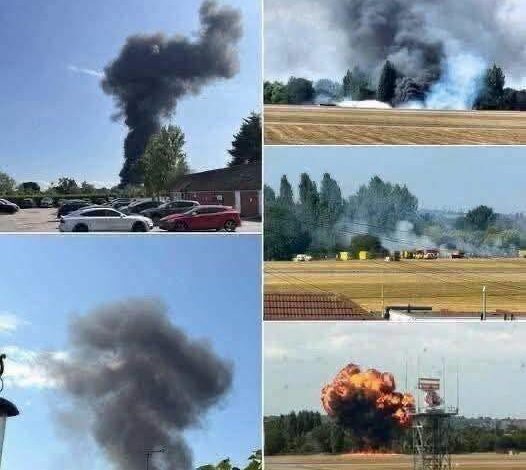
The world watched in paralyzed horror as a massive Boeing 777 turned into a ball of rolling fire on one of the busiest runways on the planet. Passengers aboard Emirates Flight EK521 were seconds away from a routine arrival in Dubai when the sky suddenly turned black with thick, toxic smoke. As the fuselage skidded across the tarmac and exploded into a terrifying fireball, 300 souls were trapped in a race against death. While a heroic, split-second evacuation saved every single passenger and crew member, a devastating secret remained: the true cost of their survival was paid by the brave soul who ran toward the flames.
On August 3, 2016, what began as a standard flight from Thiruvananthapuram, India, descended into a nightmare scenario. As the aircraft approached Dubai International Airport, the crew encountered critical issues during their landing attempt. With shifting wind shear and high temperatures impacting their final approach, the captain initiated a go-around maneuver. Tragically, the aircraft’s energy state became insufficient to sustain flight, causing it to impact the runway with its landing gear partially retracted. The jet skidded hundreds of meters, its engine detaching as the fuselage tore open and erupted into flames.
The professionalism of the cabin crew, however, transformed potential catastrophe into an incredible success story. Within minutes of the plane coming to a stop, all 282 passengers and 18 crew members were safely evacuated via inflatable slides. It was a testament to rigorous safety training and coordinated emergency planning that not one soul on board perished in the inferno. Passengers, many of whom had been moments away from despair, found themselves miraculously safe on the tarmac while the aircraft was consumed by a towering inferno that would take 16 hours to fully extinguish.
Yet, in the midst of this triumph of survival, a hero was lost. While emergency responders battled the blazing fuel tanks, an explosion ripped through the center of the aircraft nine minutes after it had come to a stop. Jassim al-Balooshi, a dedicated airport firefighter and Ras al-Khaimah resident, made the ultimate sacrifice while performing his duty to protect those still in harm’s way. His death became the defining tragedy of an incident that otherwise showcased the absolute pinnacle of aviation emergency response. Seven other firefighters were also injured in the brutal heat of the rescue operation.
In the aftermath, the investigation into EK521 revealed a complex chain of events. Authorities determined that the crew’s attempt to go around was hampered by a lack of thrust, as the autothrottle had not engaged in the expected takeoff/go-around mode. This sobering analysis highlighted how even the most experienced pilots can be caught off guard by the intricacies of modern flight systems in extreme conditions. The incident forced a global re-examination of cockpit protocols and monitoring procedures, ensuring that the lessons learned from that day would be etched into aviation history to prevent future occurrences.
For travelers worldwide, the story of Flight EK521 remains a chilling reminder of the fragility of air travel and the absolute necessity of preparation. It serves as a tribute to the cabin crews who perform under unthinkable pressure and the first responders who run toward danger when others flee. While the plane itself was lost—marking the first and only hull loss in the history of Emirates Airlines—the 300 lives saved stand as an enduring monument to the power of training and human courage. When the smoke cleared and the investigation reports were filed, the legacy of that day was not just a tragic accident, but the profound realization that in the face of absolute disaster, professionalism and preparation remain our greatest defenses.