The Kennedy Center removes Donald Trump’s name following claims it may have been added in violation of federal law.
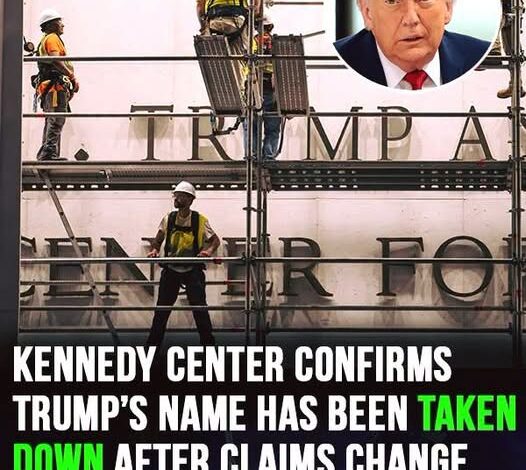
The Kennedy Center in Washington, D.C., has long stood as one of the United States’ most important cultural institutions, dedicated to performing arts and named in honor of President John F. Kennedy. Recently, the institution became the center of a political and legal controversy after changes were made to its branding that sparked widespread public debate and legal scrutiny. The controversy began when leadership changes at the Kennedy Center led to discussions about renaming or rebranding parts of the institution.
At one point, additional naming elements referencing former President Donald Trump were reportedly added under a board influenced by his allies. The proposed updated name, which included both Donald J. Trump and John F. Kennedy, immediately drew attention and criticism from various public figures, legal experts, and cultural observers. Critics of the change argued that the Kennedy Center was established by Congress as a memorial to President John F. Kennedy and that its name carries historical and legal significance.
They maintained that altering the name or adding honorary references without congressional approval would conflict with the institution’s founding framework. This argument became central to the legal discussions that followed.
The dispute eventually moved into the judicial system, where a federal court reviewed whether the naming changes were consistent with the law governing the Kennedy Center. In the ruling, the judge emphasized that the institution was created by Congress and that its name is tied directly to that legislation. According to the decision, only Congress holds the authority to officially change the name of the Kennedy Center.
Following the ruling, the court ordered that any unauthorized additions to the building’s exterior signage be removed. This included letters that had been installed as part of the disputed rebranding effort. The decision set a timeline for compliance, requiring that changes be made within a short period after the ruling was finalized.
After additional legal steps and appeals efforts were considered, the ruling moved forward, and work crews were dispatched to remove the added lettering. Reports described workers arriving early in the morning to carry out the court order, temporarily covering sections of the building while the removal process took place. The visible changes marked a reversal of the earlier branding decision.
The removal attracted public attention outside the Kennedy Center. Observers, including both supporters of the ruling and critics of the earlier name change, gathered near the site. Some expressed approval of the court’s decision, while others viewed the situation as politically motivated or unnecessary. The scene reflected the broader division in public opinion surrounding the issue.
Supporters of the court ruling argued that the Kennedy Center should remain dedicated solely to President John F. Kennedy, as originally intended. They emphasized that public cultural institutions should not be altered for political recognition without proper legal authority. Some longtime patrons of the center expressed concern that changes to its identity could undermine its historical significance.
On the other hand, individuals aligned with the leadership changes argued that the institution’s board had the right to make decisions about branding and recognition. They maintained that updates to naming or dedication could reflect broader contributions to American cultural institutions. This perspective continued to fuel ongoing debate about governance and authority over national landmarks.
Public commentary also emerged from political figures involved in the broader discussion. Some lawmakers and officials supported the court’s interpretation, stating that legal boundaries must be respected when it comes to federally established institutions. Others criticized the ruling, arguing that it limited administrative flexibility within cultural organizations.
The situation also became a topic of discussion on social media, where users shared opinions ranging from strong support of the ruling to criticism of the decision. As with many politically charged issues, reactions were divided, with discussions focusing not only on the legal aspects but also on symbolism and political identity.
Beyond the naming dispute, additional discussions emerged regarding proposed renovation plans for the Kennedy Center. At various points, suggestions had been made about extensive upgrades and modernization efforts for the facility. However, some of these proposals became entangled in the broader legal and administrative disputes surrounding leadership decisions and authority.
Critics of the renovation plans raised concerns about cost, management, and long-term planning, while supporters argued that modernization could enhance the venue’s role as a leading cultural center. These debates added another layer of complexity to the already ongoing controversy.
Former and current representatives associated with the Kennedy Center’s governance structure have stated that efforts will continue to define the institution’s direction moving forward. Some have expressed confidence that future legal or administrative reviews will clarify how naming rights and structural decisions should be handled.
Despite the controversy, the Kennedy Center continues to operate as one of the most prominent performing arts venues in the United States. It hosts concerts, theater productions, ballet performances, and cultural events attended by audiences from across the country and around the world. Its role as a national cultural institution remains unchanged.
In conclusion, the dispute over the naming and branding of the Kennedy Center highlights the intersection of law, politics, and cultural heritage. The legal ruling reinforced the principle that federally established institutions must adhere to congressional authority when it comes to official naming. At the same time, the public debate reflects how symbolic decisions can become highly contested in politically divided environments.
As discussions continue, the Kennedy Center remains at the center of attention, not only as a cultural landmark but also as a symbol of how historical legacy and modern political dynamics can collide in unexpected ways.