The Birthday Betrayal: I Walked Into My Grandfather’s 80th Party and Found a Scene That Made My Blood Boil
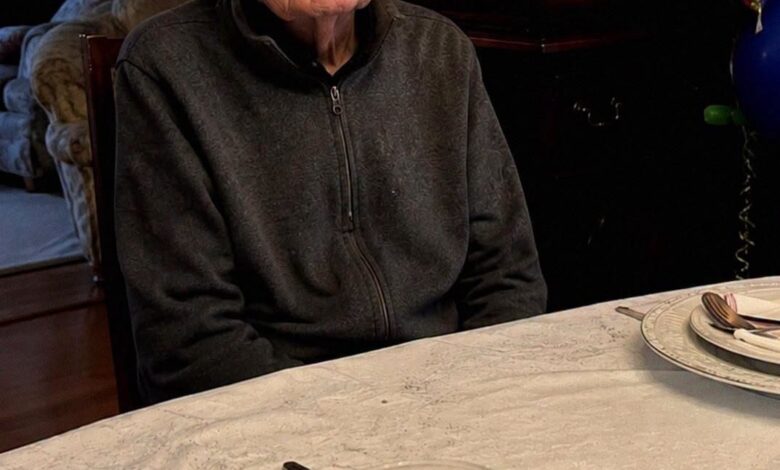
I walked into my grandfather’s house expecting the boisterous laughter of a family reunion, but what I discovered instead was a haunting, silent tableau of abandonment. The man who had spent forty years sacrificing his own comfort to pay for our braces, our degrees, and our first cars was sitting entirely alone, surrounded by untouched roast chicken and a lonely, deflated balloon. My heart shattered as I realized the cruel truth: he had been forgotten by the very people who owed him everything. This wasn’t just a missed party; it was a cold-blooded insult that forced me to orchestrate a ruthless, unforgettable reckoning.
Grandpa Walter was the heart of our family, a man of quiet, unwavering generosity. For decades, he was the person who answered the phone on the first ring, the one who kept a meticulous notebook of every grandchild’s milestones, and the man who secretly slipped envelopes of cash to any relative facing a rough month. When my grandmother passed away two years ago, his world dimmed, but his devotion to the family never wavered. He lived in that small, tidy blue house on Maple Street, waiting for the connection he had spent a lifetime fostering. When his 80th birthday approached, his excitement was heartbreakingly palpable. He wasn’t asking for gifts; he just wanted to be surrounded by the people he had spent forty years supporting.
I personally confirmed the attendance of every aunt, uncle, and cousin on his list. I heard the enthusiastic promises from Aunt Linda, the boisterous vows from Uncle Greg, and the heartfelt assurances from my own parents. Everyone promised to be there, and I passed those promises on to him, watching as his face softened with relief and joy. He spent the entire morning of his 80th birthday meticulously preparing a feast, cooking his favorite lemon cake, and dressing in the blue shirt Grandma had loved. He was ready to celebrate the life he had built, fully expecting a house bursting with love.
When I arrived late that afternoon due to an emergency at work, the silence hit me like a physical blow. The street was deathly quiet, and as I pulled into the driveway, I saw the empty space where a dozen cars should have been. The house was dim, save for one lonely balloon swaying on the porch railing. Inside, I found Grandpa sitting at the head of a massive, perfectly set dining table, slowly folding paper napkins into neat triangles. The roast chicken, the bread, and the cake sat in serving dishes, untouched and cooling. He looked up at me, his smile small and shaky, and muttered a heartbreaking lie: “I guess everyone got busy.”
My rage was incandescent. I spent the next few hours sitting with him, forcing myself to smile through a meal that tasted like ashes, all while his phone buzzed with half-hearted, dismissive text messages. Aunt Linda had a “sore knee,” Uncle Greg had “work,” and Jenna was “too busy.” As I watched him blow out a single candle on that “80” cake, I made a vow. I wouldn’t let this slide. I wouldn’t let these people continue to treat a man who had practically raised them like an inconvenience. I decided then and there that if they wouldn’t show up for him out of love, they would show up for him out of shame.
A week later, I sent a message to the family group chat. I didn’t ask for permission; I commanded their presence for an “important family meeting” at Grandpa’s house. Surprisingly, they all showed up, likely expecting some sort of inheritance drama. When they stepped into the dining room, the atmosphere shifted instantly. I had hung the same birthday banner from the week before, and I had meticulously arranged photographs on the sideboard. I had pictures of the untouched food, the empty chairs, and, most cruelly, a candid shot of Grandpa sitting in the dark, folding napkins while he waited for them to arrive.
The silence in the room was suffocating. I didn’t hold back. I took each one of them to task, holding up the photos like a prosecutor presenting evidence of a crime. I reminded Aunt Linda of her tuition, Uncle Greg of the truck he couldn’t afford, and Jenna of the rent money he had provided when she was destitute. I made them look at the image of the man who had funded their lives sitting in total solitude on his 80th birthday. Their excuses, which had felt so effortless over text, evaporated in the face of the visual truth. Aunt Linda’s face turned scarlet, Uncle Greg retreated into a defensive scoff, and Jenna dissolved into tears.
The confrontation wasn’t pretty. It was raw, uncomfortable, and long overdue. When the truth finally settled into the room, it didn’t just cause awkwardness—it caused a fundamental realignment of our family’s dynamic. Some of them tried to deflect, others doubled down on their selfishness, and Uncle Greg even stormed out, unable to handle the mirror I was holding up to his character. But the rest of them stayed. They saw the cost of their indifference, and for the first time, they actually felt the weight of their choices.
Months have passed since that day. The Sunday dinners are smaller now, stripped of the relatives who couldn’t be bothered to grow up, but the table is finally full of people who actually want to be there. My mother comes early to help cook; Jenna brings her kids every other weekend. We don’t pretend that the past didn’t happen, and we don’t offer empty apologies. Instead, we show up. We repair the porch, we share the stories, and we ensure that Grandpa Walter never again has to sit alone at the head of a table he spent a lifetime building. Sometimes, the most important lesson you can teach a family isn’t found in what they owe you, but in forcing them to look at the devastating reality of what they almost lost.