Dad defends taking daughters into women’s restroom after man calls police on him
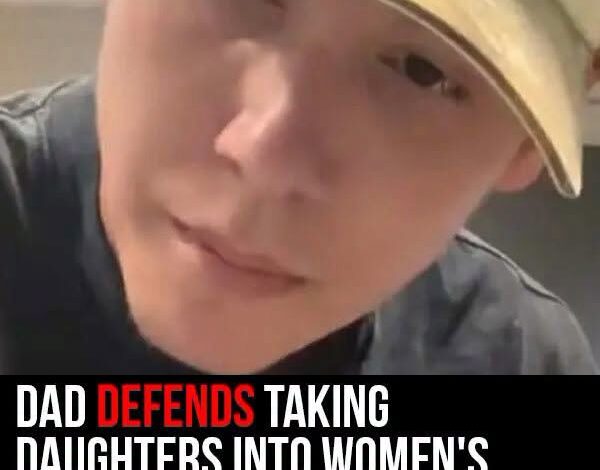
A father’s simple goal was to help his young daughters use a clean restroom during a long trip home. What began as an ordinary parenting decision quickly spiraled into a confrontation involving police officers, a furious stranger, a frightened child, and a viral video that sparked debate across the country. Within days, the incident led to public outrage, a job loss, thousands of online donations, and an outcome few people could have predicted.
For Tyler Brodsky, the situation initially seemed straightforward. While traveling with his daughters, he stopped at a gas station and faced a dilemma many parents have encountered in some form. According to Brodsky, the men’s restroom was in poor condition and occupied by several adults, making him uncomfortable about bringing his young daughters inside. When he noticed that the women’s restroom was empty, he chose what he believed was the safest and cleanest option available for his children.
His decision, however, quickly attracted unwanted attention.
What Tyler viewed as a practical parenting choice was interpreted very differently by another customer. Within moments, tensions escalated. A confrontation erupted outside the restroom, with a stranger reportedly blocking the doorway and aggressively challenging Tyler’s presence. The atmosphere became increasingly hostile, drawing attention from others nearby and leaving Tyler’s daughters visibly upset.
As voices rose and emotions intensified, one of the children began crying. What should have been a brief restroom stop transformed into a frightening and confusing experience for the family. Instead of focusing on his daughters’ comfort and safety, Tyler suddenly found himself defending his actions to an angry stranger who viewed the situation through an entirely different lens.
The conflict escalated further when authorities became involved. A 911 call reported a man inside the women’s restroom, prompting police officers to respond to the scene. By the time officers arrived, the situation had already become highly charged. What began as a simple decision about restroom access had evolved into a public dispute involving accusations, fear, and misunderstandings.
For many observers, the incident highlighted how quickly suspicion can replace empathy. Some people focused on Tyler’s decision to enter the women’s restroom, while others focused on the fact that he was attempting to care for his daughters in what he believed was the safest way available. The disagreement quickly expanded beyond the individuals involved and became a broader discussion about parenting, public spaces, and how society responds to unexpected situations.
One person who received widespread praise during the incident was a gas station employee. As tensions escalated, the worker reportedly intervened in a calm and compassionate manner. Rather than contributing to the conflict, the employee focused on helping de-escalate the situation and showing concern for the frightened family. According to reports, the worker quietly closed the door on the aggressor and later apologized to Brodsky for what his family had experienced.
That act of kindness resonated with many people who later viewed the viral footage.
As the video spread online, public reaction intensified. Millions of viewers weighed in, offering opinions on what had happened and who was at fault. The footage generated widespread discussion across social media platforms, news outlets, and community forums. Supporters of Brodsky argued that he had simply acted as a responsible parent, while others debated the broader questions surrounding restroom policies and public expectations.
The consequences extended beyond online debate. Reports indicated that the individual responsible for calling 911 ultimately lost his job after the video gained national attention. The development added another layer to an already controversial story, raising questions about accountability, public pressure, and the real-world consequences of viral moments.
Meanwhile, support for Brodsky and his family continued to grow. A fundraising campaign attracted significant donations from people who sympathized with his situation and believed he had been treated unfairly. What began as a local incident had become a national conversation, with thousands of strangers expressing support through financial contributions and messages of encouragement.
Yet one of the most unexpected developments came from Brodsky himself. Rather than keeping all of the donated funds, he announced his intention to share a portion of the money with the gas station employee who had stepped in during the confrontation. His decision reflected his belief that the worker’s compassion and courage deserved recognition.
As attention continued to grow, Brodsky repeatedly emphasized what he believed was the central issue. In his view, the incident was never about politics, ideology, or social divisions. Instead, he argued that it was about dignity, safety, and the challenges parents sometimes face when trying to care for their children in public spaces.
The controversy also renewed conversations about the availability of family restrooms. Many parents noted that dedicated family facilities could prevent situations like this from occurring in the first place. Family restrooms provide a practical solution for caregivers accompanying young children of a different gender, reducing confusion and eliminating the difficult choices that sometimes arise in public settings.
Ultimately, the story resonated because it touched on universal concerns. Most parents understand the desire to protect their children. Most people understand the importance of feeling safe in public spaces. And many recognized how quickly assumptions can turn an ordinary situation into a public conflict.
What began as a simple stop during a long drive home evolved into a national discussion about empathy, judgment, and the responsibilities people share toward one another. The viral video captured more than a confrontation—it revealed how easily fear and misunderstanding can take control, and how powerful a single act of kindness can be in restoring perspective.
For Tyler Brodsky, the experience was never supposed to become a headline. He simply wanted a clean and safe restroom for his daughters. Instead, he found himself at the center of a debate that reached far beyond one gas station. Yet through the controversy, one message continued to emerge: families deserve dignity, children deserve consideration, and sometimes the simplest solutions—such as accessible family restrooms—can prevent unnecessary conflict before it begins.