A Notable Handshake Moment Between Donald Trump and Brigitte Macron That Drew Public Attention
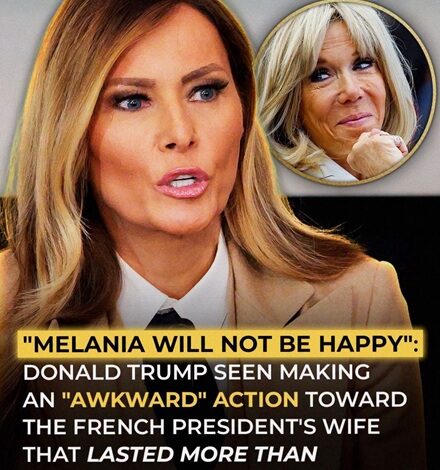
High-level diplomatic events such as international summits are often carefully structured to project unity, cooperation, and controlled formality. Yet in the modern media environment, even brief moments between world leaders can become the focus of intense global discussion. At events like the G7 summit, where leaders such as Donald Trump, Emmanuel Macron, and other global figures meet, every gesture, handshake, and expression is observed, recorded, and analyzed in real time.
In many cases, the official agenda of such summits focuses on economic cooperation, security policy, and international relations. However, public attention often shifts toward informal moments that occur between formal discussions. These moments, though brief, are frequently replayed across media platforms, where they are interpreted through political, emotional, and cultural perspectives.
One recurring subject of analysis in diplomatic coverage is body language during greetings and handshakes. These interactions are traditionally intended to be brief and symbolic, representing mutual respect between nations. However, variations in duration, posture, or eye contact can quickly become topics of discussion when viewed through a political lens.
At major summits, leaders are constantly surrounded by cameras, journalists, and security personnel. This environment creates a setting where even natural or unplanned gestures can be magnified. A handshake that lasts slightly longer than expected, or a moment of physical guidance while walking, may be interpreted in multiple ways depending on the viewer’s perspective.
Media analysts and commentators often examine such footage frame by frame. They focus on posture, hand positioning, facial expressions, and movement coordination. These interpretations are then shared widely across television programs, online platforms, and social media discussions, where they can quickly evolve into broader debates about political relationships and personal dynamics.
It is also common for expert opinions to be introduced into these discussions. Body language specialists, communication analysts, and political commentators may provide interpretations of what certain gestures could suggest. However, these interpretations are not always definitive, as nonverbal communication can vary significantly depending on context, culture, and momentary circumstance.
In the digital age, viral political moments often spread far beyond their original context. A short clip from a summit can be replayed millions of times, with each viewer forming a personal interpretation of what they see. This process can amplify minor interactions into global talking points, regardless of their actual diplomatic significance.
Another factor contributing to this phenomenon is the increasing role of social media in political discourse. Platforms allow users to instantly react, comment, and speculate on events involving global leaders. As a result, official diplomatic interactions are no longer limited to formal reporting but are continuously reinterpreted through public discussion.
In many cases, the same footage may generate completely different narratives. Some viewers may interpret a gesture as friendly and diplomatic, while others may view it as unusual or symbolic. These contrasting interpretations highlight how perception plays a major role in shaping public understanding of political events.
Beyond individual interactions, international summits are also influenced by broader geopolitical context. Relations between countries, ongoing negotiations, and previous diplomatic statements all contribute to how moments are perceived. Even neutral gestures can be viewed differently depending on the political climate at the time.
Experts in international relations often emphasize that diplomatic behavior is highly structured. Leaders follow protocols designed to ensure respect and consistency across interactions. However, human behavior is naturally variable, and not every moment fits perfectly within formal expectations, especially in high-pressure environments.
As a result, public fascination with these events continues to grow. Viewers are not only interested in policy decisions but also in the human side of leadership. This includes expressions, reactions, and interpersonal dynamics that appear during public appearances.
Over time, this has led to a broader cultural shift where diplomacy is no longer viewed only through official statements, but also through visual storytelling. Short video clips and photographs often carry as much influence as formal speeches in shaping public opinion.
Ultimately, the attention given to small diplomatic moments reflects a larger trend in modern communication. In a world where information spreads instantly, even seconds of interaction can become subjects of global interpretation. Whether viewed as symbolic, accidental, or purely procedural, these moments contribute to the ongoing narrative of international relations.
In conclusion, the fascination with diplomatic body language highlights how closely global audiences now observe political leadership. While official summits focus on policy and cooperation, public interpretation often centers on human interaction. This dual layer of meaning—formal diplomacy and public perception—continues to shape how international events are understood in the modern era.