Do Not get fooled by the supermarkets! See it!
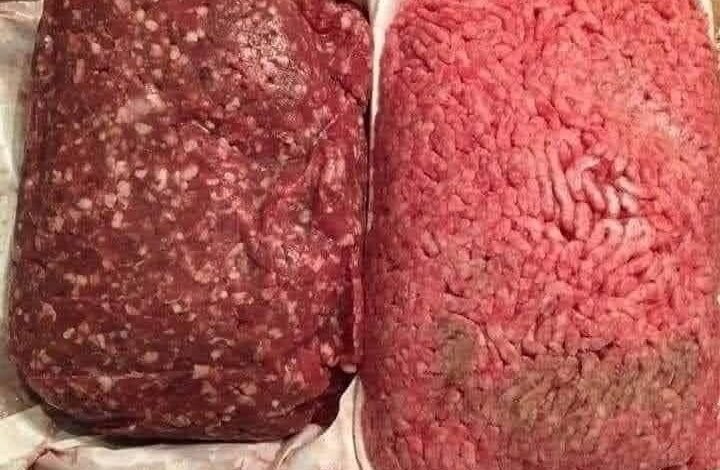
In the modern, fast-paced world of consumer convenience, the local supermarket has long been regarded as a bastion of reliability and safety. For most households, the fluorescent-lit aisles represent a curated environment where quality is promised and standards are assumed. However, a series of unsettling discoveries across the grocery industry has recently punctured this veil of consumer confidence, revealing a sophisticated and shadowy deception lurking within the refrigerated sections. What began as scattered complaints about “unusual textures” and “odd smells” in packaged meats has evolved into a full-scale investigation into the integrity of the global food supply chain, sparking a nationwide conversation about transparency, corporate ethics, and the true cost of a bargain.
The crisis first gained momentum through the power of collective observation. Attentive shoppers, particularly those who take pride in home cooking and possess a keen eye for protein quality, began reporting inconsistencies that defied the “premium” labels on their favorite cuts of beef and pork. Some noted that meat which appeared vibrant and marbled through the plastic film would release a strange, sour odor upon opening—not the scent of spoilage, but a chemical-like flatness that felt out of place. Others reported a rubbery, inconsistent texture during the cooking process, where high-end steaks performed more like processed, lower-grade offcuts. Initially, these instances were dismissed as isolated supply chain hiccups or the byproduct of lingering pandemic-era logistics, but as the volume of complaints reached a critical mass, investigators were forced to look deeper.
The resulting inquiry unmasked a calculated scheme of food fraud that bypassed the traditional checks and balances of retail oversight. The investigation revealed that the culprit was not necessarily the supermarkets themselves, but a handful of unscrupulous mid-level distributors who acted as the invisible bridge between the farm and the shelf. In an effort to inflate profit margins against a backdrop of rising inflation and overhead costs, these distributors began secretly “padding” high-quality, domestically sourced meat with lower-grade imported cuts. By meticulously mixing these disparate products, they were able to sell a hybrid product to retailers at premium prices. This practice, often referred to in the industry as “meat stretching,” allowed these entities to save millions of dollars while effectively gaslighting the end consumer.
The most disturbing aspect of this revelation was the origin of the filler meat. While the domestic components were subject to rigorous safety standards and frequent inspections, much of the imported “lower-grade” material was traced back to international facilities operating with what experts described as “minimal” or “substandard” oversight. While food safety authorities were quick to clarify that the meat did not pose an immediate biological threat—meaning it wasn’t necessarily toxic or laden with pathogens—the ethical and economic violations were staggering. Customers were paying top-tier prices for a product that was nowhere near the quality advertised. The “Premium Choice” and “Grass-Fed” stickers had become hollow marketing tools, masking a reality that involved frozen, processed imports that had been thawed and integrated into “fresh” packages.
For the average shopper, this felt like a profound betrayal of the unwritten contract between the provider and the provider. We trust our grocery stores to vet their vendors, and we trust labels to be an honest representation of the contents inside. When that trust is broken, the psychological impact is significant. It transforms a routine chore—buying ingredients for a family dinner—into an exercise in skepticism and anxiety. Supermarkets, for their part, have largely pleaded ignorance, claiming they were victims of the same distributor-led deception as their customers. In the wake of the scandal, several major chains have promised comprehensive supply-chain reviews and have terminated contracts with the implicated distributors, but for many, the damage to the “store-brand” reputation has already been done.
This situation raises a fundamental and uncomfortable question that many in the modern era prefer to ignore: How much do we really know about the food we buy? We live in an age of “opaque” food systems, where a piece of meat may change hands a dozen times across three different continents before it reaches a dinner plate. This complexity creates dark corners where opportunistic players can operate without fear of immediate detection. The meat scandal is a wake-up call, proving that even in highly regulated economies, the lure of “shaving pennies” can lead to systemic corruption. It highlights the vulnerability of a system that prioritizes volume and speed over traceability and localized accountability.
In response to the growing public outcry, food safety experts and consumer advocates are urging a return to proactive shopping habits. The era of “blind trust” in the supermarket shelf appears to be over, at least for the foreseeable future. Experts suggest that consumers should prioritize “trusted brands” that own their entire supply chain—from the ranch to the packaging plant—thereby eliminating the “middleman” distributors who were the primary actors in this recent fraud. Furthermore, there is a renewed push for consumers to support local butchers and farmers’ markets, where the distance between the source and the table is minimized, and the faces behind the counter are directly accountable for the product they sell.
Beyond just choosing where to shop, shoppers are being encouraged to become “label literate.” This means looking beyond the flashy “Premium” or “Natural” claims on the front of the box and instead scrutinizing the fine print on the back. Discerning consumers are now looking for specific certifications, such as “USDA Prime” or independent third-party animal welfare seals, which are harder for dishonest distributors to forge or manipulate. Staying alert to recalls is another essential component of the modern shopper’s toolkit; often, a recall for “mislabeled products” is the first public sign of a deeper quality issue within a specific distribution network.
As stores work to rebuild the confidence they have lost, the grocery industry is at a crossroads. There is a growing demand for blockchain technology and other digital tracking systems that would allow a customer to scan a QR code on a package of chicken or beef and see exactly where it was processed, when it was shipped, and every hand it passed through along the way. While such technology was once seen as a luxury or a niche interest for the ultra-health-conscious, it is fast becoming a baseline requirement for an public that feels misled.
Ultimately, the great supermarket meat deception of 2026 serves as a powerful reminder that our food system is only as strong as its weakest link. It is a story about the intersection of greed and the mundane reality of the dinner table. While the “unusual textures” and “odd smells” may eventually fade as supply chains are cleaned up, the lesson remains: vigilance is the only true safeguard in a global marketplace. As we move forward, the relationship between the shopper and the supermarket must evolve from one of passive consumption to one of active engagement. The health and financial well-being of the family depend on it, and the industry must realize that in the modern world, quality is not just a marketing slogan—it is a non-negotiable requirement for survival. By demanding transparency and voting with their wallets, consumers have the power to force the “meat stretchers” out of the shadows and ensure that “premium” once again means exactly what it says.