TOTAL CHAOS: The Terrifying Final Moments That Forever Shattered Our City’s Peace!
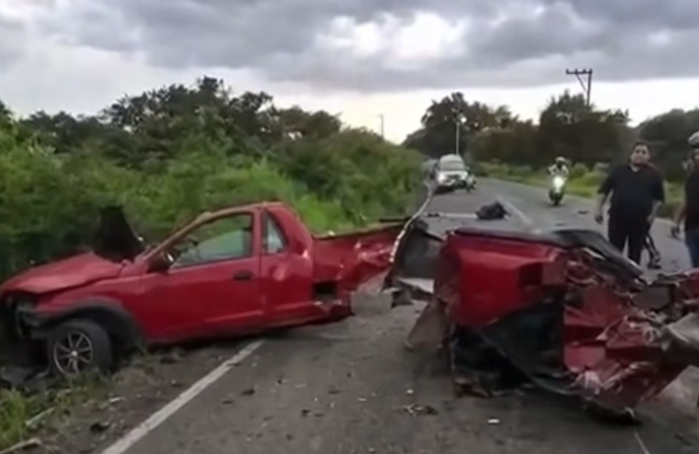
The sirens didn’t just scream; they tore through the fabric of our morning like a jagged blade, signaling the end of an ordinary existence. In one horrific heartbeat on the Saratoga Road, fate took a cruel turn, leaving a trail of wreckage and broken dreams in its wake. Lives were permanently cleaved into two distinct realities: the blissful, mundane moments before the impact, and the agonizing, hollow existence that followed. As twisted metal littered the asphalt, the city stood frozen in collective shock, unaware that the trajectory of so many lives had been irrevocably derailed in the blink of an eye.
The scene on Saratoga Road was a tableau of absolute devastation that defied simple explanation. What began as a Tuesday defined by the rhythm of morning commutes and the promise of a fresh day was instantly transformed into a site of profound grief. For those caught in the immediate vicinity, the world seemed to tilt on its axis. The sheer randomness of the tragedy is what cuts the deepest; it is a bitter pill to swallow that a routine errand, a simple walk to the corner store, or a brief pause at a crosswalk can serve as the final chapter in a person’s story. While some victims were cruelly snatched away by circumstance, others stood just feet away, spared by nothing more than the cold, unfeeling roll of the cosmic dice.
In the aftermath, the gravity of the event settled over the community like a suffocating shroud. Hospitals became centers of frantic energy and hushed, devastating conversations, while local residences were suddenly filled with the heavy, unbearable quiet of absence. Families are currently trapped in the agonizing loop of the human experience after loss—replaying the sound of a voice from a final phone call, agonizing over the last text message that now remains unanswered, and wrestling with the haunting, spectral weight of the “what-ifs.” These are the questions that will never find resolution, the ghost stories of lives cut short, and the hollow echoes of a future that evaporated in an instant.
Official investigators have descended upon the site, working tirelessly to reconstruct the driver’s final moments. They analyze skid marks, examine mechanical failure, and track the trajectory of the vehicle, attempting to build a narrative out of broken glass and mangled steel. Yet, for the community, the clinical nature of the investigation feels woefully inadequate. The search for a motive, which initially drove the public outcry and the media cycle, has begun to quietly shift into something much more profound and deeply human: a desperate, collective search for meaning in a situation that offers none.
There is no police report that can adequately capture the visceral weight of a chair pulled back from a kitchen table and left empty. No forensic analysis can quantify the absolute, crushing silence that now occupies a home where a loved one’s laughter once served as the soundtrack to daily life. These are the invisible scars of the tragedy—the fractured routines, the unfinished projects, the dinner parties that will never happen, and the simple, quiet intimacies that are now relegated to memory. The city is a vast, interconnected machine, and when a vital gear is stripped away, the ripple effect touches corners of the community that the news cameras will never reach.
New York is a city that prides itself on its relentless velocity. It is a place defined by its ability to push forward, to recover, and to move on. In the coming days, the debris will be cleared from Saratoga Road, the streetlights will blink back to their normal rhythm, and the commuters will return to their stations. The city will move again, as it always does, fueled by the sheer necessity of survival. But for the families left behind, the concept of a “normal” life has been permanently dismantled. Time, for them, has split down the middle. There is the world as it existed before the crash, and there is the daunting, alien landscape of the present, where the void left by their loved ones feels like a physical presence.
As the sun sets on the scene, the flickering emergency lights casting long, dancing shadows against the storefronts, we are reminded of the fragility of our collective existence. We operate under the illusion of control, mapping out our weeks and anticipating our futures, forgetting how easily the plans of men can be obliterated by the chaotic velocity of a single moment. This tragedy is a grim reminder that we are all, in a sense, walking on a razor’s edge. Every interaction could be the last; every departure from the house could be a final farewell.
The mourning process will be long, and the path to any semblance of peace will be jagged. It is not merely a matter of grieving for those who died, but of grieving for the loss of the perceived safety of our daily lives. The residents of this city are now left to navigate the aftermath, leaning on one another, sharing the burden of the loss, and attempting to find a way to honor those who were lost without letting the darkness consume the light that remains.
Ultimately, we are left to confront the uncomfortable truth that life is not a linear progression, but a series of fragile connections, easily severed and impossible to mend. While the investigators finish their work and the headlines eventually turn to other, fresher disasters, the people affected by this accident will remain in the stillness of their grief. They will continue to wake up to a world that feels slightly less bright and a life that feels fundamentally different. They will carry the weight of this day in every breath, a permanent testament to the morning that the world changed on the Saratoga Road. We move forward not because we have moved on, but because we have no other choice, tethered to the memories of those we loved, hoping that in the vast, indifferent shuffle of the universe, our own brief stories might leave a mark that truly matters.