BREAKING NEWS. Maximum worldwide alert. The war begins… See more
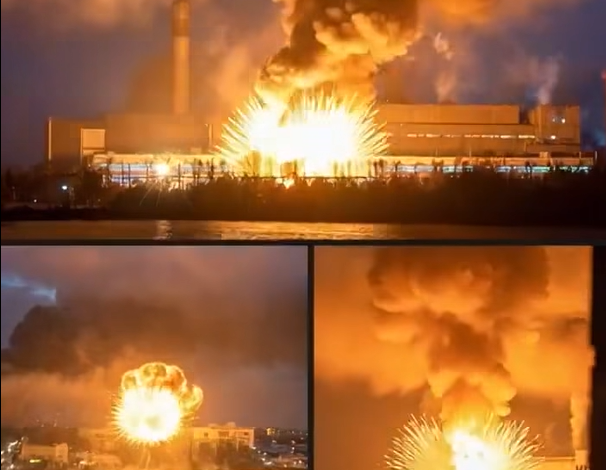
Fear spread faster than facts. There were no air-raid sirens echoing through cities, no emergency broadcasts interrupting every screen, and no formal declarations signaling the beginning of a conflict. Yet across the world, something felt different. Phones vibrated with urgent notifications, news networks switched to continuous coverage, and social media feeds filled with speculation. One phrase appeared again and again, cutting through the noise with unsettling force: global alert. For millions of people, the words alone were enough to trigger anxiety, uncertainty, and a growing sense that events far beyond their control were unfolding somewhere behind closed doors.
The alert itself contained few dramatic details. There were no reports of immediate attacks, no confirmation of military action, and no clear indication that catastrophe was imminent. Yet the absence of specific information only deepened public concern. People began searching for answers, refreshing news websites, following live updates, and trying to separate credible information from rumors. In a world where information travels instantly, uncertainty can often spread even faster than certainty.
Government officials moved carefully, aware that every statement would be scrutinized and interpreted. Leaders appeared before cameras to reassure their populations while simultaneously acknowledging the seriousness of the situation. Their words were measured and deliberate. They spoke of vigilance, preparedness, and cooperation. They emphasized caution without creating panic. Yet many observers noticed the gravity behind their language, sensing that officials were confronting risks too complex to be summarized in a single announcement.
Behind the scenes, activity intensified. In government buildings, military headquarters, and international organizations, crisis teams worked around the clock assessing developments and reviewing contingency plans. Intelligence analysts examined incoming information. Security advisors weighed possible scenarios. Diplomats maintained contact with allies and counterparts, understanding that communication could be as important as any military or economic response.
The global alert did not mark the beginning of a war. Instead, it marked something that many experts considered equally significant—the realization that the world had entered a period of heightened uncertainty. Tensions that had been building quietly beneath the surface were suddenly impossible to ignore. Long-standing disputes, strategic rivalries, and fragile diplomatic relationships appeared more delicate than ever. The alert served as a reminder that stability often depends on countless decisions made every day by leaders, negotiators, and institutions around the world.
In capitals across multiple continents, officials gathered in secure meeting rooms to discuss options and assess risks. Every word spoken in those meetings carried weight. Policymakers faced the difficult challenge of preparing for potential outcomes without assuming the worst would happen. They needed to warn populations while avoiding unnecessary alarm. They needed to demonstrate readiness while continuing to pursue peaceful solutions. The balance was delicate, and the consequences of misjudgment could be enormous.
Diplomats found themselves playing a particularly important role. Open lines of communication became more valuable than ever as governments sought to prevent misunderstandings and reduce the possibility of escalation. History has repeatedly shown that conflicts can emerge not only from deliberate actions but also from mistakes, misinterpretations, and failures to communicate. As tensions rose, maintaining dialogue became an essential safeguard against unintended consequences.
For ordinary citizens, the experience was both confusing and unsettling. Many people found themselves asking the same questions. What exactly had happened? How serious was the threat? Was there something governments knew that had not yet been made public? The lack of immediate answers created fertile ground for speculation, leading to a flood of theories, rumors, and misleading information spreading across digital platforms.
Experts urged caution when consuming information. They reminded the public that moments of uncertainty often generate misinformation designed to attract attention rather than provide understanding. False reports, sensational headlines, and exaggerated claims can easily amplify fear. In contrast, verified updates from reliable sources offer a clearer picture, even when definitive answers remain unavailable.
Humanitarian organizations quietly began preparing for possibilities they hoped would never materialize. Relief agencies reviewed emergency response plans, assessed supply chains, and coordinated with international partners. Their work remained largely invisible to the public, but it reflected a commitment to readiness. The goal was not to predict disaster but to ensure that assistance could be delivered quickly if circumstances deteriorated.
Security analysts noted that the alert revealed a broader truth about the modern world. Nations today are connected in ways that make distant events feel immediate. Economic systems, communication networks, energy supplies, and geopolitical relationships link countries together more closely than ever before. As a result, developments in one region can create ripple effects felt across the globe.
Despite the uncertainty, many leaders emphasized a message of calm vigilance. Citizens were encouraged to stay informed without becoming consumed by fear. Preparedness, they argued, should not be confused with panic. Awareness is valuable, but alarm can sometimes become its own source of harm. The challenge was to remain attentive while maintaining perspective.
As the days passed, it became increasingly clear that the alert was not simply about a single event or a specific threat. It represented a broader recognition of how fragile international stability can be. Peace often feels permanent when it exists, but history repeatedly demonstrates that it requires constant effort, cooperation, and restraint. The systems that preserve stability are not automatic; they depend on decisions made every day by people entrusted with extraordinary responsibility.
In the end, the global alert became less about imminent conflict and more about a reality many had overlooked. Peace is not merely the absence of war. It is an ongoing process sustained through communication, diplomacy, compromise, and careful judgment. The alert served as a reminder that stability should never be taken for granted.
For citizens around the world, the message remained both sobering and hopeful. Stay alert, but do not surrender to fear. Seek facts rather than rumors. Understand that while uncertainty may dominate the headlines, countless individuals are working behind the scenes to prevent crises from becoming catastrophes. And remember that peace endures not because it is guaranteed, but because it is chosen—day after day, decision after decision, often by people we will never meet, in rooms we will never enter.