Karmelo Anthony’s Appeal Fight Begins as New Attorneys Review Trial and Released Evidence
The case of Karmelo Anthony has taken another major turn, and the latest development is drawing fresh attention to a tragedy that has already shaken two families and an entire Texas school community. After his conviction in the death of 17-year-old Austin Metcalf, Anthony has brought in a new legal team to challenge the outcome and review whether anything during the trial could become grounds for an appeal. At the same time, newly released court materials, including emergency recordings, surveillance footage, and police body-camera video, have placed the case back in the public spotlight. For many following the story, the new evidence has raised painful questions about what happened at the track meet, how quickly the situation escalated, and what comes next legally.
Anthony was convicted of murdering Austin Metcalf and sentenced to 35 years in prison earlier this month. According to reports, his new legal team includes Texas NAACP President Gary Bledsoe, appellate attorney Russell Wilson II, and civil rights attorney Brooke Cluse. The attorneys said they plan to independently examine the trial record and pursue any available legal options that could support an appeal. Their focus is expected to include whether procedural errors, disputed evidence, or legal arguments from the original trial may be challenged. While the attorneys acknowledged the serious loss suffered by Austin’s family, they also emphasized that their role now is to review the case carefully and determine whether Anthony’s conviction should be reconsidered through the appeals process.
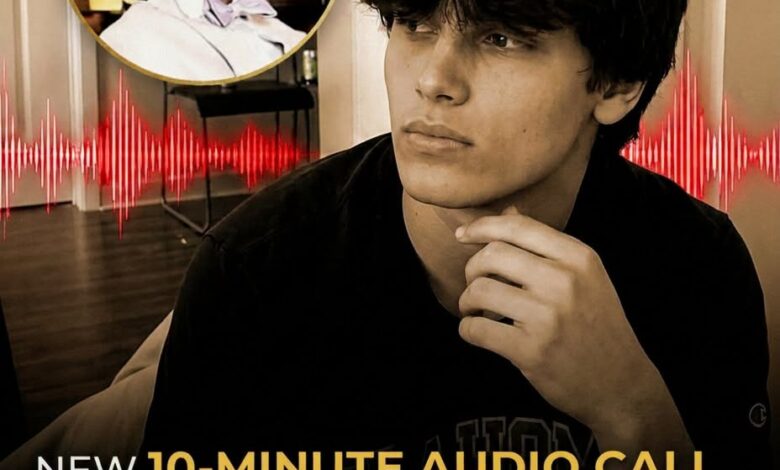
The renewed attention comes as hundreds of court exhibits have been released by a Collin County court, giving the public a clearer look at the moments surrounding the fatal encounter. The incident happened on April 2, 2025, during a district track and field event at David Kuykendall Stadium in Frisco, Texas. Witnesses said Anthony, a student from Centennial High School, was sitting under a tent reserved for Memorial High athletes when Austin told him to leave. According to investigators, the confrontation lasted less than 30 seconds. Emergency calls released afterward captured the panic and urgency as coaches, students, and first responders tried to help Austin until paramedics arrived. The recordings have been especially difficult for Austin’s family, with his father, Jeff Metcalf, saying he still cannot bring himself to listen to some of the material again.
Police body-camera footage and surveillance video have also become central to the renewed discussion. Reports say one video shows Anthony speaking with officers shortly after the incident and stating that Austin had put his hands on him. In another moment that drew attention, when an officer referred to him as the alleged suspect, Anthony reportedly responded, “I’m not alleged. I did it.” Other footage reportedly showed him leaving the area after the encounter. These materials have fueled debate over the facts of the case, the role of self-defense claims, and how the evidence was presented during trial. Legal observers have noted that under Texas law, the use of deadly force is difficult to justify without evidence of a serious threat, though Anthony’s new attorneys are expected to review every possible argument as part of the appeal process.
For Austin’s family, however, the legal process is only one part of a much deeper loss. Jeff Metcalf has said the release of the recordings and videos may help correct misinformation that spread online before the trial, but he also said he had hoped to see more accountability and remorse after his son’s death. Austin was remembered by his family as a dedicated student-athlete, a football leader with a 4.0 GPA, and a twin whose brother witnessed the tragedy firsthand. Frisco ISD provided counselors for students and staff after the incident, as many young witnesses were left coping with the emotional impact of what they saw. Now, as Anthony’s new legal team prepares its appeal strategy, the case remains divided between two very different searches: one side looking for possible legal errors, and the other still searching for peace, accountability, and healing.