Veteran Hollywood actor dies after tragic cancer battle
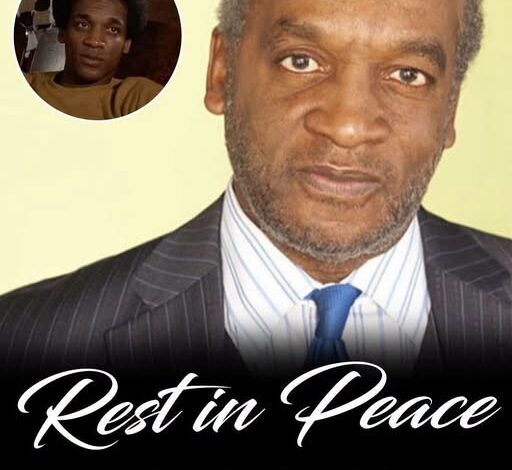
He stole scenes in The Rockford Files, haunted audiences with his unforgettable performance in J.D.’s Revenge, and brought a quiet warmth to every set he walked onto. Fellow actors often spoke about his generosity, his patience, and the calm presence he carried behind the camera. Now, Carl W. Crudup is gone, leaving behind not only a remarkable body of work but also a deeply personal story that many fans never knew. While audiences remembered him for the characters he portrayed, those closest to him remembered the man who chose a life of simplicity, spending his later years on a quiet California ranch surrounded by the animals he loved rather than the spotlight that once defined his career.
Carl W. Crudup’s life never followed the easy path that Hollywood often promises. Born in the Mississippi Delta and later raised in Pittsburg, California, he developed resilience long before stepping onto a stage. His early years shaped the quiet determination that would become one of his defining qualities. Before acting became his profession, he served in the United States Army in Europe, an experience that broadened his perspective and strengthened the discipline that would later guide his artistic career.
After completing his military service, Crudup pursued the dream that had quietly taken root within him. He enrolled at the prestigious American Academy of Dramatic Arts, where he refined his craft and prepared for a career that would span decades. His dedication quickly opened doors, leading him to Broadway, where he earned recognition for his performance alongside Moses Gunn in The First Breeze of Summer. Sharing the stage with accomplished performers challenged him to grow as an actor, and audiences soon recognized the depth and authenticity he brought to every role.
Although he never sought celebrity status, Carl became one of those rare performers whose face audiences instantly recognized. He built a career not through flashy leading roles but through memorable supporting performances that often lingered in viewers’ minds long after the credits rolled. Whether appearing in film or television, he possessed a remarkable ability to make every character feel genuine, fully lived-in, and emotionally believable.
His film career included appearances in projects such as The Gambler and the cult classic J.D.’s Revenge, where his performances demonstrated remarkable range and emotional depth. Television audiences welcomed him into their homes through appearances on beloved series including The Rockford Files, ER, Criminal Minds, Shameless, and numerous other productions. Directors valued his professionalism, knowing he could elevate even the smallest role with subtlety, authenticity, and quiet emotional power.
What made Crudup particularly admired within the industry was not only his talent but also his consistency. He approached every role with the same commitment regardless of screen time or recognition. Fellow performers often described him as someone who understood that storytelling depended on every member of the cast, not just the stars whose names appeared first on movie posters. His willingness to support others made him a trusted colleague throughout his career.
Behind the scenes, his reputation was built on kindness rather than ego. Crew members remembered an actor who treated everyone with equal respect, from directors to production assistants. Younger actors often found themselves drawn to him, not because he sought attention, but because he generously shared his experience without ever making others feel intimidated. His advice came naturally, often delivered through stories that carried lessons far beyond acting itself.
Many colleagues recalled how his conversations could quiet an otherwise hectic film set. Between takes, he would tell stories from his years in theater, his travels, or his life before Hollywood, creating moments of calm amid the fast pace of production. His presence reminded others that success was not measured solely by fame but by the relationships built along the way.
As the years passed, Crudup gradually stepped away from the demanding pace of the entertainment industry. Rather than chasing additional recognition, he embraced a quieter existence at his ranch in Littlerock, California. There, surrounded by wide-open landscapes and the animals he cared for so deeply, he found peace far removed from studio lights and red carpets. The ranch became more than a home; it became a sanctuary where he could live according to values that had always mattered most to him.
Those who visited often remarked on the affection he showed his animals. His goats and other companions were treated not simply as livestock but as members of an extended family. Caring for them brought him joy and purpose, offering a rhythm of life completely different from the unpredictable demands of Hollywood. The simple routines of ranch life reflected the humility that had always defined his character.
During his later years, Crudup faced a difficult battle with prostate cancer. Rather than allowing illness to define him publicly, he chose dignity and privacy. He confronted the disease with the same quiet strength that had shaped his entire life, relying on close family, treasured friendships, and the peaceful surroundings of his ranch. While fans continued celebrating his performances, he focused on living each day with grace and gratitude.
News of his passing prompted an outpouring of tributes from colleagues and admirers alike. Many remembered not only specific performances but the compassion he showed behind the scenes. Stories emerged of encouragement offered to struggling actors, thoughtful conversations shared between takes, and countless small acts of generosity that rarely reached public attention. These memories revealed the true measure of the man behind the performances.
Carl W. Crudup leaves behind two daughters, a lifetime of artistic achievement, and a legacy that extends far beyond individual roles. His career reminds audiences that greatness is not always measured by awards or celebrity. Sometimes it is found in consistency, integrity, and the ability to make every performance feel deeply human. His work continues to resonate because it reflected genuine emotion rather than performance alone.
Though the cameras have stopped rolling for Carl W. Crudup, the characters he brought to life continue to speak for him. Every scene he enriched, every young actor he encouraged, and every colleague whose life he quietly touched forms part of a legacy that will endure. Once audiences discover his body of work, they often realize something remarkable: he may not always have been the star of the story, but he was often the reason it felt real. That quiet excellence is the gift he leaves behind—and one that will not be forgotten.