Sally Field speaks out after facing criticism about her looks.
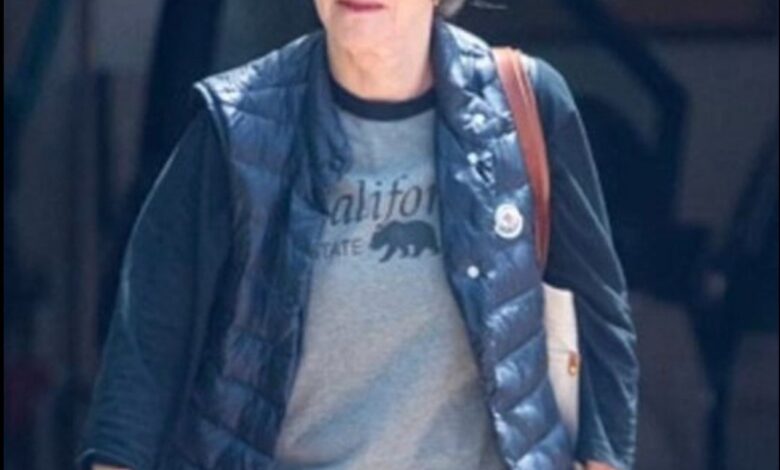
It has never been easy to be a woman in Hollywood, especially not one who chooses to grow older on her own terms.
For decades, the entertainment industry has placed enormous pressure on actresses to remain perpetually youthful, often rewarding those who conform to rigid beauty standards while sidelining those who do not.
Yet Sally Field has consistently challenged those expectations. Through talent, resilience, and an unwavering sense of self, she has built a career defined not only by remarkable performances, but by authenticity and courage.
Now in her late seventies, Field continues to radiate the warmth and emotional intelligence that first captivated audiences when she was a teenager.
While she remains celebrated for her performances in beloved films such as Forrest Gump, Mrs. Doubtfire, and Steel Magnolias, some of her most meaningful contributions have occurred off-screen.
Her openness about aging, personal trauma, and health challenges has made her an influential voice far beyond the boundaries of film.
Early Life and Personal Challenges
Sally Field was born on November 6, 1946, in Pasadena, California. Her early life was shaped by both creativity and hardship. After her parents divorced, her mother married actor and stuntman Jock Mahoney.
In her 2018 memoir, In Pieces, Field revealed that she endured sexual abuse by her stepfather during her childhood. She wrote about the emotional isolation and fear she experienced, as well as the long-lasting psychological effects of that trauma.
Speaking openly about such deeply personal experiences required extraordinary bravery. By sharing her story, Field contributed to broader conversations about abuse, survival, and the importance of speaking out.
Her memoir was widely discussed and reviewed, including by The New York Times, which highlighted her candor and emotional depth.
Despite the instability at home, Field found refuge in performance. Acting offered structure, validation, and a sense of control that had been missing from other parts of her life.
Breakthrough in Television
Field’s professional breakthrough came in 1965 when she landed the title role in Gidget. The lighthearted sitcom, based on a popular teenage character, quickly made her a recognizable face on American television. Although the show lasted only one season, it established her as a rising young star.
She soon starred in another series, The Flying Nun, playing Sister Bertrille, a novice nun whose lightweight frame allowed her to “fly” in strong winds.
While the show gained popularity, Field later admitted that she struggled during that period. She felt typecast and underestimated, longing for more serious and challenging roles.
Determined to grow as an actress, she studied with renowned acting coach Lee Strasberg at the Actors Studio. This decision marked a turning point in her career.
Transition to Dramatic Roles
Field’s dedication paid off. In 1976, she delivered a powerful performance in the television film Sybil, portraying a young woman with dissociative identity disorder. The role demonstrated her dramatic range and earned her critical acclaim.
Her transformation into a respected dramatic actress was solidified with Norma Rae, in which she portrayed a textile worker who becomes a labor union organizer.
The role earned her the Academy Award for Best Actress. During her acceptance speech, she famously declared, “You like me, right now, you like me!” — a moment that has since become one of the most quoted lines in Oscar history.
Field later won a second Academy Award for her role in Places in the Heart, further cementing her status as one of Hollywood’s most accomplished actresses.
Iconic Maternal Roles and Career Longevity
As her career progressed, Field became known for portraying complex, strong maternal figures. In Steel Magnolias, she played M’Lynn Eatenton, delivering one of the film’s most emotionally intense performances.
In Mrs. Doubtfire, she portrayed Miranda Hillard, a mother navigating divorce and family change. And in Forrest Gump, she embodied the devoted mother of Forrest, offering wisdom and unconditional love.
These roles resonated with audiences across generations. Field brought depth and humanity to each character, avoiding stereotypes and embracing nuance.
She also appeared in films such as Soapdish and Not Without My Daughter, continuing to demonstrate versatility.
Confronting Ageism in Hollywood
As Field entered her later years, she encountered a familiar challenge faced by many women in entertainment: ageism. Hollywood has long favored youth, particularly for female performers. Many actresses feel pressured to undergo cosmetic procedures to maintain a youthful appearance.
Field has spoken candidly about her decision to age naturally. In a 2016 interview with Good Housekeeping, she discussed accepting her identity as an older woman.
She acknowledged noticing physical changes — sagging skin, wrinkles, and puffiness — but emphasized that aging is inevitable.
Rather than attempting to recreate her younger appearance through plastic surgery, Field has chosen to embrace the natural process. She has explained that respecting who she is now feels more authentic than chasing an impossible standard.
Her perspective challenges deeply ingrained cultural messages that equate beauty solely with youth. By appearing publicly without dramatic cosmetic alteration, she offers a powerful example of self-acceptance.
Online Criticism and Public Scrutiny
Unfortunately, choosing authenticity has not shielded Field from criticism. Like many public figures, she has faced harsh comments on social media platforms, including X (formerly Twitter). Some users have targeted her appearance, using unkind language.
Such criticism reflects broader societal issues rather than personal shortcomings. Public discourse surrounding aging women often reveals double standards, where natural aging is judged more harshly in women than in men.
Field has largely declined to engage with negativity. Instead, she has continued to advocate for confidence and dignity in later life. Her refusal to conform has become a quiet form of resistance.
Health Challenges: Osteoporosis
Beyond industry pressures, Field has faced significant health challenges. In 2005, before turning 60, she was diagnosed with osteoporosis, a condition characterized by decreased bone density and increased fracture risk.
Women are statistically more susceptible to osteoporosis, particularly after menopause, due to hormonal changes that affect bone strength.
Field has spoken about how surprised she was by the diagnosis. Despite maintaining a healthy lifestyle, she discovered that she fit the risk profile: small-boned, Caucasian, and approaching 60.
She explained in an interview with WebMD that the progression of bone loss can occur silently, without noticeable symptoms.
Her openness about osteoporosis helped raise awareness of the condition. She became involved in advocacy efforts to educate women about bone health, screenings, and preventative measures.
By discussing her experience, she encouraged others to prioritize medical checkups and proactive care.
Advocacy and Personal Growth
Throughout her life, Field has demonstrated resilience. From surviving childhood trauma to navigating industry pressures and health challenges, she has repeatedly transformed adversity into strength.
Her memoir, In Pieces, not only detailed her experiences with abuse but also explored her romantic relationships, insecurities, and professional doubts. By sharing vulnerabilities, she challenged the illusion of celebrity perfection.
Field has also been active in political and social causes, supporting issues related to women’s rights and equality. While she does not center her public identity on activism, she consistently uses her platform thoughtfully.
Relationship with Burt Reynolds
Field’s relationship with Burt Reynolds has often drawn public interest. The two met while filming Smokey and the Bandit and were romantically involved for several years. Their chemistry was evident both on and off screen.
However, Field later described the relationship as complicated and, at times, painful. In her memoir, she explained that she eventually chose to distance herself from Reynolds for her own emotional well-being.
They did not speak during the final decades of his life. Following his death in 2018, Field reflected on their history with honesty and nuance, acknowledging both affection and difficulty.
Enduring Influence
At 78, Sally Field continues to act selectively, choosing roles that reflect depth and complexity. She remains respected within the industry not only for her awards and filmography, but for her integrity.
Her career spans more than six decades. She has won two Academy Awards, three Emmy Awards, and numerous other honors. Yet her legacy extends beyond accolades.
By speaking openly about abuse, aging, and osteoporosis, she has humanized the experience of growing older in an industry that often resists it. By rejecting unrealistic beauty standards, she has offered an alternative narrative — one rooted in acceptance and self-respect.
A Model of Grace
Sally Field’s story is not one of defiance for the sake of rebellion. It is one of authenticity. She has not claimed perfection. She has admitted insecurity. She has acknowledged fear and doubt. But she has chosen to move forward anyway.
In a culture that often equates youth with value, Field’s presence is a reminder that talent, wisdom, and strength deepen with time. Her radiance today is not identical to the glow of a 19-year-old starlet — it is richer, shaped by experience.
Her life demonstrates that aging is not a failure of preservation but a testament to survival.
In embracing who she is now, Sally Field has given audiences something more meaningful than perpetual youth. She has offered honesty. And in doing so, she has redefined what it means to grow older with dignity in Hollywood.