My Daughter Befriended a Lonely Man at the Park — Then an Old Photo Fell from His Pocket
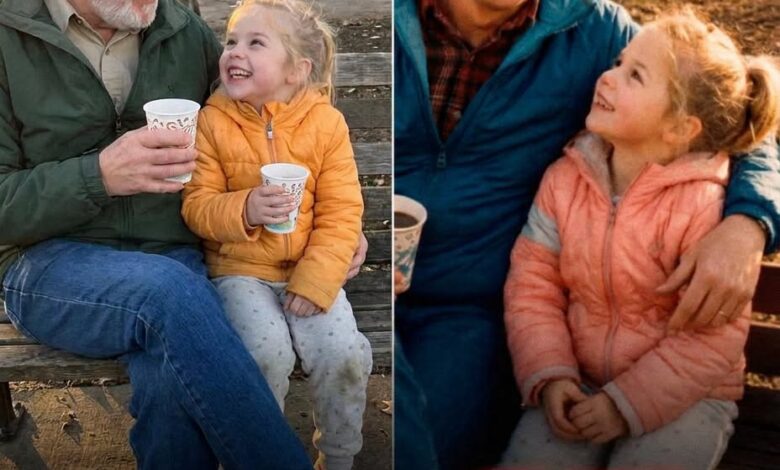
Every morning at exactly nine, the old man sat on the same park bench holding two cups of coffee, though no one ever joined him. My neighbor warned me to keep my six-year-old daughter Sophie away from him, calling him strange because he never spoke, never smiled, and stared at the same spot beneath the oak tree like he was waiting for someone who would never arrive. I tried to listen, but Sophie had the kind of heart that noticed sadness before danger. One afternoon, before I could stop her, she ran straight to his bench and asked why he always brought two coffees. The man looked stunned, then softly answered that his wife had hated drinking coffee alone. That was the day Sophie decided Walter was not scary — just lonely.
Over the next few weeks, Walter changed in ways the whole neighborhood could see. He smiled when Sophie called him “Park Grandpa,” brought her wildflowers, helped her draw with chalk, and sat with her while she fed the ducks. I watched carefully at first, afraid I was being too trusting, but Walter was gentle, respectful, and almost painfully grateful for every minute of company. My sister Claire, however, saw only danger. She accused me of being careless, said the other mothers were talking, and warned that if I did not stop Sophie from seeing him, she would call the police herself. I told her Walter was a lonely widower who had finally found a reason to smile. She told me I was being naive.
Then one evening, Walter reached into his coat pocket for a napkin, and an old photograph slipped out onto the ground. I picked it up, expecting to hand it back without thinking, but the image froze me where I stood. It showed a little girl with blonde curls, a bright smile, and a face so much like Sophie’s that my heart began to race. I demanded to know why he was carrying a picture of my daughter. Walter’s face crumpled as he explained that the girl was not Sophie. Her name was Lily. She had been his daughter, and she had died thirty years earlier in a car accident along with his wife. Suddenly, the two coffees, the empty bench, and the years of silence made terrible sense.
Walter explained that on the day of the accident, he had promised to meet his wife and daughter at that park with coffee. He was late, they left to look for him, and a truck ran a red light. Since then, he had punished himself by bringing two cups to the same bench every morning, sitting with the guilt he could not release. Sophie had not replaced Lily. She had interrupted Walter’s loneliness long enough for him to remember he was still alive. But Claire, who had followed us to the park, refused to listen. She called him dangerous, accused him of using Sophie to fill his grief, and admitted she had already called the police. When Walter heard the sirens, he vanished, leaving one untouched cup of coffee steaming on the bench.
I found him at his house with a suitcase by the door, ready to leave because he believed he had brought trouble into our lives. Sophie ran to him, wrapped her arms around his legs, and begged him not to go because he still had to teach her chess. I told him he had not hurt us, and that healing did not make him dangerous. It made him human. He stayed. Months later, Walter was back on his bench, but this time there were three cups: one for him, one for Sophie, and one for me. The photo that had terrified me at first did not reveal a threat. It revealed a man who had spent thirty years trapped in one painful moment — until a little girl with a kind heart helped him step out of it.