A Year After My Daughter Vanished from Camp, I Found a Shoebox Under Her Twin Sister’s Bed
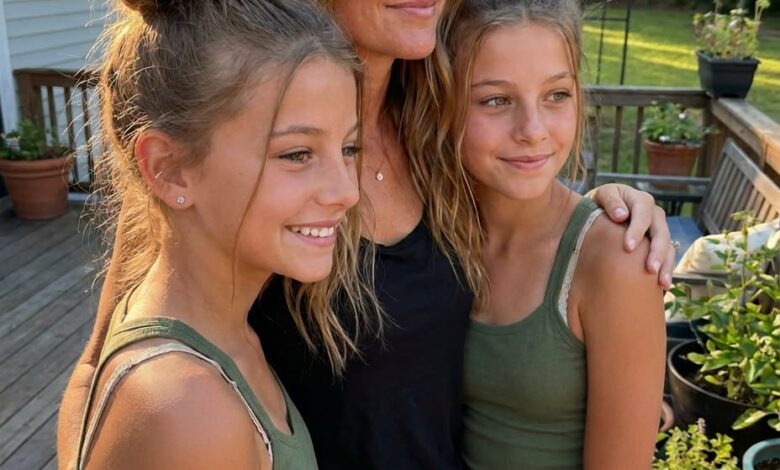
A year after my daughter Maya vanished from summer camp, I found a taped shoebox hidden under her twin sister’s bed and called the authorities before I even understood what I was holding. My hands were shaking, my mind racing, and for one terrible moment I thought I had found the answer to the mystery that had haunted our home for twelve months. But the box did not tell me what happened to Maya. It told me what had been happening to Sophie, the daughter who had come home. Inside were memories, letters, and a notebook that showed me a truth I had been too broken to see: while I was searching for the child I lost, my surviving daughter had been disappearing right in front of me.
Since Maya vanished, grief had lived in every corner of our house. Her toothbrush still stood in the bathroom cup, her empty chair stayed closest to the kitchen window, and I kept washing her purple hoodie because I was afraid the last trace of her would fade away. Sophie watched me quietly through all of it, sitting in silence, eating without complaint, and moving through the house like someone trying not to disturb a wound. I told myself her silence was grief. I told myself twelve-year-olds became quiet after tragedy. I told myself many things that made it easier not to look too closely at the pain in her face. Then, while searching for a missing math workbook in her room, I found Maya’s old sneaker box pushed deep under the bed and wrapped in layers of duct tape.
Sophie appeared in the doorway and begged me not to open it, but I was already too frightened to stop. Inside were friendship bracelets, photos from camp, birthday cards, Maya’s favorite hair clip, and a bundle of letters addressed to the missing persons unit, the sheriff’s office, and the camp investigators. None had been mailed. At the bottom was a blue notebook filled with letters Sophie had written to Maya. The first line broke me: “Dear Maya, Mom still leaves your toothbrush out. I don’t think she’s noticed mine needed replacing.” Page after page revealed what I had missed. Sophie wrote that everyone kept asking what she remembered from the lake, but nobody asked how she was. She wrote that I washed Maya’s hoodie again, called the camp again, drove past the search site again, and seemed to vanish a little more each day.
When the officer arrived, I realized I had called out of panic, not because Sophie was in danger from anyone outside our home, but because she had been carrying too much inside it. I apologized and asked for a grief counselor’s number instead. After he left, Sophie sat on the stairs and told me why she had never mailed the letters. She was afraid the authorities might write back saying the case was closed, and she believed that would break me completely. My twelve-year-old daughter had been protecting me while grieving alone. She had stopped saying Maya’s name because every time she did, I cried. She told me she wanted her twin sister back, but she wanted her mother back too. I had been treating her like a witness to Maya’s disappearance, not like a child who had also lost half of herself.
A week later, Sophie and I drove to the lake together. For the first time in a year, we did not talk about theories, search timelines, or unanswered questions. We talked about Maya as a person: how she ate cereal dry, how she fell asleep in the car almost instantly, how she laughed too loudly and wanted to take a paddleboat out at sunrise just to watch mist rise from the water. Sophie smiled for real that day, and I understood that remembering Maya did not mean losing her again. It meant letting her live in us without forgetting the child still beside me. We started counseling, replaced Sophie’s toothbrush, and slowly learned how to grieve together instead of separately. The shoebox did not solve Maya’s disappearance, but it saved Sophie from being lost in the shadow of it.