The Silent Killer Hiding in Your Neck: Why This Visible Bulge Is a Life-or-Death Emergency
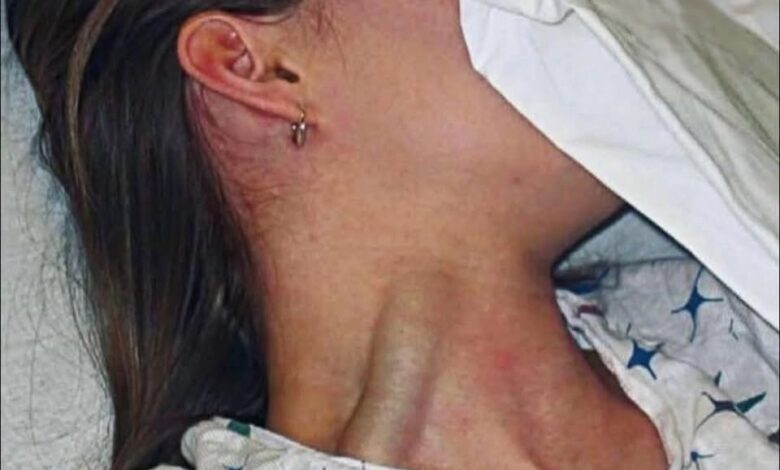
You look in the mirror while brushing your teeth, and for a split second, you notice something strange: a thick, prominent vein pulsing rhythmically in the side of your neck. You might dismiss it as tiredness, a stiff posture, or a minor cosmetic quirk, but you could be staring directly at a catastrophic medical event in progress. This is not just a vein—it is a flashing red siren from your internal organs signaling that your heart or lungs are on the brink of failure. Ignoring this bulge is one of the most dangerous mistakes you can ever make.
Jugular vein distension (JVD) is far more than a visual anomaly; it is a clinical marker of elevated central venous pressure. Under normal, healthy conditions, these large vessels—which serve as the primary conduits for deoxygenated blood returning from the brain and face—should be almost entirely invisible, especially when you are standing or sitting upright. When they become markedly visible, bulging prominently above the clavicle, it indicates that blood is backing up, unable to return to the heart with the ease it requires. This backup creates a pressure gradient that literally forces the vessels to distend, transforming your neck into a high-pressure warning system for your entire cardiovascular network.
The potential causes behind this visible distension range from chronic, manageable conditions to acute, life-threatening emergencies. At the top of the list is right-sided heart failure. In this scenario, the right ventricle of the heart—which is responsible for pumping blood to the lungs for oxygenation—loses its efficiency. Unable to push the blood forward, the system causes a bottleneck. This “backlog” results in blood pooling in the systemic veins, including the jugulars. If you notice this bulge accompanied by swelling in your ankles, unexplained fatigue, or persistent fluid accumulation in your abdomen, you are observing the hallmark physical presentation of a heart struggling to keep up with the demands of your body.
Even more terrifying is the condition known as cardiac tamponade. This is a medical emergency of the highest order, where the pericardial sac surrounding your heart fills with fluid, essentially squeezing the organ until it can no longer expand or contract effectively. When the heart is compressed, it cannot pump, and the blood destined for the chambers remains trapped in the venous system. Patients experiencing this often present with “Beck’s triad”: distended neck veins, dangerously low blood pressure, and muffled heart sounds. Without immediate, invasive intervention to drain the excess fluid, the heart is effectively suffocated, leading to imminent cardiac arrest.
The lungs, too, play a critical role in this dangerous diagnostic picture. A tension pneumothorax—a situation where air is trapped inside the chest cavity—can exert such intense pressure on the heart and surrounding vessels that it prevents proper venous return. This is a traumatic event often preceded by sudden, agonizing chest pain and extreme difficulty breathing. The body’s response to the internal pressure shift manifests in the neck, as the veins become visibly gorged in a desperate attempt to shunt blood away from the overloaded chest cavity. This is a surgical emergency that requires immediate decompression; there is no time for home remedies or “waiting to see how it feels.”
Furthermore, a pulmonary embolism—a blood clot that migrates to the arteries of the lungs—can create a sudden, massive increase in pressure on the right side of the heart. As the heart struggles to force blood past the obstruction, the right ventricle becomes overloaded, causing the backup that leads to visible JVD. With symptoms often including rapid, shallow breathing, chest pain, and low oxygen levels, this is a condition that requires urgent hospital imaging and life-saving anticoagulant treatment. The neck vein is often the first visible symptom that the pulmonary circuit has been compromised.
How can you tell if what you are seeing is a true medical red flag? Healthcare professionals typically evaluate these veins by placing the patient at a 30 to 45-degree angle. By observing the height of the venous column relative to the sternal angle, a doctor can correlate the physical sight with your central venous pressure. If this is something you have noticed, it is not a diagnostic test you should attempt to interpret alone. You need a formal clinical evaluation, which will likely involve an echocardiogram to observe the heart’s function in real-time, a chest X-ray or CT scan to inspect the lungs, and an ECG to monitor the electrical rhythm of your heart.
When should you seek help? The answer is simple: immediately. Massive or persistent jugular vein distension is a medical red flag that must never be ignored. If you notice bulging neck veins in yourself or a loved one—especially if that sign is paired with shortness of breath, sudden lightheadedness, chest discomfort, or significant swelling in the lower limbs—do not wait for an appointment or hope it fades overnight. Seek emergency medical care at once. These symptoms are frequently the early, desperate warnings of profound cardiovascular or pulmonary dysfunction that requires immediate stabilization.
Treatment for this condition is never about “fixing the vein.” The vein is merely the messenger, reporting a disaster occurring deeper within your body. Once the underlying cause is identified, the strategy becomes laser-focused: diuretics and beta-blockers may be employed to ease the workload on a failing heart, urgent fluid drainage or needle decompression may be used to release the pressure on a suffocating chest, and potent anticoagulants may be administered to dissolve life-threatening clots. The management plan is entirely dependent on the speed and accuracy of the diagnosis.
In the end, your body is a sophisticated system that communicates its status in physical, observable ways. Jugular vein distension is one of the most reliable, visceral indicators that the internal flow of your life force has been interrupted. It is a sign that demands respect and immediate action. Do not let yourself become a statistic of a treatable condition that was spotted too late. If you see the warning, act on it. Your heart, your lungs, and your future depend on your willingness to listen to what your body is trying to tell you.