The Silent Classroom: Twelve Futures Extinguished in a Terrifying Highway Catastrophe
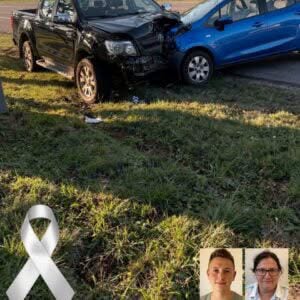
Twelve vibrant lives were snuffed out in a heartbeat, leaving behind nothing but the haunting silence of an empty bus and the jagged, twisted metal of a nightmare. The highway near Nuporanga, once just a path home, transformed into a scene of absolute carnage that has brought an entire nation to its knees. Families who were waiting for a simple “I’m on my way” text were instead greeted by the wail of sirens and the crushing reality of a tragedy that defied comprehension. The dreams of twelve brilliant students at the University of Franca are gone, and the shock is only just beginning.
The impact was violent, instantaneous, and final. As the university bus collided with a heavy truck, the world for dozens of young people—and their families—shifted permanently into a dark, unrecognizable reality. What began as a routine commute after a day of lectures ended in an inferno of grief. Twenty-one other students were pulled from the wreckage, left to navigate the agonizing path of physical recovery while carrying the psychological weight of being the ones who survived. The sheer scale of the destruction has left the region in a state of paralysis, turning a vibrant academic community into a landscape of inconsolable mourning.
In the immediate aftermath, the scene was one of chaos that no amount of emergency training could fully mitigate. First responders worked through the night, their efforts illuminated by the harsh, strobing lights of emergency vehicles against the dark expanse of the road. But as the sun rose over Nuporanga, it revealed the true scope of the loss. The vibrant promise of twelve bright futures had been extinguished, replaced by a vacuum that resonated through every hallway and lecture theater at the University of Franca. The institution, once a center of intellectual discovery, effectively froze in time. Classes were suspended, not out of protocol, but out of a collective, suffocating realization that the halls would never be the same again.
São Paulo’s governor did not hesitate to declare three days of official state mourning, but symbols of government decree feel hollow against the magnitude of this loss. Across the city and the surrounding areas, the campus transformed into a sanctuary of grief. Thousands of candles were lit, forming a shimmering, mournful perimeter where students gathered not to study, but to hold one another and weep. The air was thick with the scent of lilies and the sound of quiet, broken prayers. There is a specific kind of agony in losing the young—a realization that the natural order of life has been cruelly and inexplicably violated.
While the legal machinery begins its slow, grinding work, investigators are tasked with the impossible: reconstructing the exact mechanical and human failures that led to the collision. The truck driver now faces the heavy, inevitable weight of legal proceedings, a process that promises to be as grueling as it is necessary. Yet, for the families who must now plan twelve funerals instead of celebrating twelve graduations, the legal outcome is secondary. Their focus remains on the impossible task of walking through a home that has become haunted by the memories of who should have been there.
Counselors and grief specialists are currently working around the clock, sitting in hushed rooms with parents who are physically present but clearly shattered. These professionals provide the only bridge between the parents and a reality they cannot bear to accept. Friends and classmates cling to one another in auditoriums and city squares, trading photographs and stories of laughter that feel like echoes from a different lifetime. They speak of dreams that will never be fulfilled, of planned careers that will never launch, and of the profound, gaping holes left in their social circles. These are not just names on a casualty list; they were the architects of the future, and their absence is a tax that the entire community will be paying for decades to come.
Amidst the raw, unfiltered agony, the tragedy has ignited a fierce, urgent conversation about road safety and the systemic failures that put our students at risk every single day. Why was the road design not safer? Why were the heavy vehicles and student transport systems allowed to converge in such a dangerous configuration? For years, the transport of students has been treated as a logistical necessity rather than a high-stakes safety operation. This catastrophe has exposed the cracks in our infrastructure, demanding a reckoning from those in power. Protecting those who travel daily in the pursuit of education should be a paramount priority, yet it often takes a tragedy of this magnitude to force the hand of change.
Flowers, handwritten notes, and tear-stained messages now line the paths these students once walked. Every step on the university campus is now taken with a renewed awareness of how fragile the thread of life truly is. The community has made a solemn, unspoken vow that the final journey of these twelve young people will not be relegated to a footnote in a local news report. They are determined that the memory of these students will serve as a permanent, burning reminder that our current standards for public safety are inadequate.
As the state moves out of its official mourning period, the work of rebuilding begins—not just the infrastructure, but the human spirit. The University of Franca will eventually reopen, and students will return to their desks, but the trauma of this night will remain embedded in the foundation of the institution. We are forced to ask ourselves how we can possibly honor those who were taken too soon. The answer lies not just in the flowers we lay today, but in the structural and cultural changes we implement tomorrow. We must ensure that the pursuit of knowledge never again comes with such a devastating, final cost. Until then, we are left to hold the hands of those who are grieving and to remember the twelve bright lights that were extinguished far too soon, leaving a darkness in their wake that only time, and perhaps meaningful change, can ever begin to heal.