People shocked to learn how young Keira Knightley was in Pirates of the Caribbean
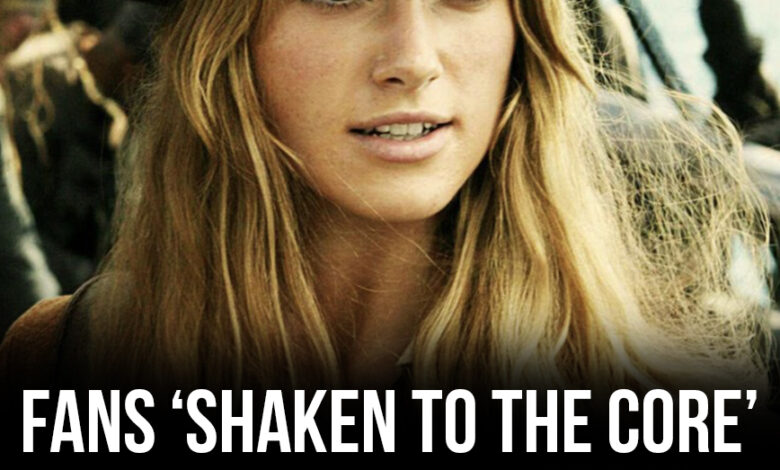
Now 40, Keira Knightley occupies a rare space in cinema as an actress of profound gravitas and outspoken advocacy. Yet, as fans revisit the film that made her a household name—2003’s Pirates of the Caribbean: The Curse of the Black Pearl—a startling realization is rippling through social media: the woman who commanded the screen as the formidable Elizabeth Swann was, for most of the production, legally a child.
Knightley was just 17 years old when she stepped onto the deck of the Black Pearl, an age that has left modern audiences in a state of collective disbelief. “This must be a LIE,” one fan recently remarked online, while another noted the jarring disconnect of seeing her as a peer at the time: “When I watched the movie I thought she was older than me.”
A Star with “Hollywood’s Heyday” Quality
The English-born actress was no stranger to the industry, having landed her first roles by age six. She had already navigated a galaxy far, far away as Sabé in Star Wars: Episode I – The Phantom Menace and found breakout success in the indie hit Bend It Like Beckham. However, it was producers Jerry Bruckheimer and Gore Verbinski who saw in her an “indescribable quality” reminiscent of the golden age of cinema.
Knightley initially underestimated the role, famously admitting she expected to be “riding in carriages.” Instead, she found herself performing her own stunts, including spending two full days standing on a plank before refusing a double to take a daring jump herself.
The Cost of a Billion-Dollar Franchise
While the franchise catapulted her to the A-list—with Dead Man’s Chest eventually becoming the third highest-grossing film in history at the time—the off-screen reality was far from a swashbuckling adventure. As her fame exploded, so did a toxic media culture that hounded her every move.
Tabloids focused relentlessly on her slender frame, fueling unfounded rumors of an eating disorder. By the age of 22, the weight of the scrutiny led to a full mental breakdown. Looking back in a 2024 interview with The Times, Knightley described a “classic trauma” response to those years.
“There’s been a complete delete… I’ll suddenly have a very bodily memory of it because, ultimately, it’s public shaming, isn’t it? It’s obviously part of my psyche, given how young I was when it happened. I’ve been made around it.”
A Precarious Age for Fame
The actress has been increasingly candid about the “precarious” nature of being a young woman in the Hollywood machine. Speaking to Variety, she noted that 17 is an age where one is “still a child” and needs the grace to make mistakes—a luxury the paparazzi denied her.
“The value of photographs of any famous young women at the time went up if they were of a very negative nature,” she told The Telegraph. “If you weren’t already having a mental breakdown, they were trying to push you into doing things that kept your value as high as those who were.”
Following the initial Pirates whirlwind, Knightley made the conscious decision to retreat from big-budget blockbusters, admitting to The Guardian that the level of fame was something she felt she “failed” to handle. “Even if I did another one now, I don’t know that I’d be confident I could deal with it any better,” she reflected with characteristic candor.

A Legacy Beyond the Screen
Today, Knightley has redefined her career on her own terms. While still a critically acclaimed talent—earning widespread recognition for her work in Pride and Prejudice and beyond—she has shifted much of her focus to humanitarian efforts. Her work with Amnesty International, Oxfam, and Comic Relief has made her a prominent voice for social justice.
Married to musician James Righton and a mother of two daughters, Knightley’s journey from a 17-year-old ingenue to a resilient advocate serves as a sobering reminder of the human cost of the early-2000s celebrity industrial complex.