My Daughter’s Passport Case Was Empty at the Airport — Then Grandma Smiled Like She Had Won
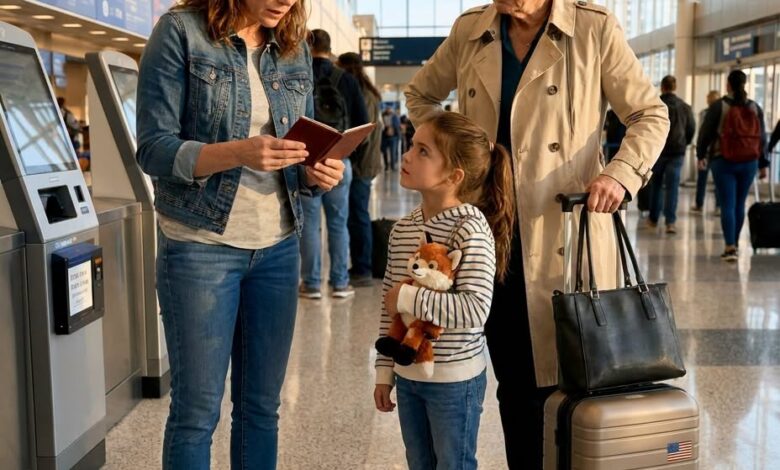
Ellie stood beneath the harsh white airport lights with her little passport case open in both hands, staring into the empty pocket where her blue booklet should have been. Around us, suitcases rolled, boarding announcements echoed, and travelers moved past with the careless urgency of people whose vacations were still intact. My nine-year-old daughter looked up at me, her face draining of color, and whispered, “Mom, it was in here. I put it in here.” I checked every zipper in her backpack, every folded sweater, every pocket in my purse, even though I already knew she had been so proud of carrying it herself. The airline agent gave us the soft smile people use before ruining a day they can’t save and said Ellie could not board an international flight without it. Behind us, my mother-in-law Carol stood beside her suitcase, watching my daughter begin to sob with a calm, polished expression that looked almost like satisfaction.
The trip to Cancun had taken five months of planning: matching swimsuits bought on sale, a countdown calendar on the refrigerator, and purple palm trees Ellie had drawn into each square. She was sensitive about touch, especially unexpected hugs, and my husband Brian and I had taught her a simple boundary: she could smile, wave, and say “No thank you.” Carol hated that. She believed respect meant obedience, even from a child, and Brian had spent most of his life being trained to appease her. His family had been living on our generosity for years — phone bills, credit cards, condo fees, emergency transfers, help for his sister Janelle — while Ellie’s braces, summer camp, and our own savings kept getting postponed. At the airport, when Carol suggested Ellie might finally learn to be “more responsible,” and Janelle asked if I wanted to leave our daughter behind so the trip would not be wasted, I wrapped my arm around Ellie and took her home.
That night, while Ellie slept with swollen eyes and her stuffed fox tucked under her chin, a photo appeared in the family group chat from a Cancun hotel room. There, sitting on a patterned blanket in bright vacation sunlight, was Ellie’s passport. The caption claimed it had somehow been mixed in with Grandma’s things by accident, but passports do not climb out of zippered cases and into someone else’s luggage. Brian called Carol, and after one careful pause too long, she admitted enough to reveal the truth: she had taken it because Ellie had refused to hug her at the door. “Maybe now she’ll finally learn something,” Carol said, as if humiliating a child in an airport were discipline instead of cruelty. Brian did not yell. He opened our bank accounts, pulled up years of payments, and watched the total reach $174,000 over seven years — money quietly siphoned from our household while his mother punished our daughter for having a boundary.
The consequences began that same night. Brian canceled automatic transfers, removed Carol from our phone plan, froze the credit card she had been using, changed passwords, opened new accounts, and sent a formal written notice ending all financial support and unsupervised contact until Carol apologized directly to Ellie. We reported the passport as taken without permission, contacted the hotel, and had management secure and return the document by overnight courier. When Carol tried to turn the family against us, Brian sent the screenshot of Ellie’s passport on the hotel bed and wrote one sentence that changed everything: Ellie is nine; she is allowed to say no to a hug. A lawyer explained that most of the money could not be recovered because it had been paid voluntarily, but we could stop the bleeding and protect what remained. Brian did exactly that, and when Janelle arrived demanding rent help, he finally said the word his family had spent decades teaching him to fear: no.
Months later, we took Ellie back to the airport for the trip that had been stolen from her. This time her passport stayed in a pouch around my neck until the agent scanned it and smiled, telling us we were all set. Ellie cried then, but it was relief, not shame. In Cancun she built a lopsided sandcastle called Fort No Hugs Unless I Say So, drank strawberry mocktails by the water, and laughed with the free, bright sound of a child learning that love does not require surrender. Carol eventually sent a letter, but it held no apology, only blame wrapped in soft words, so Brian threw it away without showing Ellie. A year later, watching our daughter at her birthday party shout “My body, my rules” while her friends laughed and backed away from a fistful of frosting, Brian said peace costs less than obedience. He was right. The airport had not taught Ellie responsibility. It had taught us that sometimes protecting your child means closing the door on the adult who mistook cruelty for a lesson.