Debra Messing Criticizes Mamdani Over NYC Snowstorm Chaos: Stars Slam Leadership for Dangerous Gridlock on City Streets.
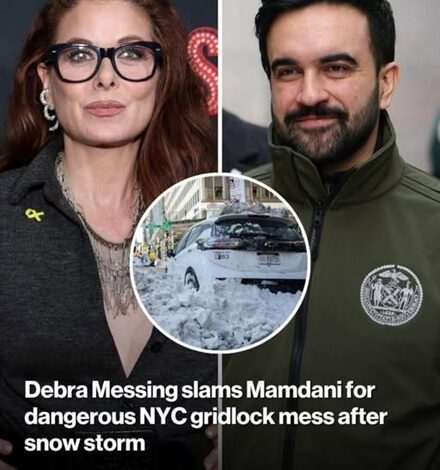
Winter Storm Fern swept through New York City with unusual intensity, leaving behind streets blanketed in snow, disrupted services, and frustrated residents navigating the aftermath.
Among those whose experiences captured widespread attention was actress and longtime New Yorker Debra Messing.
Her public recounting of a daylong struggle to reach a hospital appointment amid snow-choked streets has sparked a broader conversation about emergency preparedness, municipal coordination, and the lived realities of urban infrastructure under stress.
While celebrity voices often attract attention, Messing’s account resonates because it reflects a common, deeply human experience: being at the mercy of systems meant to protect citizens during a crisis.
The Incident: Traffic Gridlock and Human Vulnerability
In a widely shared social media post, Messing described the harrowing experience of being immobilized in traffic long after the storm’s heaviest snow had fallen.
What made the ordeal particularly alarming, she noted, was witnessing an ambulance—the embodiment of emergency response—stuck in the same gridlock, unable to navigate streets that should have been cleared for urgent transport.
For Messing, what might initially have been considered a mere inconvenience escalated into a situation with potentially life-threatening implications.
The inability of emergency services to move freely highlighted a breakdown in fundamental operational coordination at a moment when reliability was most critical.
This episode is notable not only because of Messing’s profile, but also because it encapsulates the fears and frustrations of thousands of residents facing delayed medical appointments, interrupted commutes, and disrupted daily life during extreme weather.
In a city of over eight million people, where emergency response systems are often taken for granted, even a single obstruction can feel magnified, turning routine travel into a test of patience and resilience.
Context: New York City’s History with Crises
Messing framed her experience in contrast to prior crises that New York City has weathered, including blackouts, terrorist attacks, and the global COVID-19 pandemic.
Each of these events, though disruptive, revealed the city’s capacity to mobilize resources, coordinate services, and communicate effectively with the public under pressure.
In comparison, she argued, the disruptions caused by Winter Storm Fern felt less like an unavoidable act of nature and more like a reflection of systemic inadequacies.
Historically, New York City has developed intricate contingency plans for severe weather, including pre-storm road clearing, prioritization of emergency routes, and coordination with public transportation authorities.
Yet Messing’s narrative suggested that these mechanisms either failed or were insufficiently executed. Her focus on city leadership was not merely anecdotal criticism but a reflection of broader expectations residents hold for municipal governance: ensuring that essential services continue to function even when routine conditions are disrupted.
Public Reaction: Shared Frustration and Collective Experience
Messing’s post quickly struck a chord with many New Yorkers who reported similar experiences during the storm. Social media threads, local news reports, and community forums were filled with accounts of stranded vehicles, delayed medical appointments, and impassable streets.
For many, the shared frustration transcended political affiliations or celebrity interest. It highlighted the ways in which extreme weather exposes vulnerabilities in urban life, particularly for residents reliant on timely access to emergency services, healthcare, and public transportation.
This collective experience underscores an essential point about urban living: disasters are not solely measured by meteorological intensity but by the ability—or inability—of civic infrastructure to maintain functionality when the unexpected occurs.
Messing’s account, though widely publicized because of her profile, served as a mirror to countless similar encounters across the city.
Official Responses: Context, Complexity, and Caution
City officials and supporters of the current administration urged caution in assigning blame for the disruptions. They pointed to the fact that severe winter storms frequently expose longstanding vulnerabilities in municipal infrastructure, traffic management systems, and emergency coordination networks.
Officials emphasized that leadership inherits challenges that cannot be fully rectified overnight, and that significant structural reforms in snow removal logistics, road maintenance, and emergency preparedness often require sustained investment over multiple fiscal cycles.
Proponents also highlighted the storm’s unusual intensity, suggesting that unprecedented conditions can overwhelm even the most meticulously prepared urban systems.
While the city maintains specialized fleets of snowplows, salt trucks, and emergency vehicles, extreme snowfall combined with high traffic density can create bottlenecks and operational delays, particularly in neighborhoods with narrower streets or higher population density.
From this perspective, the challenges Messing encountered may not solely indicate administrative negligence but reflect broader, systemic limitations that affect large cities worldwide.
Critics’ Perspective: Accountability and Crisis Readiness
Despite these reassurances, critics argued that the problems Messing described point to failures in leadership, planning, and execution.
They emphasized that one of the fundamental responsibilities of city governance is crisis readiness—ensuring that basic functions like emergency transport, public safety, and hospital accessibility remain operational during extreme events.
From this standpoint, Messing’s account is emblematic of a deeper erosion of trust, demonstrating that residents’ confidence in municipal systems is contingent on visible, effective response measures.
Critics also noted that recurring issues in snow removal, traffic management, and emergency service coordination are not new, but rather long-standing problems that exacerbate during periods of stress.
By highlighting the human consequences of these failures, Messing’s story contributed to a broader public discourse on accountability and infrastructure resilience.
Snow as a Civic Challenge
The episode illustrates a critical dynamic: while snowfall is a natural event, the civic response—or lack thereof—determines whether a storm is a mere inconvenience or a genuine threat to public well-being.
The distinction lies in how quickly and effectively authorities can mobilize resources, clear critical pathways, and reassure residents that essential services remain accessible.
In New York City, where density and complexity magnify the stakes, even short delays in snow clearance can have outsized effects on emergency medical access, commuting times, and general public safety.
The notion of snow as a civic challenge is not new. Urban planners and municipal engineers have long recognized that the unpredictability of weather, combined with the physical constraints of city streets, demands a highly coordinated response.
Messing’s account, however, brought this abstract concept into sharp, relatable focus. By describing the tangible obstacles faced by everyday residents, she transformed a meteorological event into a concrete narrative about human vulnerability, infrastructure limitations, and the necessity of robust civic planning.
Infrastructure and Logistics in Winter Storms
New York City employs a multi-layered system to manage snow and ice, including pre-treatment of roads with salt brine, deployment of plows for major arteries, and targeted clearing of critical emergency routes.
Despite these measures, challenges persist, especially in neighborhoods with higher vehicle density, older infrastructure, or limited access for large maintenance vehicles.
Snow accumulation can rapidly outpace clearing efforts, while gridlocked traffic—sometimes compounded by stalled or abandoned cars—can impede both municipal and private emergency response.
In Messing’s scenario, the visual of an ambulance trapped in traffic became a potent symbol of these logistical shortcomings. Emergency vehicles rely on a combination of cleared streets, traffic enforcement, and public compliance with detours.
When one or more of these elements fails, response times suffer, potentially endangering lives. This underscores the importance of pre-emptive planning and clear communication from city leadership, particularly in densely populated urban centers.
Psychological and Social Implications
Beyond logistical concerns, Messing’s experience sheds light on the psychological and social dimensions of urban crises. Being immobilized for hours, witnessing emergency vehicles struggle, and feeling at the mercy of municipal systems can evoke anxiety, fear, and a sense of helplessness.
These feelings are amplified when residents perceive that the response—or lack thereof—is preventable. Social media amplified Messing’s voice, creating a collective space for residents to share similar experiences, validate each other’s frustrations, and demand accountability.
The incident highlights how public trust in government is shaped not only by the inevitability of weather events but also by the perceived efficacy and transparency of leadership during emergencies.
When the public perceives that systems are failing, confidence erodes, leading to broader civic dissatisfaction even after the storm has passed.
Lessons for Future Preparedness
Several lessons emerge from the debate surrounding Messing’s experience. First, urban infrastructure must be designed and maintained with redundancy and adaptability in mind, ensuring that emergency services can function even under extreme stress.
Second, communication is critical: residents benefit from clear, timely updates regarding road clearance, emergency access routes, and expected delays.
Third, systemic investment in snow removal equipment, staff training, and inter-agency coordination is essential to mitigate the human consequences of future storms.
Finally, individual narratives—such as Messing’s—play an important role in holding municipal authorities accountable.
They humanize otherwise abstract data about response times and snow accumulation, transforming numbers and statistics into relatable stories that illustrate the stakes of civic preparedness.
Conclusion: From Celebrity Account to Civic Insight
Debra Messing’s account of Winter Storm Fern is more than a celebrity anecdote. It is a lens through which broader questions about urban infrastructure, emergency preparedness, and public trust can be examined.
Her description of gridlocked streets and immobilized ambulances humanizes the challenges faced by millions of residents, emphasizing that the consequences of a storm are not measured solely by snow accumulation but by the responsiveness of the systems meant to safeguard the public.
The story illustrates a universal truth about urban living: natural events can quickly become civic crises when infrastructure, coordination, or planning fall short.
While meteorological phenomena are unavoidable, the human experience of those events—whether marked by frustration, risk, or safety—depends on the effectiveness of civic systems.
As New York City continues to recover from Winter Storm Fern, the ongoing debate focuses less on individual complaints and more on collective responsibility.
Residents and observers alike are asking fundamental questions about accountability, efficiency, and trust: when disruption moves from nature to human consequence, can city systems be relied upon to protect and serve?
Messing’s post, amplified by the shared experiences of fellow New Yorkers, reminds both leaders and citizens that preparedness, communication, and visible action are as critical as any natural forecast in determining the impact of extreme weather events.
Ultimately, the Winter Storm Fern episode underscores that even routine activities—like reaching a hospital appointment—can become tests of civic resilience during extraordinary circumstances.
It highlights the interconnectedness of infrastructure, leadership, and human experience, providing a compelling case study in how urban centers can learn from failure, adapt, and strengthen their capacity to withstand the next storm.