My Parents Came to My Mansion With a Fake Lease — They Forgot I Owned the Door
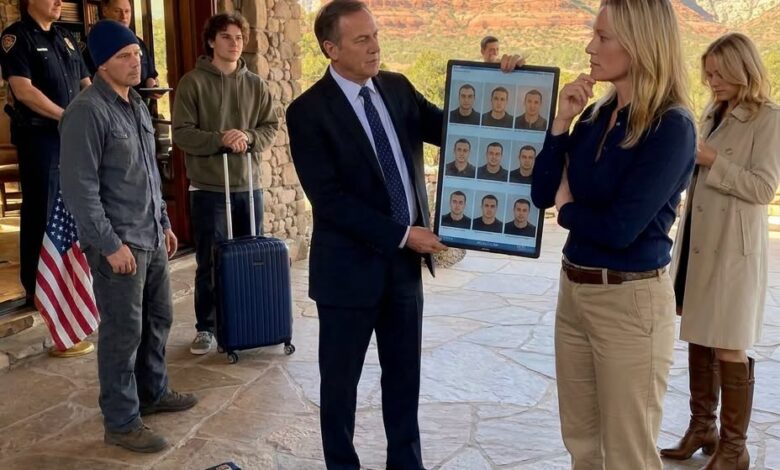
Ellena Voss stood in the shadowed entrance hall of her Sedona manor while her father held a fake lease up to the security camera like a winning lottery ticket. Outside, the December air was sharp, the antique brass lock gleamed under the porch light, and a locksmith waited with his drill angled toward the door. Her mother filmed from behind him, already wearing the tearful expression she used whenever cruelty needed to look like concern. Her brother Nathan stood beside two suitcases, as if the family had already moved in. “You can’t stop us,” her father called, his voice carrying through the old stone entryway. What he did not know was that two police officers were waiting in the library, three investigative reporters were seated in the dining room, and the locksmith had already agreed to cooperate. Ellena pressed the intercom and said, “Go ahead. Break the door.”
For most of her life, Ellena’s family had treated her like a footnote they could revise whenever the truth became inconvenient. At Christmas, her parents forgot gifts, excluded her from trips, and retold each cruelty as if she had been dramatic, unstable, or ungrateful. Her younger brother Nathan was the golden child, given a senior title in their father’s failing development company after dropping out of business school, while Ellena built her art career one invoice at a time. She had illustrated bestselling books, painted hotel murals, and once sent her parents $12,000 when her mother claimed employees might lose health insurance. Still, Nathan was praised for “carrying on the family legacy,” and Ellena was asked whether her art was still a hobby. By the time she bought the neglected twelve-room manor through her business company, with clean credit, a careful down payment, and help from her attorney Marcus Hail, she understood one thing clearly: protection was not paranoia when people had spent years mistaking your silence for permission.
The first warning came in an envelope sent to Ellena’s private mailbox: a loan guarantee for $1.88 million, supposedly signed by her two years earlier for her father’s company. The signature looked close, but the middle initial was wrong, the address was seven years old, and the notary worked for her father. Marcus helped her file an identity theft report and preserve the evidence, and soon they discovered a broader pattern — a forged lease, a counterfeit medical letter claiming Ellena had impaired judgment, copied purchase documents, and a plan to enter the manor as “lawful tenants.” If her family could establish physical occupancy, they could cloud the title, pressure the lender, interfere with her insurance and financing, and possibly use the property as collateral to delay foreclosure. Nathan had even sent her a photo of the manor with the message, Dad says family property should stay in the family. That was when Ellena understood they had not come looking for their forgotten daughter. They had come looking for an asset.
The confrontation unfolded exactly where the evidence could see it. Her father confirmed on camera that he believed the lease was valid, claimed Ellena lacked the capacity to deny entry, and ordered the locksmith to proceed. When the locksmith hesitated, Nathan grabbed a pry bar and damaged the restored frame, triggering the alarm and bringing the officers, detective, Marcus, and reporters into the hall. Her father waved the forged physician’s letter; her mother tried to call it a family misunderstanding; Nathan began insisting he thought the paperwork was real. But the documents told a different story: the lease predated Ellena’s ownership yet used language from later purchase records, the loan carried the same forged signature, and messages showed Nathan discussing how Ellena’s credit could keep the company alive. The lender’s fraud team, county attorney, insurance records, mortgage filings, and court evidence eventually dismantled the whole scheme. Her father took a plea involving forgery, attempted unlawful entry, and financial fraud; Nathan avoided prison by cooperating but faced restitution and monitoring; and her mother, stripped of the family narrative she had always controlled, was left trying to explain why love had required a fake lease and a forged doctor’s letter.
The broken doorframe stayed in place until the case ended, then Ellena gave the splintered wood to a sculptor in her first residency program. The piece became Entry Denied, a bronze woman holding her own key inside a fractured doorway, and it now stands in the manor’s main gallery. The house became what Ellena had intended all along: a residency for women rebuilding after financial or emotional abuse, with studio space, legal consultations, credit protection workshops, and rooms offered not as rescue, but as respect. On the first Christmas after sentencing, the ballroom filled with artists, laughter, and people who came because they were invited, not because they wanted access. Ellena read the final page of the letter she had spent years writing but never sending, closing the door on parents who remembered her only when her signature, credit, and home became useful. Her father had believed the broken door would prove she could not stop him. Instead, it became the first thing visitors saw when they entered a house he would never control.