An Actress Enduring Journey Through Hollywood and Life!
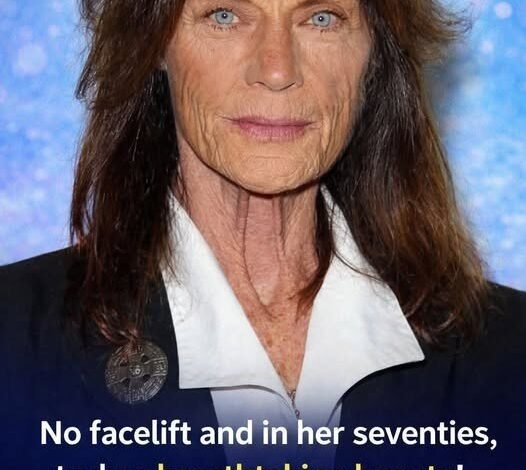
Aging almost never arrives with a dramatic announcement. Instead, it settles in gradually, layered year after year, revealing itself in subtle ways we don’t always recognize right away. It appears in photographs that suddenly feel recent, in familiar voices that carry new depth, and in reunions that quietly mark the passage of time. Far from diminishing a life, these shifts often bring clarity—sharpening perspective, deepening understanding, and narrowing focus to what truly matters.
For public figures, aging unfolds under constant observation. Their appearances, performances, and personal choices become part of a shared cultural timeline. Actors, especially, offer a unique sense of continuity. Through decades of work, they allow audiences to grow alongside them, watching skill and insight evolve as experience reshapes how stories are portrayed. Over time, creativity doesn’t fade—it often gains strength.
Hollywood has long celebrated youth, momentum, and reinvention. Yet many performers quietly defy that model by continuing to work on their own terms later in life. Some become more selective, choosing fewer roles with greater intention. Others gravitate toward characters shaped by wisdom rather than ambition. In doing so, they reveal a simple truth: creativity does not have an expiration date—it adapts.
Meg Foster’s career is a powerful example of this enduring process.
From her earliest screen appearances in the late 1960s and early 1970s, Foster stood apart. Her piercing blue eyes, composed intensity, and understated confidence made her instantly recognizable in an industry that often rewards sameness. She never attempted to blend in, and that quiet resistance became one of her greatest assets.
Throughout her work in film and television, Foster avoided narrow categorization. She moved fluidly between dramas, thrillers, science fiction, and Westerns, frequently portraying characters marked by emotional depth and inner strength. At a time when many actresses were limited to rigid archetypes, she sought roles that felt authentic—even when the worlds around them were imagined.
During the 1970s and 1980s, she worked alongside some of Hollywood’s most familiar faces, yet fame was never her goal. Rather than chasing visibility, she chose projects that genuinely interested her, regardless of their commercial promise. That independence earned her lasting respect—her performances enhanced scenes without demanding attention.
As the industry evolved, so did Foster’s relationship with it. Like many actors, she encountered the narrowing opportunities that often accompany age, particularly for women. Instead of viewing this as decline, she approached it as change. She continued acting when roles aligned with her values and stepped away when they did not.
Beyond acting, Foster embraced a quieter, more intentional life. She distanced herself from Hollywood’s relentless pace, choosing authenticity over constant exposure. This choice did not weaken her legacy—it refined it. By stepping back, she preserved her autonomy in an industry that often requires perpetual visibility.
Now in her mid-seventies, Foster stands as a reminder that relevance is not defined by headlines or screen time. It is shaped by integrity, consistency, and the courage to define success personally. Her lasting appeal comes not from resisting age, but from accepting it openly.
For actors like Foster, aging becomes less about loss and more about precision. Experience adds nuance. Time deepens emotional range. Early ambition gives way to discernment, allowing creativity to be guided by meaning rather than momentum. At this stage, artistic expression often becomes more deliberate, rooted in lived experience.
Audiences are changing as well. There is increasing appreciation for stories that reflect life in its entirety, including its later chapters. Performers who age visibly and honestly offer something rare: representation that honors time instead of denying it. They remind us that growth doesn’t stop—it simply takes new forms.
Meg Foster’s path reflects that shift. She represents a generation of performers who proved that individuality can outlast trends, and authenticity can endure long after the spotlight moves on. Her career is defined not by a single role, but by steady dedication to craft and self-respect.
In a culture that pressures people—especially women—to cling to youth, her example carries quiet strength. She did not reinvent herself for approval. She allowed evolution to happen naturally, trusting that her worth was not dependent on constant validation.
That lesson extends beyond Hollywood. Aging is often framed as something to resist, but stories like Foster’s suggest another view: aging as clarification. As years pass, priorities sharpen, distractions fade, and what remains is choice—how to spend time, where to focus energy, and what truly matters.
Time changes everyone. It alters appearance, circumstances, and opportunity. Yet it also offers perspective—and when embraced, that perspective becomes a source of power.
Meg Foster’s journey through life and career reflects this truth. Aging is not a retreat from relevance or purpose. It is a continuation—shaped by experience, self-awareness, and the freedom to live without apology.