Discovering the Spiny Orb-Weaver: Nature’s Unique Garage Guest
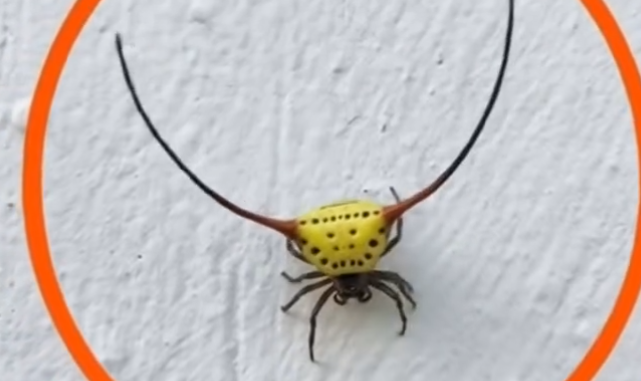
Unexpected encounters with wildlife can transform the most ordinary spaces into places of wonder and discovery. A quiet garden, backyard fence, porch, or walking trail can suddenly become an opportunity to notice a creature we may have passed countless times without ever truly seeing. One particularly memorable example is the spiny orb-weaver, a small spider known for its distinctive appearance, colorful markings, and fascinating web-building behavior.
At first glance, the spiny orb-weaver can look almost unreal. Its unusual body shape and prominent spines make it appear dramatically different from the spiders most people are accustomed to seeing around their homes. For someone encountering one for the first time, it may even resemble a tiny crab, a strange seed, or an elaborate piece of natural armor suspended in the middle of a web.
Despite its intimidating appearance, the spiny orb-weaver is generally far less threatening to people than its appearance might suggest. These spiders spend much of their time focused on constructing webs and capturing small flying insects. Their presence around gardens and vegetation can therefore be part of the natural balance occurring quietly around homes every day.
One of the most recognizable features of a spiny orb-weaver is its hardened abdomen, which may be marked with striking combinations of white, yellow, orange, red, or black depending on the species and individual. Several pointed projections extend from the body, creating the characteristic “spiny” appearance responsible for the spider’s common name.
Those spines may look like miniature weapons, but their purpose is largely defensive. An unusual shape can make the spider more difficult or less appealing for certain predators to attack. In nature, appearance is often part of survival, and the spiny orb-weaver’s extraordinary body demonstrates just how creative evolution can become.
Its web is equally impressive.
Like other orb-weaving spiders, it constructs the familiar circular web many people associate with classic images of spiders. Thin strands radiate outward from the center while carefully arranged spiral threads create an efficient structure for intercepting flying insects.
Building such a web requires remarkable precision. The spider must select an appropriate location, establish supporting threads, and then create the intricate pattern that becomes both its hunting ground and temporary home.
In the morning, especially when dew settles across the silk, these webs can become unexpectedly beautiful. Tiny droplets of water collect along the threads, revealing an architecture that might otherwise remain almost invisible. What looked like an empty space between two branches suddenly becomes a shimmering geometric structure.
The spider often waits near the center of its web for movement.
When a small insect becomes trapped, vibrations travel through the silk, alerting the spider that something has entered its carefully constructed trap. This ability allows the spiny orb-weaver to hunt without chasing prey across the ground.
For gardeners, this behavior can be useful. Many of the insects captured by orb-weavers are small flying species that naturally occur around plants and outdoor spaces. Rather than being an unwanted intruder, the spider is participating in the ecosystem surrounding the home.
Spiny orb-weavers are typically encountered outdoors, particularly in warm environments with plenty of vegetation and flying insects. They may build webs between shrubs, tree branches, fences, porch structures, or other stable objects that provide enough space for their circular webs.
Their location can occasionally create inconvenience, especially when a web stretches across a walkway or another frequently used area. In those situations, giving the spider space when possible is often enough. Webs may be rebuilt or relocated as conditions change.
The unusual appearance of these spiders can understandably cause alarm, particularly for people who are uncomfortable around spiders in general. But recognizing the animal can change the experience completely. Instead of seeing an unknown creature and immediately assuming danger, understanding what it is allows curiosity to replace some of that fear.
That shift is valuable because wildlife doesn’t have to be large or exotic to be interesting.
We often imagine encounters with nature as something requiring a trip into a forest, national park, or distant wilderness. Yet entire ecosystems operate quietly around our homes. Spiders build complex structures overnight. Bees navigate between flowers. Birds establish territories in backyard trees. Tiny predators and prey interact beneath leaves without anyone noticing.
The spiny orb-weaver is a particularly striking reminder of that hidden world.
Its strange armor-like body may initially attract attention, but observing it more carefully reveals something much more interesting: an animal perfectly adapted to a specific way of surviving. Its web, body shape, hunting strategy, and behavior are all parts of a system refined over countless generations.
The next time one appears in a garden or near a porch, it may be worth resisting the immediate urge to fear or remove it. From a respectful distance, watch the web. Notice the symmetry. Look at the spider’s remarkable shape and consider how much work went into constructing the delicate structure surrounding it.
Sometimes the most memorable encounters with wildlife don’t happen deep in the wilderness.
Sometimes they happen a few steps outside the back door, where a tiny spider suspended between two branches quietly reminds us that nature is far stranger, more complex, and more beautiful than we usually take the time to notice.