The Subtle Messages Hidden in a Woman’s Legs
The way a person stands, walks, and shifts their weight can communicate more than most people realize. Legs are primarily built for movement and support, but they also play a major role in posture, body language, and the first impressions others form. Without anyone saying a word, a steady stance may appear confident, while restless movement can suggest nervousness, impatience, or simply excess energy.
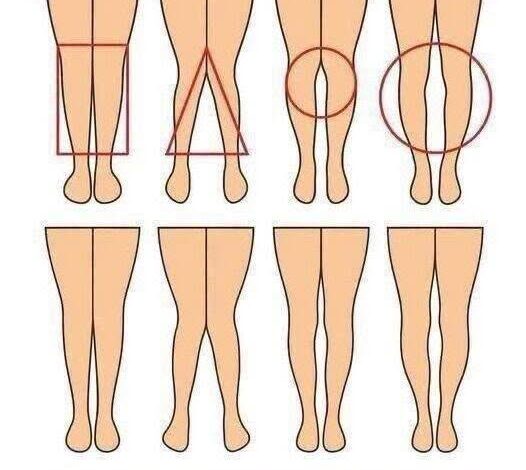
It is important, however, not to confuse body language with anatomy. The natural shape of a woman’s legs is largely determined by genetics, bone structure, joint alignment, pelvic width, and the placement of muscles. Some legs remain close together from thigh to ankle. Others meet at the knees but separate below, while some have more space between the thighs or calves. These are common physical variations, not reliable signs of personality, health, attractiveness, or fitness.
A visible thigh gap, for example, is strongly influenced by the width and angle of the pelvis. Exercise may change muscle tone and body composition, but it usually cannot alter the underlying skeleton. Two women following the same workout routine can therefore develop very different silhouettes, even when both are equally strong and healthy.
Movement patterns can also affect how legs look and function. Running may build particular muscles in the thighs and calves, while cycling, dancing, swimming, or yoga can create different kinds of strength and flexibility. Daily routines, past injuries, footwear, and habitual posture may influence gait and weight distribution as well.
Fashion provides another way legs shape personal expression. Wide-leg trousers can create flowing movement, fitted pants emphasize natural lines, and different skirt lengths change the overall proportions of an outfit. These choices are not about hiding a supposedly wrong body type. They are tools people can use to highlight the features they enjoy and feel comfortable in their clothing.
Popular online charts sometimes claim that leg shape reveals romantic behavior or personality. Straight legs may be labeled confident, inward angles described as shy, and curved legs associated with energy or independence. Such interpretations can be entertaining, but they should not be treated as science. Human personality cannot be accurately diagnosed from knee spacing or the outline of someone’s calves.
Posture and movement provide limited situational clues, but context matters. Crossed legs might indicate discomfort, modesty, habit, temperature, or nothing meaningful at all. A wide stance could express confidence, but it may also be the most comfortable position for that person’s joints. Reading too much into a single pose can create false assumptions.
The healthier perspective is to see legs for what they are: diverse structures that carry the body through daily life. They allow people to work, exercise, dance, travel, and remain independent. Their value is not determined by whether they match an illustration or a narrow beauty standard.
Every body distributes weight and builds muscle differently. Appreciating that variety shifts attention away from judgment and toward strength, comfort, balance, and mobility. Legs may quietly contribute to expression and style, but their most meaningful story is the life they help a person live.