Resurfaced photo of Melania Trump sparks debate over “injected” look
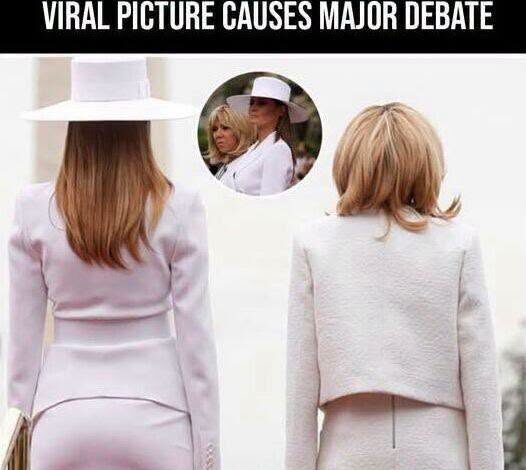
A photograph of Melania Trump standing beside Brigitte Macron has returned to social media years after it was taken, reigniting an argument that says as much about online culture as it does about either woman. The image, captured during an official appearance in 2018, shows both women dressed in pale, carefully tailored outfits. Yet instead of discussing the diplomatic event, many viewers focused intensely on Melania’s figure and began debating whether her appearance was natural.
The renewed attention quickly became uncomfortable. Some commenters made crude jokes, while others claimed that the former model’s shape looked “injected” or surgically enhanced. There was no new evidence behind the speculation. A single angle, fitted clothing, and the way the two women were positioned were enough for strangers to build confident theories about cosmetic procedures.
Other users pushed back, pointing out that photographs can be misleading. Lighting, posture, fabric, perspective, and even the instant selected by a photographer can dramatically change how a person appears. They also argued that reducing an international public appearance to a discussion about a woman’s body reflected a familiar double standard.
The photo became especially divisive because Melania and Brigitte represent different styles and public images. Their matching white ensembles encouraged side-by-side comparisons that spread rapidly across social platforms. Political loyalties then intensified the reaction. Praise and criticism were often aimed less at the photograph itself than at what each woman symbolized to the person commenting.
Melania has previously rejected claims that she relies on cosmetic procedures. She has said that she prefers to age naturally and has credited her appearance to healthy habits and personal discipline. That has not stopped repeated online speculation about her face and body, particularly whenever older photographs resurface beside more recent images.
People who have met her away from cameras have sometimes described a personality that differs from her reserved public expression. According to those accounts, she can be humorous, direct, and more relaxed in private. Her guarded manner during formal events has nevertheless encouraged the public to project its own assumptions onto her.
The latest debate also highlights how rarely prominent women are allowed to appear in public without their bodies becoming part of the story. Clothing choices, facial expressions, weight, posture, and signs of aging are examined with a level of intensity that male political figures seldom face. Even silence does not protect women from that scrutiny; it often gives online audiences more room to invent explanations.
There is also a broader problem with treating appearance as evidence. A viral image does not provide medical facts, and strangers cannot reliably determine whether someone has undergone a procedure by studying one photograph. Repetition can make a rumor feel established, but it does not make the claim true.
The resurfaced picture ultimately became less about Melania Trump or Brigitte Macron and more about the internet’s appetite for comparison. A fleeting moment from an official event was transformed into a referendum on beauty, class, nationality, politics, and aging.
For supporters, Melania’s composed appearance represented elegance and discipline. For critics, the same image became an opportunity to question her authenticity. Between those extremes was the simplest possibility: two women were photographed from behind while wearing tailored white outfits, and the camera captured one brief angle.
Years later, the image continues circulating because it invites instant judgment. The continuing reaction shows how quickly social media can turn a person’s body into public property—and how difficult it has become to let a woman occupy a photograph without demanding that she explain every detail of how she looks.